
The way ahead: Super Group outlines its US assault with a global Betway brand strategy
With Super Group becoming the latest in a long line of gambling firms to pursue a SPAC merger, EGR catches up with CEO Neal Menashe and president and COO Richard Hasson to assess the next chapter for this prominent betting stalwart

As a launchpad for potential future success, the reverse merger with a so-called blank-cheque company has gone from a little-known, seldom-used financial vehicle historically viewed with suspicion to a popular and accepted route to the public markets. And the gambling industry wasted little time jumping on the SPAC bandwagon such is the clamor to crack America. The latest to reveal its hand was Super Group (SGHC), the company behind Betway and multi-brand casino Spin, with the unveiling in April of a $4.75bn SPAC merger with Sports Entertainment Acquisition Corp. (SEAH) to form a New York Exchange-listed global gambling company. Discussing the decision to go public, which will see SGHC’s existing shareholders hold 88% of the combined group, SGHC CEO Neal Menashe namechecks the parties on the other side of the table at SEAH: US investors Eric Grubman (chairman and CFO) and John Collins (CEO). “These are two individuals who have come from Goldman Sachs, the NFL and NHL and have a lot of knowledge and experience, particularly in the US,” he explains to EGR. “From our point of view, it was the perfect timing, but we were not actively looking for it. We were introduced to Eric and John and there was an instant chemistry and the whole SGHC project snowballed from there.
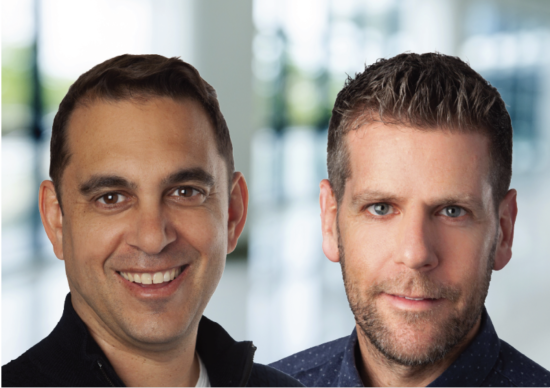
Neal Menashe (left) and Richard Hasson
Under the microscope
By announcing the decision to go public, SGHC pulled back the curtain on its Betway and Spin operations and offered investors and the media a window into a company that has tended to avoid the limelight. While the Betway logo seems to be plastered everywhere in the world of sport with more than 60 brand partnerships, including appearing on the shirts of Premier League club West Ham United, the senior people behind this opaque business have kept a low profile. Licensed in 23 jurisdictions and employing 3,500 staff, the operator revealed in its glossy presentation that it boasts more than 2.5 million active customers and accepted $42bn in bets in the 12 months to 21 March 2021. Interestingly, the average bet size is under $2, which sounds particularly low on face value, yet you have to take into account this includes slots. These naturally tend to be a few cents per spin. This statistic emphasises that the company has a large, casual customer base rather than relying on VIPs and the RG issues this can create. Meanwhile, the Betway sportsbook offered 7.3 million markets, 374,000 in-play events, and recorded a stable ~10% trading margin in 2020. SGHC said that when it comes to its geographic mix, the Americas accounted for 48% of the $1.1bn NGR achieved in the 12 months to the end of March. Indeed, the Betway brand has established a strong presence in Latin America, particularly Brazil where Betway holds a podium position for brand awareness, according to Nielsen research. Europe was 21%, Africa 12% and the rest of the world made up 18% of the total. Shifting the balance of the pie is now the aim with the assault on the US, a market with a TAM of $53bn at maturity. The opportunities presented by greater expansion into the US market have proven very lucrative for a long list of European operators, including William Hill, Entain, and Flutter Entertainment, with each choosing to expand for different reasons. “The US as an opportunity is a platform for us to accelerate our growth, and it is also a perfect vehicle for the world to understand the Super Group business and our brands,” Hasson explains. “From that point of view, this merger helps with some of the backstory for Super Group globally and of course helps us to engage with regulators,” he adds. SGHC has market-access deals in 10 states, yet it is a market that has become a more crowded one, while the top-tier sports betting giants have a stranglehold on some online betting states. The US is characterized by high revenue, but also high costs as DraftKings has demonstrated with its mammoth losses mainly due to marketing. While the market may be daunting to some, the US market is too big to ignore, and many have crossed the Atlantic either through market-access deals with local operators or through the medium of M&A. SGHC is somewhat late to the party, choosing in February to ink a brand license agreement for Betway with Digital Gaming Corporation (DGC) and giving it access to 10 US states. However, SGHC subsequently entered into an agreement to acquire DGC, the company revealed simultaneously with the SPAC merger announcement. Despite it being three years since PASPA’s repeal, Menashe remains upbeat, which he attributes to Betway’s global pedigree and not only its existing US sponsorships with teams such as the NBA’s Chicago Bulls, but its wider partnership deals.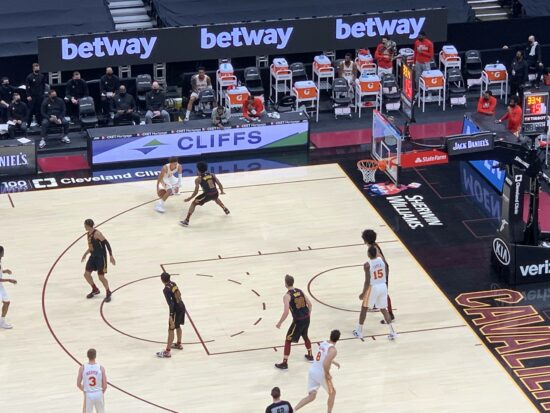
Betway achieves high global brand awareness through key partnerships with tier-one sports teams such as the Cleveland Cavaliers