
Get in the game: How Betcha is building communities using the Barstool model
Betcha CRO Jason Shapiro talks micro-influencers, building sports fandom communities, and how Barstool Sports inspired the DFS-style betting platform

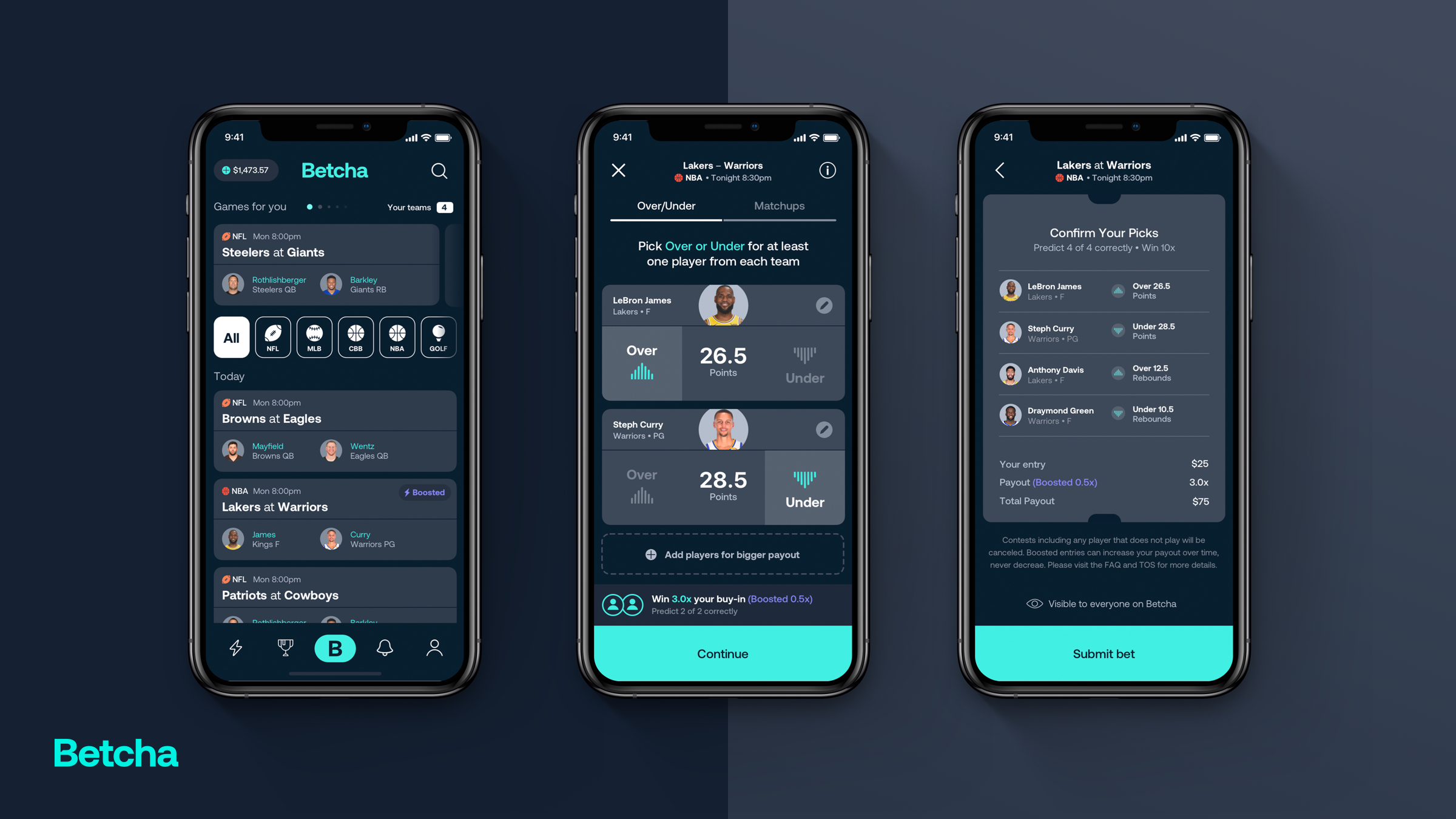
Using the likes of Peloton, Robinhood, and Barstool Sports as inspiration for its product, social DFS-style betting app Betcha is forging communities among its users by tapping into their sports fandom and offering up unique prizes for engagement. The app is awarding marketing powers to micro-influencers across its userbase, including college fraternity leaders, to grow local audiences.
CRO and former FanDuel marketing consultant Jason Shapiro is discovering just how social betting can be as Betcha users flood to the app to make picks based on their peers. “If you scroll through Twitter, you’re constantly seeing people giving you their picks and why they like them. The more you look at it, the harder it is to hold off on wanting to join that action because you get that sense of having a chance to win money. That fear of missing out (FOMO) effect has been massive,” he tells EGR North America, as engagement on the app soars in non-betting states like Florida and California.
Shapiro offers up a detailed insight into the product’s gamification journey and how it is establishing a new kind of sports bettor.
EGR North America (EGR NA): How did Betcha start?
Jason Shapiro (JS): In 2015, I was working at an agency and we signed FanDuel as a client. This was back sort of during the DFS boom here in the US, when FanDuel and DraftKings were making waves and spending a ton of money on marketing.
I was helping to negotiate, manage, and execute their 32 team deals across the NFL and the NBA, as well as their NBA league partnership. I would listen to what they liked, what they didn’t like and what their pain points were, and I started to feel as though I had an idea for what white space opportunity was available. Simultaneously, some of the other co-founders of Betcha were working with the [New York] Jets on their fan engagement solutions and building B2B software that would help gamify their apps.
When I look at the sports betting industry, I see products that are functional in terms of the number of markets that they have to bet on, but I see products that are also very transactional in nature. I would liken the current sports betting experience to buying a stock.
We’ve done a lot of user research and I think for some people it can be an intimidating experience. I think Robinhood is a good comparison for us because they took something in investing, and through this brilliant blend of UI/UX and user-friendly features, they have helped make investing feel accessible for more people, and more attractive to a younger audience.
On the other side, we feel that there is a huge opportunity to layer on a social and gamified experience to sports betting and that’s the vision for Betcha.
EGR NA: How has the product progressed since we last spoke in October 2020?
JS: We’ve taken a very product-first approach since the genesis of Betcha. In that product we have built in a lot of social functionality and features that we always felt would allow us to have some virality and generate some organic traction in a different way. In December 2020, we saw tremendous momentum and organic growth that sort of backs up that ethos.
Handle was up 400% month over month, with total entries up 133% month over month, and our user base actually doubled from the previous three or four months combined. Even in the first week of January, that momentum continued to snowball.
Not only are we really starting to see people take to the product, but we’re starting to see that this could also appeal to someone who’s maybe never placed a bet before. We do a lot of one-on-one intakes with our new users and interact with them. We’re attracting the type of user that definitely is familiar with daily fantasy, props, and sports betting.
But a very sizable percentage of these people are learning what spreads are for the first time and are asking pretty basic questions, and then sharing that with their friends. It’s been a really encouraging last two months here. And now that the NBA is back, we’ve had the NFL playoff s, and the NHL has started, we’ve got a full sports calendar once again and I think there’s a great opportunity for us to continue to ride that momentum.
EGR NA: Have you been piggybacking on the growth of sports betting or is the product acting as a precursor to real-money betting in states that have yet to legalize it?
JS: I think the latter is probably the most appropriate way to describe the audience that we’re starting to uncover. I’m in Florida currently and there’s 23 million people here, in a state where sports betting is at least a few years away because of the tribes, and it’s been a massive state for us.
Same in California and Texas. But it’s not necessarily also the audience who bets offshore, who’s had an account at Bovada or 5Dimes over the last year. A lot of these people have maybe tried season-long fantasy football or are big sports fans but haven’t bet a lot before or have maybe bet a little with their friends socially but have never done it through a platform.
We have talked to some guys who have wagered offshore, but for them the ease of use of our product and the ability to use it with their friends is really appealing to them.
 EGR NA: What does the product roadmap look like at the moment?
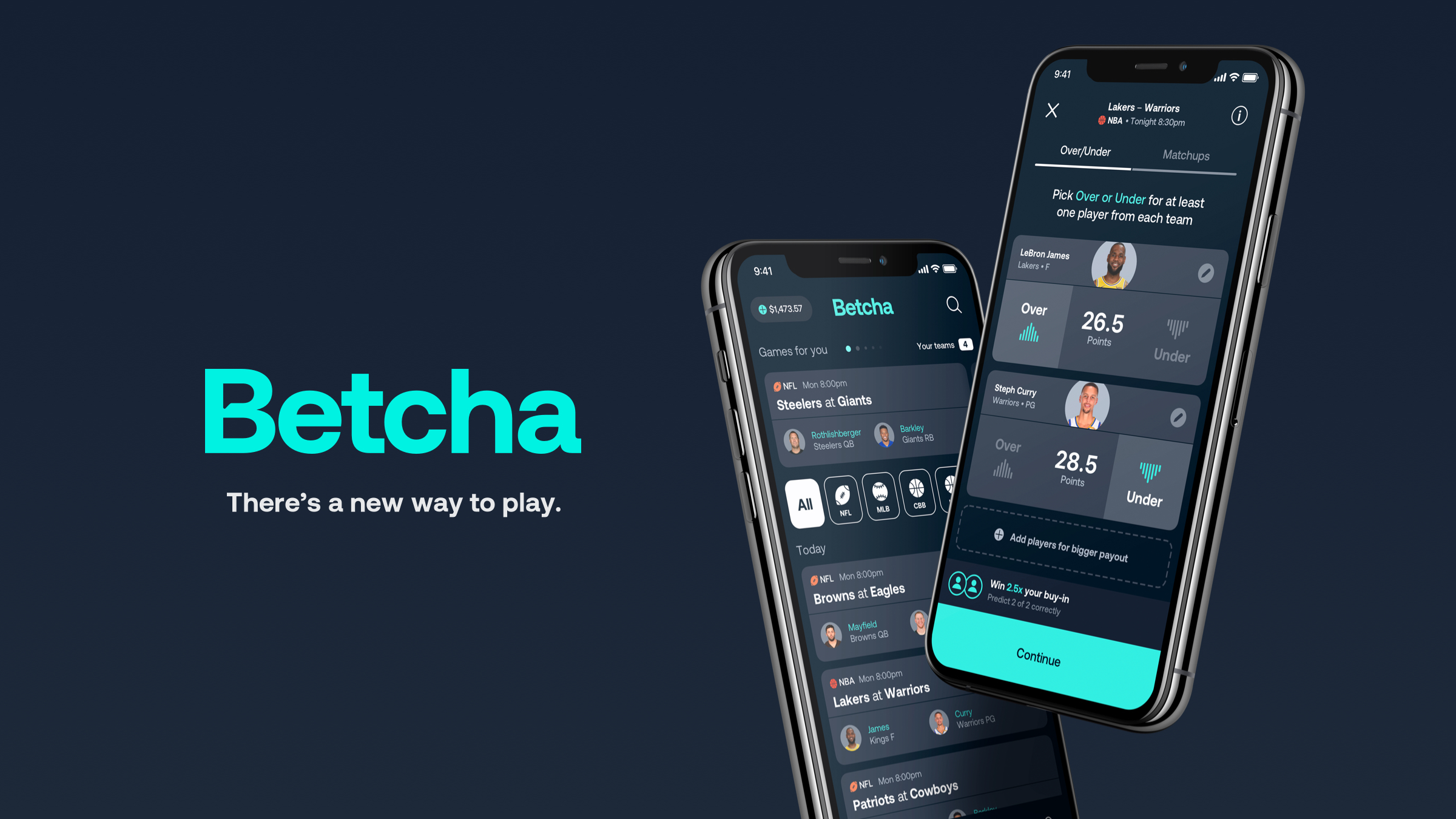
JS: There are a couple of major things that we have coming down the pipeline. We’re constantly looking to add different game types to continue to keep things fresh. Right now, we’re focused on individual games where if the Boston Celtics are playing Miami Heat, you click on that game and you’ve got all the top players to choose from.
They also have the ability to pick from players across the league and choose their own adventure. Maybe you’re not going to watch a specific game, you’re just a huge basketball fan and you want to pick LeBron James and Kevin Durant. We’re calling this the all-star showdown, where instead of just being focused on one individual game, we’ll focus on that entire evening of NBA games or NFL games and allow people to pick from across all the games and select their favorite players.
That’s a big feature for us as some people are more fans of the league than they are a specific team, especially in basketball. One of the biggest features that we’ll ever release, as a foundation for a lot of the gamification stuff we have envisioned, is something that we’re calling the Ownership Challenge, which we’re going to roll out with the NBA season.
This is a new feature whereby we will group people to compete as communities by their favorite team and they will be able to unlock things of tangible benefit to them. My parents have a Peloton bike and one of the big features Peloton released over the last year is something they’re calling ‘hashtag communities’ where you self-identify with a community of people that you have a shared interest with but you may not even know.
And you are now riding against these people and having this digital interaction with them as a community. We feel that there’s a huge opportunity to do that based on people’s fandom. Not only does this start to build a social community, but we’d like for the prizes within those leader boards to be discounts on [Los Angeles] Lakers tickets, discounts on Lakers merchandise, unlocking of skins and avatars, and things that you can decorate your profile with.
Things of both tangible and intangible value, that can also appeal to the younger generation [of bettors]. The vision for the company is to really build an entire experience around the transaction of winning or losing money, and so this feature is really one of the foundational elements of how we want to do that.
EGR NA: What player behaviors have you experienced? Any that coincide with traditional sports bettors and DFS players?
JS: One of the big insights has been when looking at the social functionality where we took elements from our own fantasy football and sports betting and daily fantasy behaviors. One of the things we’ve heard a lot is the word FOMO, which in this case is people coming into the app interested in making a bet or wager, and they look through the games and don’t really find anything that really jumps out at them based on the projections, so they just immediately go to their feeds where they will see other people make picks and then go on to make entries that they otherwise would not have made.
I think as part of the sports betting and daily fantasy ecosystem that’s been built, the flywheel that’s been so powerful is the amount of content out there. If you scroll through Twitter, you’re constantly seeing people giving you their picks and why they like them. The more you look at it, the harder it is to hold off on wanting to join that action because you get that sense of having a chance to win money.
That FOMO effect has been massive and our active players are placing somewhere between five and nine entries a week, which is much higher engagement than we had projected, even in our business plan.
EGR NA: What does the product roadmap look like at the moment?
JS: There are a couple of major things that we have coming down the pipeline. We’re constantly looking to add different game types to continue to keep things fresh. Right now, we’re focused on individual games where if the Boston Celtics are playing Miami Heat, you click on that game and you’ve got all the top players to choose from.
They also have the ability to pick from players across the league and choose their own adventure. Maybe you’re not going to watch a specific game, you’re just a huge basketball fan and you want to pick LeBron James and Kevin Durant. We’re calling this the all-star showdown, where instead of just being focused on one individual game, we’ll focus on that entire evening of NBA games or NFL games and allow people to pick from across all the games and select their favorite players.
That’s a big feature for us as some people are more fans of the league than they are a specific team, especially in basketball. One of the biggest features that we’ll ever release, as a foundation for a lot of the gamification stuff we have envisioned, is something that we’re calling the Ownership Challenge, which we’re going to roll out with the NBA season.
This is a new feature whereby we will group people to compete as communities by their favorite team and they will be able to unlock things of tangible benefit to them. My parents have a Peloton bike and one of the big features Peloton released over the last year is something they’re calling ‘hashtag communities’ where you self-identify with a community of people that you have a shared interest with but you may not even know.
And you are now riding against these people and having this digital interaction with them as a community. We feel that there’s a huge opportunity to do that based on people’s fandom. Not only does this start to build a social community, but we’d like for the prizes within those leader boards to be discounts on [Los Angeles] Lakers tickets, discounts on Lakers merchandise, unlocking of skins and avatars, and things that you can decorate your profile with.
Things of both tangible and intangible value, that can also appeal to the younger generation [of bettors]. The vision for the company is to really build an entire experience around the transaction of winning or losing money, and so this feature is really one of the foundational elements of how we want to do that.
EGR NA: What player behaviors have you experienced? Any that coincide with traditional sports bettors and DFS players?
JS: One of the big insights has been when looking at the social functionality where we took elements from our own fantasy football and sports betting and daily fantasy behaviors. One of the things we’ve heard a lot is the word FOMO, which in this case is people coming into the app interested in making a bet or wager, and they look through the games and don’t really find anything that really jumps out at them based on the projections, so they just immediately go to their feeds where they will see other people make picks and then go on to make entries that they otherwise would not have made.
I think as part of the sports betting and daily fantasy ecosystem that’s been built, the flywheel that’s been so powerful is the amount of content out there. If you scroll through Twitter, you’re constantly seeing people giving you their picks and why they like them. The more you look at it, the harder it is to hold off on wanting to join that action because you get that sense of having a chance to win money.
That FOMO effect has been massive and our active players are placing somewhere between five and nine entries a week, which is much higher engagement than we had projected, even in our business plan.
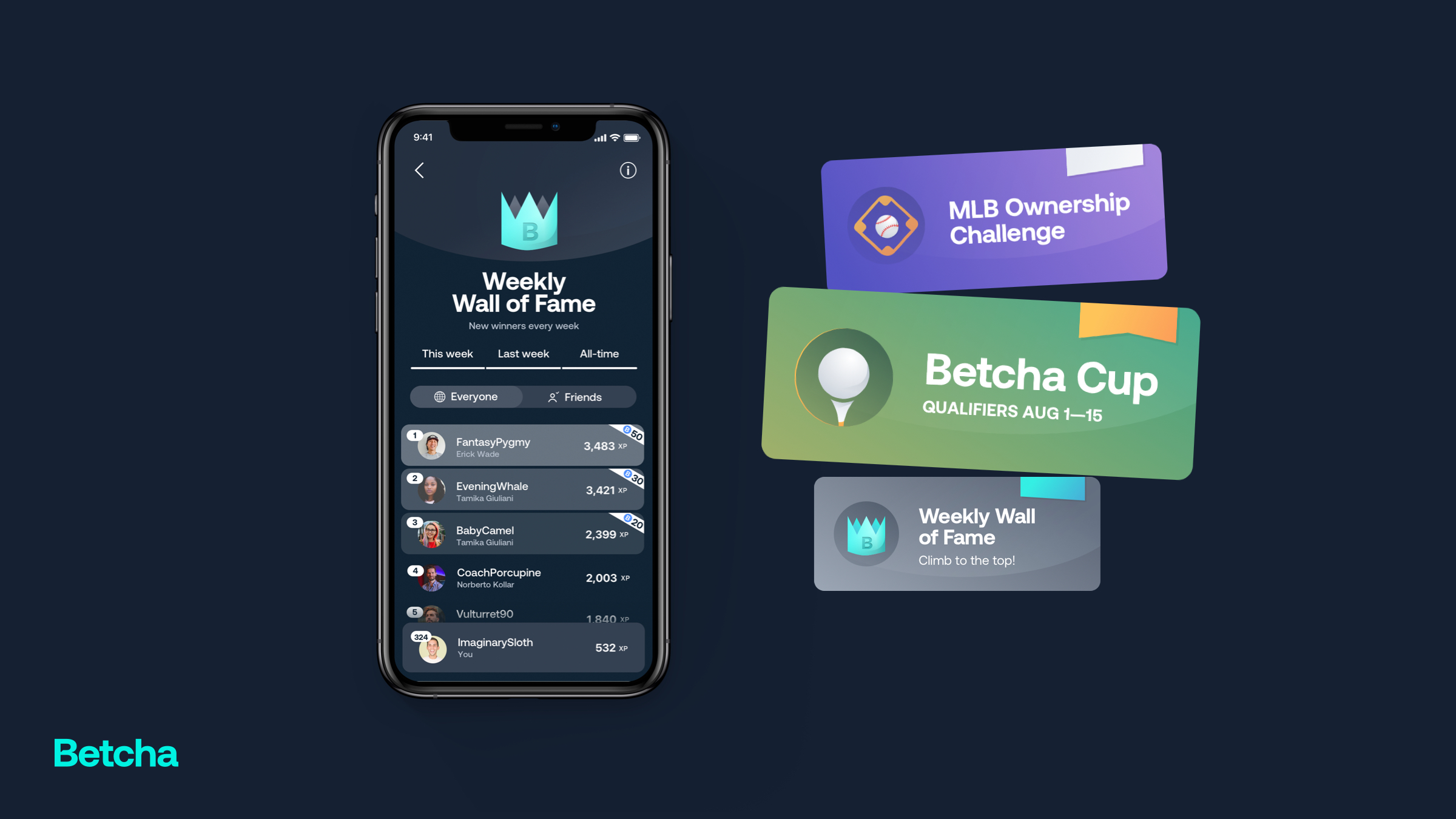
Betcha leaderboards

Jason Shapiro, Betcha chief revenue officer