
All aboard: Why the online customer journey can often prove to be a bumpy ride
With online gaming products often compared to retail trading and challenger bank apps for their usability, EGR NA analyzes the fundamental friction points within US online betting products and considers how awkward onboarding and customer journeys can be improved

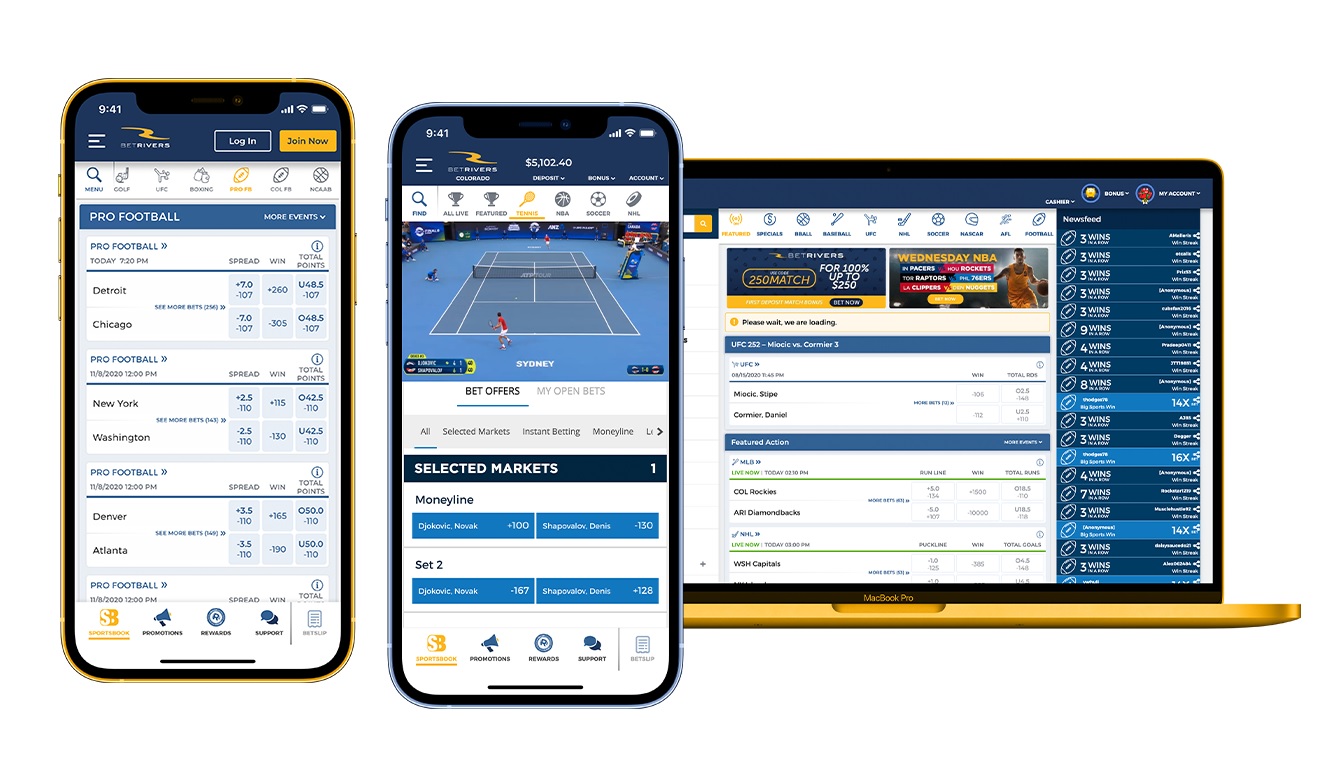
Innovation in consumer-facing mobile apps and e-commerce sites is commonplace in the US. Considering the meteoric rise of the likes of Amazon, Uber, and mobile gaming in recent years, the consumer expectation for superior customer experiences has grown, much to the dismay of the online gambling industry. The sector’s longstanding experience in Europe hasn’t quite prepared it for the expectations of extremely tech-savvy Americans, but with the US online gaming industry still in its infancy, and the adoption of sports betting in new states continuing at pace, geographical expansion has become much more of a priority for operators than improving and iterating their products. Thus, customer experience is suffering, particularly in the initial stages of the player’s journey, where ‘know your customer’ (KYC) plays a pivotal role. Yaniv Sherman, head of US at 888, acknowledged in a recent webinar, hosted by Continent 8, that many of the US betting products available today are adapted from classic European sportsbooks, which historically have not offered the most seamless user experience, particularly in onboarding new players. “The US is a special market in the sense that while it is one of the youngest for betting, it is the most highly developed e-commerce market,” Sherman said. “Consumers are very used to seamless and frictionless customer experiences. Online sports betting is generally new and puts an emphasis on the necessity for innovation, but it also is a tremendous opportunity to introduce something new,” he added. Sherman went on to highlight the similarities between betting products and consumer-friendly financial trading apps like Robinhood, noting the convergence between the two industries, particularly in the US where financial trading is commonplace among Millennials. “If you look at how custom-built products are tailor-made to the US consumer, we should take a page from them and adopt the good things about the customer experience and the language they speak,” Sherman said. But betting apps are somewhat hindered by stringent regulations in the US due to the state-by-state nature of legalized sports betting. Strikingly different legislation between states makes developing a unified product extremely difficult, particularly as operators are legally required to incorporate geolocation technology into their products to ensure users are located within state lines. Unsurprisingly, this requirement caused significant friction in the early days of legal online gambling in the States, as the tech was underdeveloped in 2013 when New Jersey launched igaming. To this day, it is not uncommon for anyone ordering an Uber to New York City’s West Side to find their driver parked in the middle of the Hudson River, according to their Uber app. “No one had ever used a computer’s location for geolocation before,” David Briggs, CEO for geolocation technology developer GeoComply, tells EGR North America. “They’d use an IP address, which is completely unreliable for anything that’s mission critical. We were the first native application on Windows and Mac that would locate a device within about 30 meters, and in the beginning we had quite big buffer zones between where the state actually ended and where we drew the technology’s boundaries,” Briggs explains. “We began this complex process of having adjustable buffer zones that actually curved inwards where we could see fast-moving traffic. We’ve had to deal with other weird stuff like passenger ferries along the Hudson River which duck in and out across the New Jersey/New York border all the time,” he says. Briggs admits it took time for operators to come around to trusting GeoComply’s technology, as the repercussions for a potential failing in an operator’s geolocation could lead to serious repercussions. Briggs further notes that European operators entering the market back in 2018 after PASPA’s repeal had a jaded perspective of both B2B and B2C online offerings at the time. “They saw the US market as not really as knowledgeable as they were and they didn’t see the regulators as people they should respect because they saw them as only land-based regulators that were not as knowledgeable about digital gaming,” Briggs comments. “In some cases, time was lost and wasted with operators that assumed the regulators would just suddenly change their minds and start agreeing with the European point of view, but that just didn’t happen.” Over time, the technology has improved (to the point where it can track a player’s location up to 30 centimeters) and the market has matured. And trust in the supplier has been established, resulting in “the [wider] conversation [around technology] becoming much more educated” among industry stakeholders, Briggs claims. But at this stage, the focus for operators is largely on geographical expansion over product development. “Customers will do anything to get a bet on, so in this sort of environment they will put up with some flaky UX,” Briggs says. “But at some point, the ridiculous expansion every year by new states opening will calm down and then product differentiation, brand differentiation, and user experience starts to really matter. That’s when you’ll see UX starting to play a bigger role.”
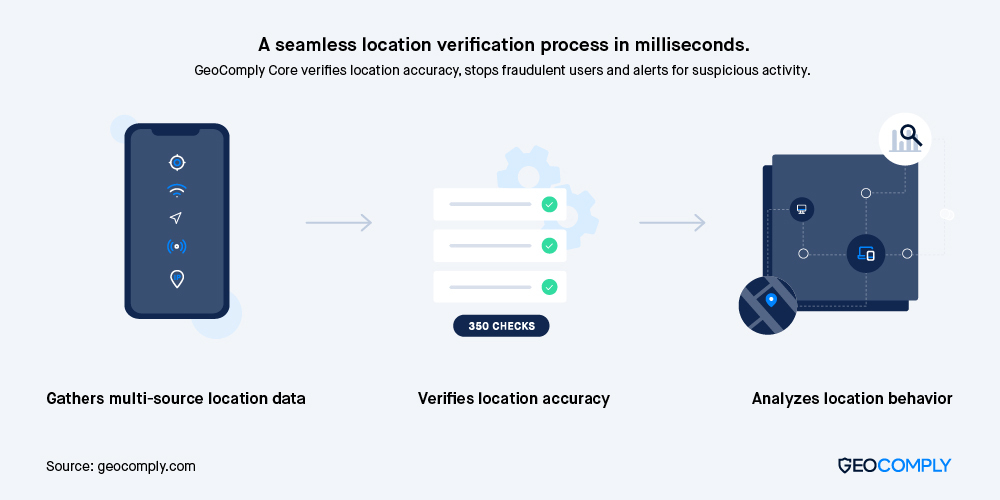
Technology can nowadays precisely pinpoint a player’s location to within 30cm
Learning the hard way
Onboarding issues have plagued European markets for years before North America started opening up to the industry. A blog post dating back to August 2020, published by UX and product development specialists Degree 53, claimed the average time it took for a user to register and deposit with a UK betting app took between one and four minutes, with William Hill, BetVictor, and Betway offering the fastest overall journey. In the review, Degree 53 recommended that apps offered numbered steps and clear labels for first-time depositors that may not be familiar with the registration process. “What’s key [in onboarding customers] is that there needs to be much more hand-holding of the customer from the initial point when they arrive on a product,” Degree 53 managing director Richard Wagstaff explains today. “What’s interesting with the US is a lot of these people are registering with a product, app, or website like this for the first time and the operators are asking for a lot of personal information, and you might wonder why they’re asking you for it. If an operator doesn’t make it very clear why they need that information and break it up into manageable chunks so that it doesn’t become daunting, people will just give up.” It’s clear the sector’s North American counterparts have thus far not really learned from the mistakes made across the Atlantic as many rush to go live with basic products. However, one industry veteran, who has experienced first-hand the growing pains of Sweden opening its doors to commercial operators, is now seeking to enhance the user experience of online casino players in New Jersey. Ex-NordicBet and Catena Media CEO Per Hellberg recently told EGR NA his new igaming venture PlayStar Casino would be making the consumer “the main focal point of the business.”Brick-and-mortar benefits
“What we are building is basically a combination of product and a completely different user experience from how they sign up, how they’re being treated, and what they see on the site which will be very localized,” Hellberg outlined, noting that affiliate marketing and personalized CRM will play pivotal roles in the development of the business. Hellberg insists US online gaming products should cater to the market’s unique physical casino and sportsbook experiences, which are vastly different from the UK and Europe. US casino resorts are common holiday destinations for locals, and although many flock to Atlantic City, Las Vegas, and Reno every year, regional casinos are also hugely popular for weekend breaks. Operators that also own retail properties are at an advantage in being able to leverage their brick-and-mortar databases to improve the customer onboarding process. Penn National Gaming (PNG) and BetMGM have both utilized data provided by players via their respective loyalty programs to help personalize the user experience.
Penn National Gaming has utilized data provided by players via its loyalty program to help personalize the user experience