
Revenue or socially responsible gaming? Operators can have both
Optimove’s Motti Colman explains how operators can still return a profit by embracing effective and tech-led RG measures


If there were ever any doubts about regulators’ intention to enforce responsible gambling regulations strictly, the first three months of 2022 dispelled them. This year, operators have already racked up more than £15M in fines for failing to meet RG regulations and protect at-risk players – almost the same amount they amassed in the entirety of 2021. In 2019, for comparison’s sake, the total sum of penalties for these violations was £17m.
In other words: RG regulations are here to stay. And the igaming industry is better off for it. First and foremost, a gambling problem can devastate a person’s life – something that we, as a society, must never lose sight of. And second, practicing socially responsible gaming makes more financial sense than one might expect.
A bird’s eye view of the industry landscape reveals three maturity levels when it comes to responsible gambling:
Basic: Operators that provide players the option to self-exclude at any time. This is the most rudimentary requirement in most regulated regions.
Competitive: Operators that explore attributes that players demonstrate before they self-exclude. Creating a segment of self-excluded customers allows operators to identify suspicious attributes and try to mitigate them.
Advanced: Operators that implement a machine learning algorithm that helps them predict which players are likely to become at-risk. When predictive models are in place, there’s no need to make a manual, binary decision on whether to cut a player off; the system can take the player through an RG journey, which may provide informative content and set limits before cutting the customer off.
Taking a player through an RG journey like the one described above makes the most sense from a business perspective. But many operators still divide their marketing department into two separate teams – RG and CRM – with different goals.
While traditional CRM marketing creates player journeys consisting only of promotional campaigns in order to measure incremental net gaming revenue, RG journeys focus on educational and informative content that encourages players to adopt healthier behaviours in order to measure player migrations from one risk level to another and overall retention rates.
The key to resolving this goal conflict is segmentation. By segmenting players into tiers based on their risk levels and adjusting the informative-to-promotional campaign ratio accordingly, operators can increase their revenue while implementing more socially responsible practices.
The best way to do that is using advanced CRM platforms which allow operators to easily create marketing flows, monitor how players migrate from one risk level to another and adjust their marketing strategies (i.e., informative-to-promotional ratio) as necessary.
Doing all this at scale is challenging. Therefore, AI must be the answer for all RG-related requirements in the future. Once players are identified as at-risk, for example, an AI algorithm can autonomously reassign them to the appropriate segment, focusing on adjusting the behaviour, understanding the problem and taking preventive measures.
Which is, one could argue, the main message behind responsible gambling: that sometimes, for the benefit of everyone involved, a step back is needed.
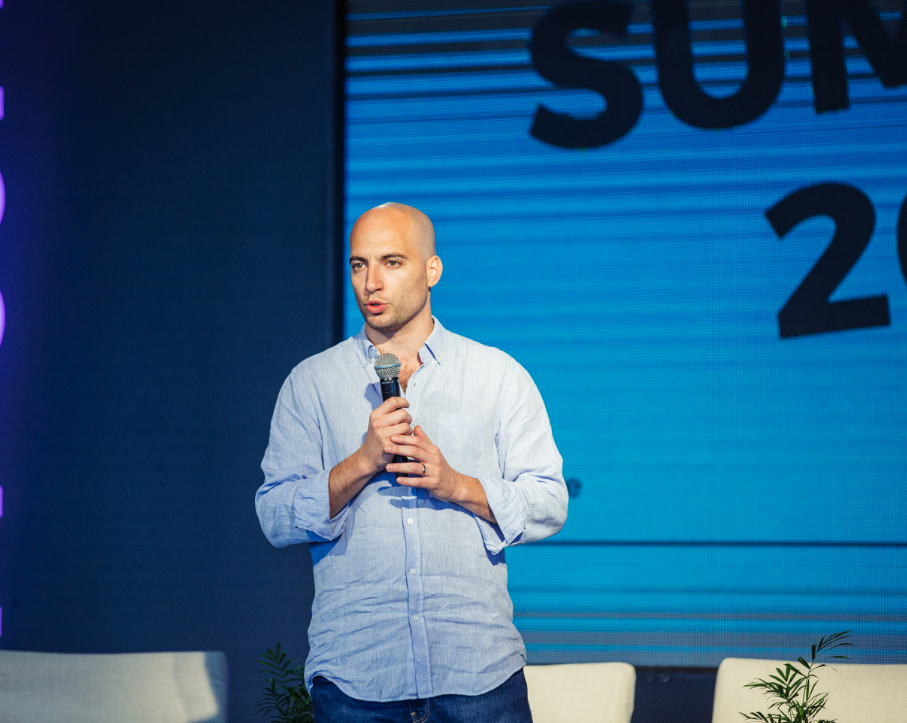 Motti Colman, Optimove senior sales director, is an expert in CRM marketing within online, offline and retail gaming. Motti combines sharp business and finance skills with business and marketing best practices, positioning him as a leader in his field. Previously, Motti headed up a High Net-Worth Family Office in London. Motti holds an ACA in Forensic Accounting from BDO.