
Uzbekistan targets legalised online sports betting by 2021
Parliament mulls sports betting as part of jumpstarting of football leagues

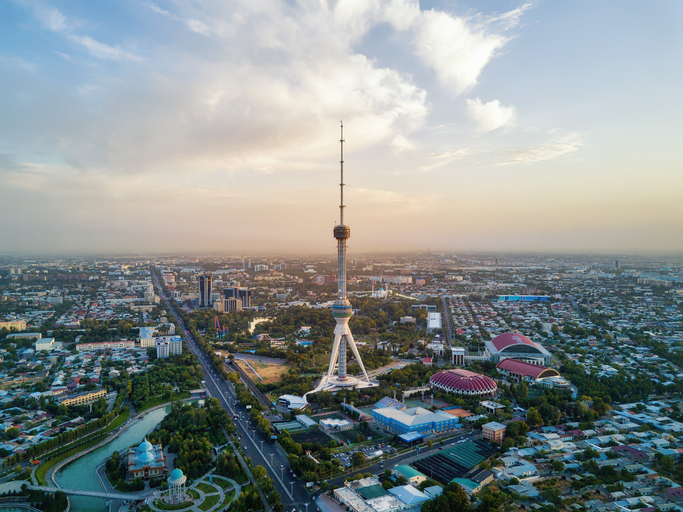
The Uzbekistani government has drafted a bill that could see the launch of regulated sports betting in the country as early as 2021.
The proposals are included within the presidential decree “On measures to bring football to a new level in Uzbekistan”.
The bill provides for legalising and regulating sports betting in Uzbekistan, with a proportion of the money raised through taxation being funnelled back into the development of Uzbekistani sports initiatives.
This covers the creation of the Uzbek Football brand, as well as the opening of sponsorships of local football teams to commercial firms including gambling operators.
The bill will also see the development of a high-speed football stadium reporting system which will be used to provide immediate footballing data to bookmakers. Uzbekistani footballers will be allowed to engage in betting activities until 1 June 2020, when they will be barred from doing so going forward.
Responsibility for regulation and licensing of both online and land-based bookmakers will rest with the country’s Capital Markets Development Agency under the bill.
No definitive date for implementation is given within the bill, however the timetable for wider implementation of the new market will commence as soon as the bill is passed.
In Uzbekistan, all forms of gambling are currently forbidden with official reasoning stating that gambling is culturally ambiguous and leads to crime.
However according to a 2017 European Commission report, the illegal betting sector in Uzbekistan generates an average turnover of €50m annually.
Ilya Machavariani, gaming lawyer from Dentons Law Firm, said the potential of the Uzbek market could be similar to that of its nearest neighbour Kazakhstan, which legalised and regulated gambling in 2007.
According to Kazakhstani government estimates, the regulated sports betting industry generates €130m in turnover. Kazakhstan has a population of 12 million while Uzbekistan has a population of 32 million.
“If we are to look from the operator’s side of this possible legalization, it may be noted that as of today Uzbekistan is surrounded by the countries which already have regulated markets, including Tajikistan, Turkmenistan and Kazakhstan,” Machavariani said.
“Hence it may be argued that after the legalisation international operators may benefit from arising synergy of operating within 4 countries with relatively similar cultural and social background and combined population of approx. 65 million,” Machavariani added.
The bill will first be heard in the Oliy Majlis (the Supreme Assembly) of Uzbekistan before being passed to the Uzbekistani senate for final approval. The bill will then be passed to the country’s President, Shavkat Mirziyoyev for signing into law.