The month in tech: Google Pixel 3 rumours and Nike's digitally-enhanced store
All the latest in wider technology news for the month of July 2018

Samsung reported weaker than expected Q2 results in July on Galaxy S9 sales. Samsung officials said quarter-over-quarter demand for mobile devices fell due to weaker than expected sales of flagship models and discontinuing older, low-end models. The company said sales of S9 and S9+ missed internal targets amid a slowdown in overall high-end mobile demand.
They’re hooked
The latest Communications Market Report by UK telecoms regulator, Ofcom, has seen a 1.7% drop in the number of voice calls made via mobile carriers for the first time in mobile phone history. According to the report, 78% of adults in the UK now own a smartphone, and users check their devices every 12 minutes throughout the day on average. On the findings, Ofcom’s director of market intelligence, Ian Macrae, said: “Over the last decade, people’s lives have been transformed by the rise of the smartphone, together with better accessto the internet and new services. Whether it is working flexibly, keeping up with current affairs or shopping online, we can do more on the move than ever before. But while people appreciate their smartphone as their constant companion, some are finding themselves feeling overloaded when online, or frustrated when not.” The detailed document reported that each adult opened their Facebook app the most – seven times a day – from a list of popular apps. Meanwhile, 18-24-yearolds used it even more frequently at nine times a day. WhatsApp followed closely behind, with adults averaging six sessions a day and 18-24-year-olds, eight daily sessions.
Next in line
Rumours around the web have suggested that two new Google Pixel phones are expected to launch this year, as well as the company’s first-attempt at a smartwatch, the Pixel Watch. New features for the upcoming Pixel 3 were outlined by Google at the Google I/O conference in May and described as intelligent, simple, and in the realm of “digital wellbeing”. Tech Advisor said the biggest update to the hardware would be the single button navigation system which will let users swipe to open apps and view their most used apps. The site admits it does not expect the phone to be launched before October of this year as Google has unveiled its last two new phones on 4 October in previous years. The Pixel 3 will be powered by the latest version of Android – Android 9.0 P – and is expected to be a pure version of the software, running exactly as Google intends, with regular security updates and no ‘bloatware’.
Keep it simple
Mobile carrier Three has launched a new phone plan for SMEs to simplify their business phone usage. Three Simply Business lasts 24 months and offers users unlimited minutes and texts with differing amounts of data. The two plans also give customers access to Netflix, Apple Music, Deezer, Snapchat, TVPlayer and SoundCloud without overrunning their data allowance. According to the carrier, Simply Business was launched following a survey of 1,000 UK small businesses, commissioned by Three, which found that while 63% of respondents thought their mobile was very important for their job, one in five claimed to find mobile phone packages complicated.

Analysis: UX-OTUS
Mark Israney, partner, Propus Partners LLP
With the breaking news of the repeal of PASPA seemingly distant in the rear-view mirror, the first few weeks’ worth of performance data has helped maintain levels of excitement as to what the next few years has in store for sports betting in the US. It is, of course, not yet clear what shape regulations will take in each state, with permitted channels being one of the key considerations for each.
While remote betting may not be allowed in some states – and for some of those that do allow it, mobile may still be subject to further restriction – the future potential for mobile betting across the country is huge.
With US smartphone penetration rates estimated to be in excess of 70% (higher than the UK for example), and with 4G (and soon to be 5G) coverage available to many, the online US sports betting market is being born into a mobile-first way of life (as opposed to the many European operators which have adopted a mobile-first way of thinking, but with legacy technology challenges to overcome).
While we expect that the first wave of sports betting products will either be provided by European partners, or created in the mould of existing Vegas sportsbooks, we would expect secondary waves to offer something a little different. With the American consumer used to a rich set of data accompanying each sporting event, the challenge of presenting this data through a mobile device, and in a way that doesn’t hamper the betting experience, will prove something of a challenge.
However, given levels of UX expertise in US businesses across other industries, it is a challenge which we would expect to be tackled in some interesting ways. While those that work within the European sports betting industry are expecting US operators to require knowledge of experiences from this side of the pond in order to avoid the vast number of operational pitfalls ahead, user experience may well end up being an area where learnings could be reciprocated, with innovations within the embryonic US market powering enhancements within the UK and beyond.
Tech world –
The UK government is plotting a joint conference with France to help advance the widespread adoption of fast-moving technologies like AI and cyber-security. According to Computing.co.uk, the conference, set to take place next year, will foster cross-channel collaboration between academics, industry and governments. Plans for the five-year partnership include the UK’s Alan Turing Institute working on research and funding initiatives with its cross-channel counterpart DATAIA. Both countries have also reaffirmed their commitment to net neutrality, and agreed a joint statement to ensure users can access the internet without ISPS blocking particular sites. On the partnership, CEO of techUK, Julian David, said: “International platforms for collaboration, such as the one announced by Matt Hancock, provide valuable cross-border perspectives on many of the social, legal and ethical questions that will be raised as we continue to innovate.”
Ahead of the curb
Nike has opened the first of a series of Nike Live concept stores which combines digital and online ecommerce and customer services processes with a physical retail venue. The firm uses data from online purchases to determine which shoes should be stocked by the LA-based store and which models are most sought after in the area. Stock is chosen based on frequent customers’ shopping habits. Data is also used to categorise shoes into popular styles like lifestyle and running to allow for variation based on the preferred styles of both men and women. Frequenters of the store are also offered an in-app experience which enables them to pre-reserve shoes to try on in-store. Business Insider reports the company is plotting further digitally savvy stores in a number of major cities around the world, with the next to launch in Tokyo in 2019.
Onwards and upwards
Microsoft reported a 17% increase in revenues for Q2 to $30bn, with an operating income of $10.4bn, an increase of 35% on the previous year. Executive vice president and CFO for the tech behemoth, Amy Hood attributed the growth to “exceptional sales execution” with Microsoft’s cloud technology experiencing revenue growth of 53% year-on-year. CEO Staya Nadella said: “We had an incredible year, surpassing $100bn in revenue as a result of our teams’ relentless focus on customer success and the trust customers are placing in Microsoft. Our early investments in the intelligent cloud and intelligent edge are paying off, and we will continue to expand our reach in large and growing markets with differentiated innovation.”
Revolut(ionising) trading
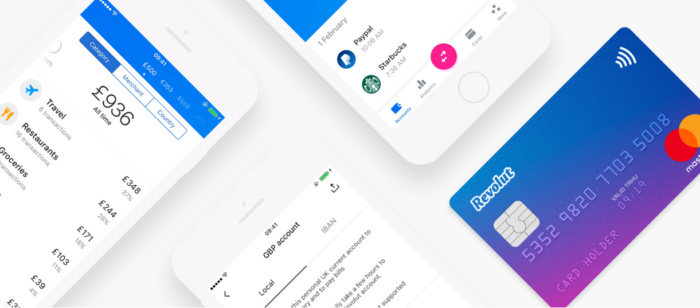
Fintech start-up and digital bank, Revolut, is planning to roll out a commission-free trading platform to let users invest in London-listed companies and, further down the line, exchange-traded funds. Nikolay Storonsky, Revolut’s co-founder and chief executive, told CNBC: “For many years, people have felt frozen out of trading by high fees and clunky interfaces, so Revolut are aiming to make investments cheap, simple and completely mobile.” The platform will compete with the likes of Trading212, another 0% commission service for trading stocks, equities, gold and oil. CNBC reported Revolut had doubled its user count just months after it said it had passed the one million user mark in November 2017.
Non-compliant
The European Consumer Organisation (BEUC) has accused Amazon, Facebook and Google of being non-compliant with GDPR. The organisation’s tool Claudette tool uses AI to scan documents and carry out an automated analysis of each company’s privacy policy, Computing reports. The BEUC said: “In total, all the policies amounted to 3,659 sentences (80,398 words). Of these, 401 sentences (11%) were marked as containing unclear language, and 1,240 (33.9%) contained ‘potentially problematic’ clauses or clauses providing ‘insufficient’ information. Our study suggests that the current privacy policies of online platforms and services still have a significant margin for improvement.”