
CEO interview: Martin Higginson, NetPlay TV
NetPlay chief executive Martin Higginson has built big brands from scratch in the past. Can he manage this with NetPlay's TV-led properties and edge egaming into the mainstream?
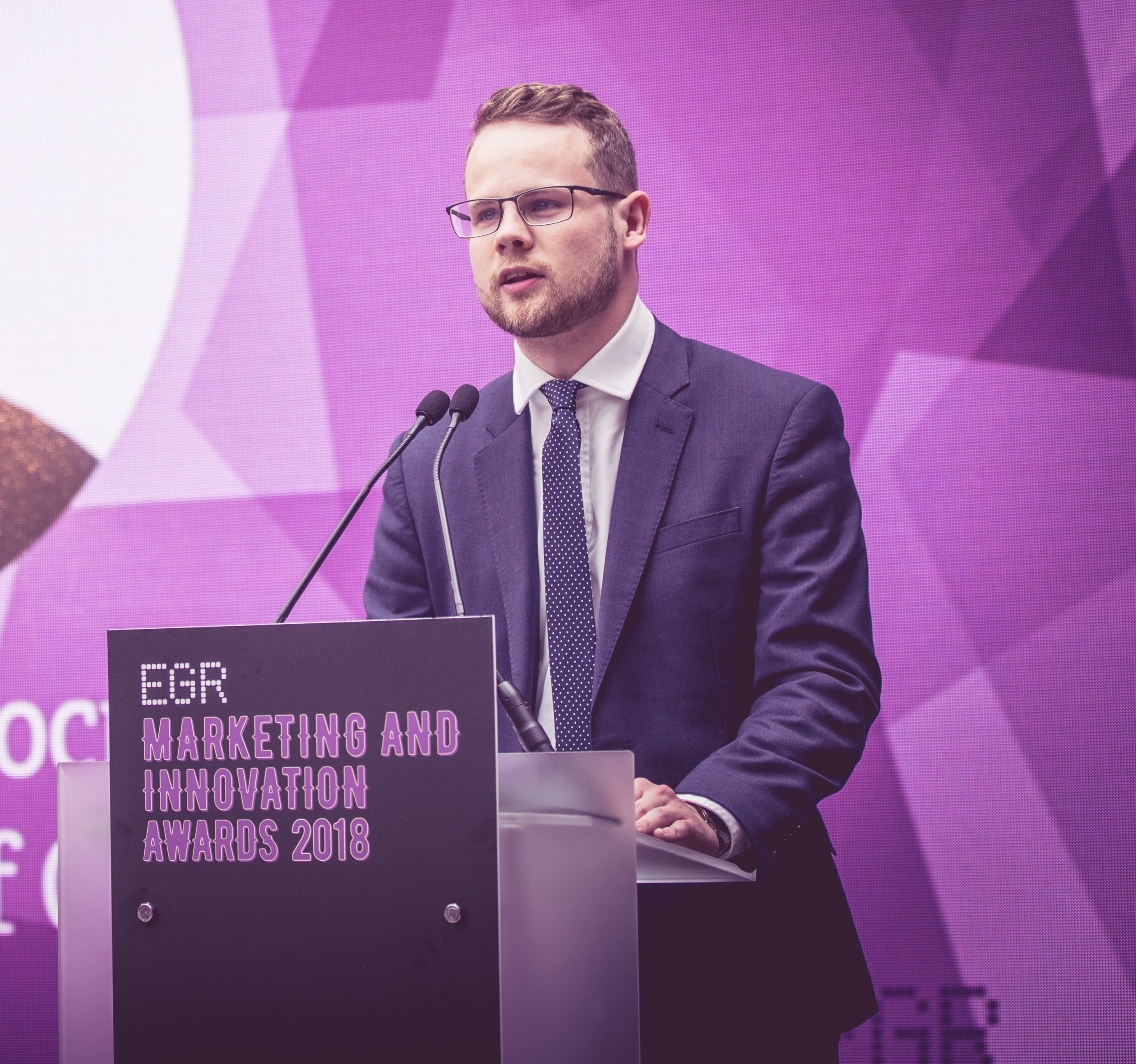
DESPITE the promise of partnerships with TV networks and media brands, egamÂing operators’ aspirations to go mass market remain at this stage just that, aspirations.
However, NetPlay TV is attacking the secÂtor’s long-standing conundrum of how to go mainstream from the opposite side. Its stratÂegy being to get its brands and products in front of as wide an audience as possible via transactional gaming-based entertainment shows on the UK’s biggest commercial TV channels.
Chief executive Martin Higginson has masterminded NetPlay’s domination over the TV gaming space in the UK since coming on board in 2006.
Two critical developments last year saw NetPlay achieve its stranglehold. First, it acquired the Challenge Jackpot brand from Virgin Media Television, adding this to its own SuperCasino brand. The operator then seized upon the window of opportunity creÂated last June by telecoms watchdog Ofcom reclassifying gambling programming as teleshopping, clinching airtime deals with STV, Five and now, arguably the jewel in the NetPlay crown, ITV.
The latest strand of NetPlay’s strategy to “own and control where we have no compeÂtition” across the UK’s terrestrial, satellite and freeview commercial channels is transÂactional bingo show BingoStars, now airing up to six nights a week within ITV1’s new teleshopping slot, The Zone.
As Higginson’s opening mission statement makes clear: “When you turn ITV on, there will only be Challenge Jackpot and BingoSÂtars, when you turn on Virgin 1, there will only be Challenge Jackpot, the same with STV, Five and Bravo.”
Unchartered territory
NetPlay’s gameshow formats clearly draw upon the premium-rate phone-in quiz shows with which ITV used to bolster night-time revenues, but how the operator is monetisÂing these across major terrestrial channels via the newer technologies of mobile, online and the interactive red button is far from tried and tested.
With NetPlay entering largely uncharted waters, Higginson is probably a good skipÂper to have. Selling his first business to IPC magazines aged just 20, Higginson had acÂcrued a personal fortune estimated at around £70m by the time he joined NetPlay, most recently from turning mobile content busiÂness Monstermob into a listed business with a market cap of £290m before his (eventful) exit in 2006.
“What is interesting to me is to carve out a new type of business, to turn things on their head. Part of the reason for getting involved in TV was that nobody was doing TV three years ago, and still in the UK, nobody really does TV,” says Higginson, when asked what drew him to the NetPlay opportunity.
Ofcom’s landmark reclassification could not have come soon enough for commerÂcial broadcasters that, he argues, are facing “some of the toughest times they have ever faced”.
A dramatic fall-off in premium rate reveÂnues from 2007 due to consumer confidence being undermined by a succession of scanÂdals has been compounded by a recession-driven plummet in advertising income. “ITV used to make more than £25m a year from its premium-rate, late-night gaming slot. That is the slot we are filling,” Higginson says.
But as the AIM-listed group’s £3.2m loss during the first half of 2009 demonstrated, partnering with tier 1 broadcasters and deÂveloping new formats is expensive. As is airÂtime on terrestrial channels, amounting to £1.2m in the fourth quarter of 2009.
Although it edged back into positive earnÂings territory in the first quarter of 2010, no doubt aided by the cash injection of £12.8m it received last July from Playtech major inÂvestor Directforce Trading for a 29.6% share in the company, Higginson is aware of the mounting pressure on him to deliver.
“There is this incredible impatience beÂcause what everybody thinks at the moment is that online gaming is a fad, ultimately. That is what they are all worried about. Nobody is worried about brands, just bottom-line profits.I’m bothered about how we’re going to build a brand that has sustainability.”
Higginson does admit NetPlay has “taken a big gamble” investing heavily in a model yet to prove its viability. “But the alternative is to sit in the purely online business and try and battle it out with everyone else”, he says. “Unless you have got something that differentiates you, then you are going to have consolidation by default.”
And Higginson’s belief in the power of TV to build brands, despite its increasing audience fragmentation across satellite and freeview, remains total. “TV is a very powerful medium. When we are on Five, we are tuned in to a million viewers. There is BARB data to support that. When we are on ITV, it will be 1.5 million. Used in the right way, that can develop what we call ‘love mark’, in other words, loyalty beyond reason, with far better lifetime values [than conventional egaming offerings].”
Convergence for all
NetPlay’s new ITV 1 format BingoStars is “the first game of bingo which plays mobile, internet, and TV in a transactional way ona terrestrial TV channel”, according to Higginson. PartyGaming has of course been here before, its Bingo Night Live airing for justone series on ITV1 in 2008, famously generating the biggest ever game of bingo, 62,500 playing simultaneously.
“Bingo Night Live was a success, as it proved people are interested in playing bingo on TV. But it wasn’t properly transactional. They only had the internet, whichmeant you either had to print your ticket off or play online, which is counter-intuitive as most people have their PC in a differentroom,” says Higginson.
So BingoStars will play via mobile using the simplest form of SMS text messaging.”You should not develop convergence for technologists. The customer is the one that will drive convergence. We’re not relying oniPhones. This is something where you have 100% penetration,” Higginson explains. Group mobile bets topped £1.1m last month, he reveals, representing 100% month-on-month growth.
But why is NetPlay creating a whole new brand instead of using its existing Bingos online brand and using the TV to drive newplayers to this? Higginson explains: “As we don’t own Bingo.com, I’m not prepared to advertise something in the UK where we could have huge amounts of leakage via misspellings, as with TV, you do rely on people searching using Google. But we do own bingo.it, bingo.de, bingo.fr, so as we expand the BingoStars format into territories such as Italy, we would launch with bingo.it.”
The new deal
Playtech, whose major investor Directforce Trading became a 29.6% shareholder in NetPlay last July, helped develop the backend technology for BingoStars.
Under the terms announced at the time, NetPlay was to migrate its online brandsincluding Bingos.com, Eurotelemillions.com and Supercasino.com to the Playtech platform in return for £12.8m cash to fund further growth and providing live gaming content to Playtech licensees.
So how much progress has been made with this? “We will probably not license our products to Playtech licensees,” Higginson tells eGR. “We have the option, but I’m not sure it’s the right thing to be doing. Transferring brands on to their network is a hard thing to do. They have their own brands, and we’re an operator, but we are not an operator, so where do we sit?”
Higginson adds that “the whole [relationship] has evolved” in a different direction to that agreed last July, with Playtech now eff ectively acting as a technology partner to NetPlay’s business-to-broadcaster-to-consumer roll out. “It makes more sense for Playtech to work in partnership with us and roll out to new licensees. Five is effectively now a sub-licensee of Playtech, the same with ITV. Playtech now has these broadcasters as clients, which it would never have got in its own right. It has opened up a new marketplace, as it has every egaming company it could probably get.”
The two companies could even collaborate to produce TV lottery shows for Playtech clients obtained via its SciPlay JV targeting state lotteries, says Higginson. “The deal with Scientific Games makes a lot of sense if you bolt on a TV component. What lotteries need globally are TV shows with so. gaming around the edges.”
TV potential also exists for other product verticals, according to Higginson. “Live poker is interesting. We have a team looking at new innovations, and think there is a big opportunity for a poker-type show.”
But above all, Higginson’s focus is on building NetPlay’s brands into fi xtures in the entertainment mainstream. “We turned Monstermob from nothing into a several-hundred- million-pound business. I believe we have the talent here to create this into a similar size. People are expecting fantastic things, but this is going to be a fi ve-year journey. Only fads and crazes are built overnight,” he says, harking back to his earlier comments about how many still perceive egaming.
Indeed, if anyone has the track record and tenacity to prove the naysayers wrong about TV gaming, it’s Martin Higginson.
Name: Martin Higginson
Company: NetPlay TV.
Brands: ChallengeJackpot (includes Roulette Nation), SuperCasino, BingoStars, Bingos, EuroTelemillions, Bingofriends, Casinojoker, ElBingos, EuroTeleLotto.
Founded: Established in 2000 to develop and market a range of mass-market entertainment and information products. Listed on the AIM market of the London Stock Exchange in 2001. In 2006, the fixed line telephony business was sold and the TV gaming business acquired.
Career: Megafone, founder, 1987-1998
Thus plc, business development director, 1997-2000
Monstermob plc, founder and CEO, 2000-2006
NetPlay TV, CEO, 2006-present