
CEO Interview: Gigi Levy, 888
Gigi Levy loves a verbal joust. eGaming Review took him on over possible Dragonfish spin-offs, big exits, and what he really thinks of the egaming sector.
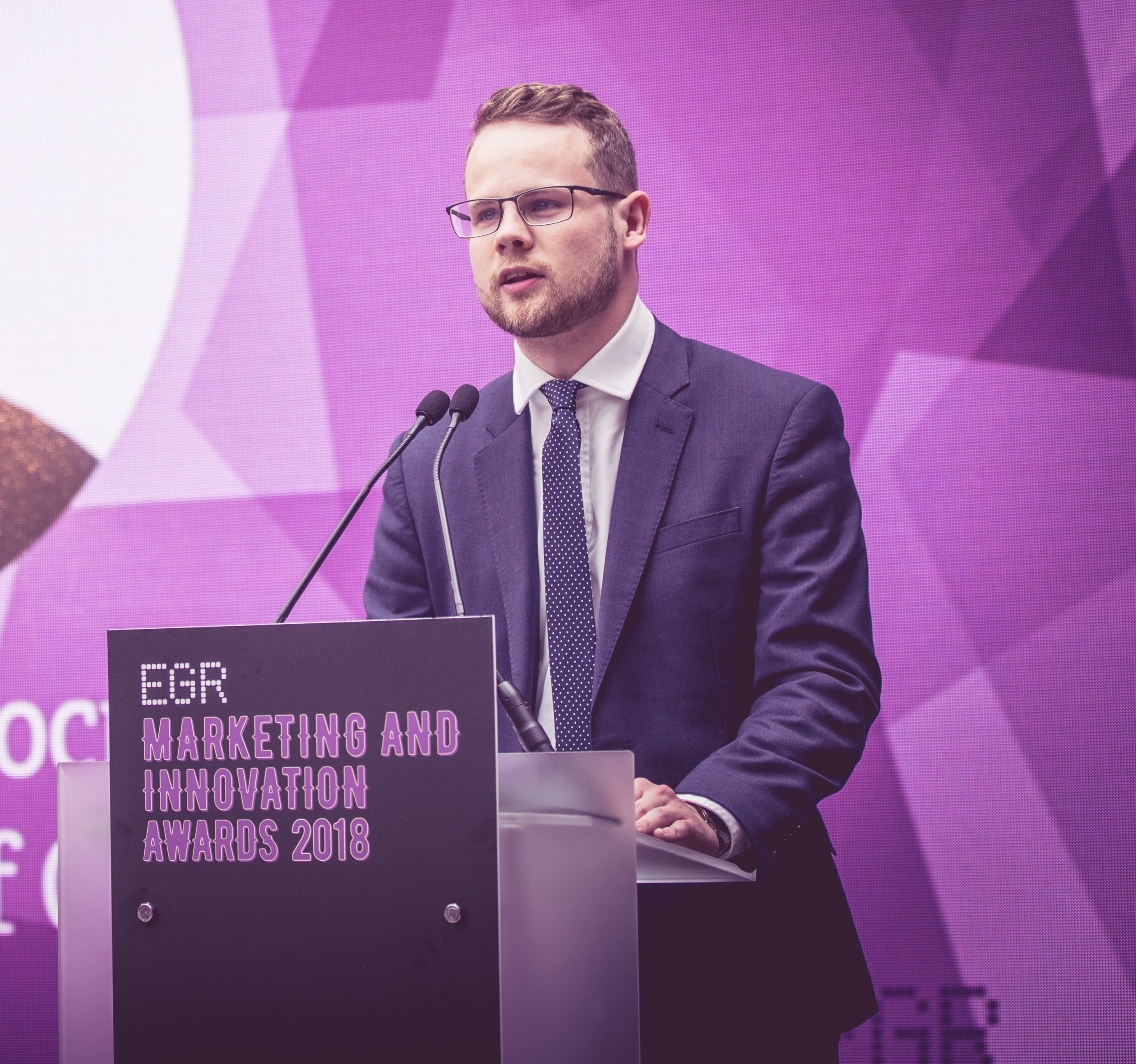
GIGI Levy is a journalist’s challenge “ a very smooth operator, well-drilled in the art of answering questions with an engaging, easy manner, while giving little away.
He also has a disarming habit of diffusÂing direct questions with a quip, while circumventing the nub of the issue. So, ‘how would you respond to suggestions you were brought in to fatten the busiÂness up for sale?’. Answer: “If that was the case I’m probably doing a bad job, beÂcause I’ve been around for four years.” Or, ‘have you had conversations with people about buying you?’. Answer: “Me personÂally, yes, they would love to buy me.”
More on that line of questioning and his more detailed responses a little later “ and you’ll have to trust that he was a little more revealing than his ripostes suggest.
The emergence of B2B
Levy was promoted from chief operating officer a matter of months after joining 888 Holdings from telecommunications-foÂcused customer relationship management specialists Amdocs, where he was presiÂdent of the New York Stock Exchange-listÂed organisation’s Western Europe, Central and Latin America region.
The timing of his appointment, some might reflect, could have been better for him. “I was hired two months before the US market closed. When I was hired the brief was ‘make sure everything continÂues growing; it’s very simple, thank you, bye bye’ and it’s ended up being a bit of a different story.”
Again, he says this partially in jest. 888 listed on the London Stock Exchange the year before his arrival. On taking on the role of leading the company, Levy was tasked with expanding its product offering from casino and a bit of poker.
“That was the brief “ to become a global, multi-product offering, and then to check whether there were additional strategic things we could do.”
One opportunity Levy pursued was the creation of a B2B arm, something the board needed some coaxing into. “There were no B2B plans at all when I joined the company, although there was an unÂderstanding that there was merit in going that way,” he says.
He adds he was pleasantly surprised by the scope of the company’s software strengths and had looked at how media players had established themselves as seÂrious players in the UK as a sign that 888 could service companies from outside the gambling industry in other markets too.
In 2007, having tested B2B waters with an under-the-radar casino and poker deal, the company purchased GlobalÂcom, which had a B2B bingo business. It wasn’t until the completion of the deal to provide Harrah’s online casino platform in September 2009 though that Levy felt his call was fully vindicated.
Future of Dragonfish
However, while Dragonfish accounted for $51.3m (£33.7m) of 888 Holdings’ total operating income of $246.7m “ and has already confirmed a casino deal with Bwin-Gioco Digitale in Italy, plus a reÂnewal with PartyGaming’s Cashcade this year “ the sense is Levy feels it hasn’t yet hit the heights he’d anticipated.
“To be very frank, the fact the regulatory marÂkets in Europe are developing slightly slower than we thought they would in some jurisdictions makes it tougher to win the type of customer we really want, which are big companies from outside the gaming industry that are looking for the right partner to assist them in getting into online gaming.
“Having said that, it all seems to be going in the right direction, and we’re having the right discussions. So it’s not that we’re disappointed with our share of the pie, but that we would have loved for the pie at this point to be bigger.”
By the time this issue hits desks it’s highly likely another significant B2B deal will have been announced, reveals Levy, adding that it’s “quite unique and quite strong and for that we’re willing to pay a higher multiple than the x6 we paid for Wink”.
Watch this space. Such frenzied activity and a more distinct identity has inevitably led to suggestions that Dragonfish will be separated from its parent, not least to avert any sus- picion that the B2C and B2B businesses are closer entwined than 888 would have you believe.
While PartyGaming has kept its divisions under the same brand, Levy feels the 2009 rebranding was important in sending a message. Levy himself says he spends more of his time dealing with Dragonfish issues, particularly when it comes to him look- ing prospective clients in the eye to tell them B2B is an integral part of the parent company’s strategy.
However, he avoids getting too involved in detail for both Dragonfish, led by Gabi Campos, and the B2C opera-tion run by Adi Soffer-Teeni. All of this should eventually make a spin-off more lucrative, as Levy confirms. “I personally think that consolidation should happen on the B2B side, not just the B2C side. This means that because there’s a gate separating it, we will one day be able to consolidate separately.” So this means we are looking at a future of Dragonfish as a separate company?
“Potentially, yes.”
Once again, Levy slips effortlessly out of a definitive answer.
The flaws in egaming
No doubt Levy refined such skills while taking his MBA at Kellogg School of Management, coincidentally (or not) the alma mater of Campos and Soffer-Teeni. He talks of having acquired a toolkit there, but perhaps more interesting is the thinking he brought with him from the telecommunications industry. The parallels between mobile operators and their egaming peers are clear, he says.
“The main thing in online gaming is that vicious equation of CPA versus lifetime value. How much money does it cost you to recruit a customer, how much money will you get from the customer and how can you constantly lower the former and increase the latter?”
The phenomenal speed with which the market has grown has created fissures, says Levy. “They built all their best practice themselves,” he says, “but they’ve gotten now to the point “ and that was a few years ago “ where in some areas their ongoing attempts to build best practice rather than go for the knowledge that has been acquired in other industries is becomÂing a slowing factor.”
Levy cites the failure to utilise off-the-shelf campaign manageÂment technology successfully deployed in the telecommunications industry as an example, claiming that looking elsewhere saved a year of development for 888.
Levy’s second insight from telecomÂmunications is around customer segÂmentation. “There is this inherent belief that there’s only one type of customer that plays online gaming and that type is predominantly 35-year-old men, who are Bs and Cs in terms of income etc; so there’s very little effort made on segÂmentation. What I knew from the telÂecommunications industry is there’s no such thing “ when you start breakÂing it down there’s a huge difference in customer types.”
Finally, Levy says egaming companies, including 888, were not being “properly run, process-wise as big companies” due to the speed of sector growth. ConsolidaÂtion, he says, would most likely have hapÂpened sooner, had this not been the case.
“These are young companies “ the oldest in the sector is about 12 or 13-years-old, which is not very old. In most of these companies the foudners are still significant shareholders. Most of these people are people who have never worked in a big organisation before, so they don’t understand the eco-system of M&A – that’s one of the examples of how the youth of the industry is slowing it down.”
 Ladbrokes: Will they, won’t they?
One deal that could spark real exciteÂment would be one that’s been figure figurÂing heavily in the industry rumour mill “ Ladbrokes. So is there any truth in recent speculation?
“Not at this point, but there’s a new chief executive and I’ve not spoken to him yet. I know him well and who knows, maybe the first thing he tells me when we speak is that they’re willing to pay 200p a share, but maybe not.
“I can tell you that of the last round of relationships, we remained at all levels good friends and a have a lot of appreciÂation of one another. The deal ended up not happening at that time, but I think the logic behind such a deal remains “ just as the logic behind us consolidating with almost any of the other great comÂpanies in the industry.”
What you choose to read into that is your call, but who wouldn’t accept a double-share price offer, so really Levy’s merely whetting the appetite for the story, isn’t he?
He continues though: “With Ladbrokes looking at “ and I think Richard Glynn being quoted as saying “ online as a growth engine, I think there’s not that many assets out there that can give this to Ladbrokes. With the huge synergy we saw with us owning the technology that they don’t have also makes it a relatively cheap deal, almost at any price.
“Can they pay it? Do they want to pay it? Will Richard deal with consolidation when he needs, as every chief executive does, to clean everything out in the company according to his view of life? Is there anything imminent? Not that I can see and not that I know.”
We’ll keep an open mind and Levy points out the next two years could equally feature 888 acquisitions of other hot properties as “no company today is big enough” to cope with the demands of regulaÂtion. One thing that could stand in the way of any future deal with the likes of Ladbrokes, some suggest, is the lack of a Department of Justice (DoJ) settlement. Levy has “not yet seen any indication that this is the case” but is “carefully reviewing the situation in the US, every day”.
Looking to the future
The US is clearly still pretty foggy and Dragonfish’s deal with Harrah’s, which incidentally led to the US casino giant seeking official approval for it last month, has helped inform Levy, to an extent. “In general I learnt a lot more about the US regulatory system than I ever thought I’d want to, which is quite a good thing. But I think that on the poker side there is a realiÂsation that it is sooner rather than later and almost inevitable that a bill will pass for online poker. Time, scope, state-by-state, opt-out? Who knows.”
Like the rest of the industry, he feels and fears US politicians will be wary of being seen to vote in favour of gamÂbling. Either way, B2C in the US is not likely to be on the agenda for 888 iniÂtially, although there “might be a B2C deal where we license our brand and get the majority of the revenue”.
France too will be something of a waiting game. “We’re looking into the final decree in France and will decide whether to take [a licence] or not. We’re very positive on this. We’re very likely to, but need to see final requirements. Others are slightly worÂried about the limitations.”
While the Bwin-Gioco deal has helped inform dealing with regulation and reguÂlators, it remains an involved process. In two years’ time, says Levy, 888 will be a lot more focused on regulated markets, B2B will remain a standalone operaÂtion, and the company will be doing more with social networks, mobile, and customer touch points (more on this in our online excluÂsive). Plus, “there’s the likelihood that we’ll be a bigger company by merging. I think in two years’ time we will be acquiring or we might be acquired”, although selling today would be “counterintuitive because that means we are not taking advantage of everything that we have done”.
In two years, he says, the benefits of where 888 has invested will be a lot more visible and a better valuation will be possible to achieve. “That’s the theory. The reality is we know that could be very different. We could get a proposal tomorrow, which is so great that the board and shareholders decide that it’s better than waiting. You asked for my bet “ that’s my bet.”
Finally, there’s time to ask what caused the man of mystery to ask eGaming Review to leave the cab we were sharing as he approached Knightsbridge back in early March. UnfortuÂnately, Levy’s still not able to divulge more, as to do so would have others “running and trying to steal” the deal. Whatever it is, Levy’s keeping his cards very close to his chest.