Trade war: how Swedish trade association BOS is lobbying for changes to the Swedish market
BOS CEO Gustaf Hoffstedt chats to EGR Compliance on the turbulent twists and turns of recent Swedish regulatory changes and how banding together is changing the market


Businesses working together for mutual benefit is not a new phenomenon; it has a history going back to the industrial revolution when cotton mill owners would form the first trade unions, which was the genesis of the modern day Labour party. Lobbying for the interests of all by replacing the multitude of voices with one voice is a simple ideal that permeates all types of unions, including those currently made up of gambling operators.
Historically, gambling operators have chosen to speak with their own voices, because they are business enterprises and are essentially in competition with each other. One operator speaking on their own can be ignored or dismissed for acting in their own interests, but a multitude of operators lending their weight to a single cause can change the course of their native industry. This has been shown in recent years by the steady regulation and licensing of online gambling across Europe. Yes, there is a strong element of political will and financial support, but operator lobbying has played its part.
Sweden is perhaps the most recent example of how operator lobbying can change the colour of a gambling market from black to grey and then to white. For the last two decades, the market had been a monopolistic one, dominated by Svenska Spel and ATG, the state’s chosen incumbents, but in this environment, black market operations created what many referred to as a ‘Wild West’ where international operators competed for customer market share in what was a lawless environment. Something had to give, and that something was the Swedish government which, thanks in no small part to operator lobbying, implemented a regulatory and licensing structure, designed to bring black market revenue into the regulated, taxable environment where consumers would be protected.
However, replacing one market with a totally new one has not been without its problems, with the Swedish Gambling Authority (SGA) butting heads with newly licensed operators almost on a weekly basis. Accusations of a lack of clarity in these newly formed regulations are commonplace, with operators including Betsson Group, Global Gaming and others questioning decisions made.
Amid this war of words, the role of the trade association has never been more important and one of Sweden’s biggest is BOS. Reflecting on how the association has approached the lack of alignment between regulations and interpretation, BOS CEO Gustaf Hoffstedt explains: “ In the past we’ve applied for clarity on several initiatives including marketing and bonusing and the normal response is, ‘the SGA does not give advice to operators on how to interpret rules’.
“The result of this is that the industry receives clarity after some time on the rules, but usually accompanied by a regulatory fine, which is an extremely expensive way of the industry understanding what the regulator is trying to achieve.
He continues: “We will never give up advocating to the SGA and the Swedish Consumer Authority (KO) that prior guidance is much better than issuing fines for all parties concerned,” For Hoffstedt, advocacy as a gambling industry trade body is about one thing and one thing only: creating a market which is friendly to operators, protects consumers and has strong safer gambling regulation. It hasn’t changed since the founding of BOS in 2012, before the Swedish market regulated. As Hoffstedt explains: “Back then it was important to us to convince political stakeholders about the importance of abandoning the monopoly system in favour of a licensing system.
“Now, since we have a licensing system, we are of course interested in having an impact on the interpretation of that licensing system.”
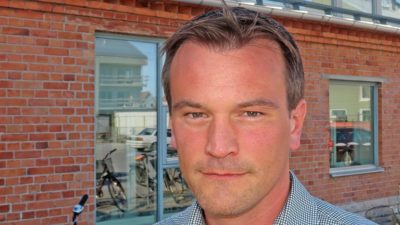
BOS CEO Gustaf Hoffstedt
Building bridges
Discussing the make-up of BOS, Hoffstedt reveals it operates with an advisory board made up of representatives from the group’s membership which issue directives on specific industry issues. But at a wider level, the group’s core objective is to impact the Swedish market through lobbying and advocacy.
“I am the only individual employed by the association, and I receive my instructions from a board of directors made up of member firms. Board members include bet365, LeoVegas, Betsson, Kindred, NetEnt and William Hill. All in all, we have just over 20 member firms.
“We usually meet with the board three or four times every six months, but that has obviously intensified with the coronavirus to monthly board meetings. As a whole organisation we don’t meet in person that often, merely because our members are stretched out between Sweden, Malta and the UK but I try to connect with our members every day,” Hoffstedt explains.
Bad vibrations?
The coronavirus pandemic is perhaps unique in that it has hit all sectors of life, including the gambling sector, where operators have had to face up to the loss of revenue for long periods. However, operators have had to deal with another big issue: usage of the pandemic to enforce tighter controls on the industry. Coronavirus has seemingly given gambling industry detractors the fuel they need to push back on an industry already suffering from its own financial pandemic.
As Hoffstedt explains, the coronavirus pandemic has created the “most intense working period” he has ever seen in the life of BOS and, indeed, his prior career as a Swedish politician.
“This experience exceeds even that, and the reason for that is this crisis has created possibilities for political stakeholders to suggest new measures on the gambling market. Some of the measures may well be connected to reality, but the sad fact is that some of them have no connection to reality at all.
“I have to say that I’m unsurprised by this. Given my political background, I can understand that politicians may have different incentives for calling for changes than those people working in the industry, but this goes beyond anything I’ve ever seen in my life,” the BOS chief explains, making reference to perhaps the biggest issue to hit the Swedish market since re-regulation began.
On 23 April, long-time industry detractor and Sweden’s Minister for Social Affairs, Ardalan Shekarabi, lit the blue touch paper on a new war with long-lasting consequences for the industry. In a press conference, Shekarabi proposed the implementation of an SEK5,000 (£432) a week deposit limit on all Swedish gamblers, as well as wide-ranging restrictions on bonusing by operators until the end of 2020, measures he claimed were to stop a rise in harm among gamblers affected by Covid-19.
Reflecting on his own thoughts after the press conference, Hoffstedt explains: “I thought he [Shekarabi] must have had sound data on increased gambling during Covid-19 that the rest of us hadn’t been able to find yet. To my surprise, it turned out that there was no such data, which gave support to the idea that this was a political decision rather than one based on facts.
“To be frank, I didn’t expect that level of cynicism from the government, and that it would be the base on which the whole package of measures rested on false information and suppositions.”
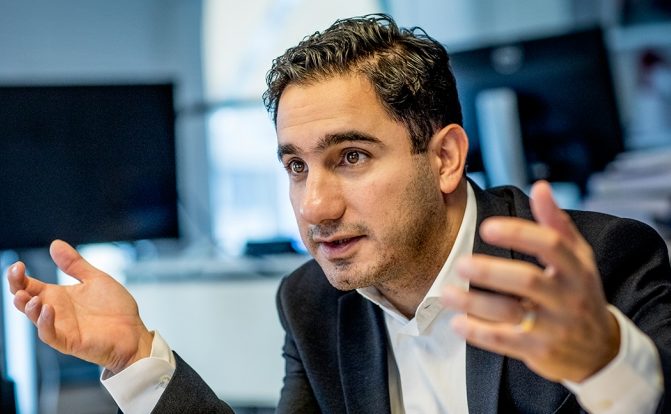
Sweden’s Minister for Social Affairs Ardalan Shekarabi has been perhaps the biggest thorn in Swedish operators’ side since the period before regulation began
Qualifying his conclusions on the nature of the restrictions, Hoffstedt questions whether Shekarabi might be using further restrictions on gambling as a vehicle to enhance his own political agenda. As Hoffstedt explains, citing an awareness of Shekarabi in Swedish political circles going back a quarter century: “I think he’s concluded that any kind of measures directed against the gambling industry can win him political support especially from people with little or no knowledge about gambling, because gambling has a reputation in Sweden.”
The BOS chief also cites Shekarabi’s own party, the social democrats, as having questions to answer, claiming it has been using its political power to favour Sweden’s former monopoly operators, Svenska Spel and ATG. Qualifying this, Hoffstedt highlights the fact that Sweden’s social democrat party has representatives on the board of ATG, while the Swedish government owns a majority stake in Svenska Spel, asserting that these interests would be enhanced if more punitive measures were imposed on the rest of the Swedish market.
“To impose harsh restrictions on online casino (usually operated by private international operators) and in the latest hour liberate ATG from such restrictions regarding its horse betting is an unashamed example of that,” Hoffstedt adds.
Action stations
The proposals made by Shekarabi during the press conference were startling, but what was more startling was the timetable for implementation so soon after and with little time for operators to react. However, as Hoffstedt explains, BOS’ modus operandi didn’t change very much, in that the core credo of fact-based advocacy would continue.
“The directive was to investigate the figures and that we should of course communicate whatever we find, regardless of whether that may be in our interests or not. When we investigated the numbers, we also found communications between the ministry and the SGA, who noticed the very same thing that we did, namely that there was no such increase.”
Given the high stakes for Swedish-licensed operators already hurting from Covid-19, the other side of BOS’ purview – advocacy – also went up a notch, beginning with a scathing commentary on the Swedish market by the CEOs of five of BOS’ most significant members. In a letter authored alongside BOS, the bosses of Betsson, Kindred, LeoVegas, William Hill and NetEnt claimed the new regulations are out of step with the initial aims of creating a safer gambling environment through regulation and instead would fuel the black market.
These were later joined by several other operators, not all of whom were members of BOS. To support its fact-based advocacy, BOS published a damning report into the effects of the proposed changes, with analysis firm Copenhagen Economics confirming a drop in channelisation to 72% in online casino and 80% in sports betting. During the consultation process, they were joined by perhaps the unlikeliest of allies: the SGA, which threw its own support behind the drop in channelisation bandwagon.
The SGA questioned whether the new measures would help the group targeted, stating that between 5-25% of all Swedish players accounted for between 80-90% of total sales, meaning the larger proportion of players would be unaffected by the proposed changes.
Discussing BOS’ interactions with the SGA, Hoffstedt explains: “I meet with representatives of the SGA quite often. They are not particularly outspoken, but I fully respect that because they are not a lobbying body but a state authority. They have come to the same conclusions as we have and are justifiably concerned about developments in channelisation after these measures are implemented.
“After all, how will they be able to repair a market where 50% of the online casino market is not channelling to licensed operators? They will only be able to implement measures which have a marginal effect on channelisation,” Hoffstedt adds.
The problem, he contends, is not with the SGA, which is broadly supportive of the trade body’s stance, but with the Swedish government, which he claims is only paying lip service to BOS’ views. “I’ve had two or three meetings, one with the minister himself and two or three meetings with his state secretary Alejandro Firpo. We had one meeting, maybe one or two days prior to the proposal of these measures, which went well,” Hoffstedt explains.
“I’ve had several good meetings where I’ve been joined by some prominent representatives from our members, but the problem is that the impact of those meetings is zero.”
Zero-sum game?
The re-regulation of the market was a milestone for the country’s politicians, regulators and for BOS which had lobbied extensively for this to occur and to the considered observer, the sudden shift seems completely contrary to that spirit of goodwill.
The process itself was cemented by a compromise agreement between seven out of Sweden’s eight main political parties, something which in itself took over a decade to produce. Regardless of the consequences for operators, the shockwaves of this sudden seismic shift in Swedish gambling law are already reverberating, as Hoffstedt explains: “The truly sad thing about the initiatives is that while they are not only abandoning fact-based advocacy, they are also abandoning the political compromises that gave this regulation political stability.
“In fact, it’s already begun to destabilise with the Swedish moderate parties’ complaint about the minister, concerning his claims made on the online gambling increase. Government is paying a high price when it abandons the good cooperation between political parties that has given this regulation sustainability,” Hoffstedt adds.
While the new initiatives have reopened political divisions in Sweden that have not been open since the pre-regulation days, the initiatives have in fact unified all of Sweden’s other gambling industry stakeholders for the first time in their condemnation.
However, opposition alone will not change the Swedish government’s course towards a stricter gambling regulatory regime, and in the spirit of building bridges, BOS, with the support of its members, issued its own seven-point plan of regulatory changes to protect players.
In addition to a B2B licence framework, BOS recommended the introduction of a system of player risk ratings, based on individual data gained by gambling operators on customers’ gambling habits. The group also requested the Swedish government clearly defines the SGA’s mandate, and for the expansion of the Spelpaus.se national self-exclusion database to include payday loans.
BOS’s alternative proposals were the result of careful planning, involving representatives from William Hill, Betsson, Kindred, LeoVegas, Videoslots, NetEnt, ComeOn, Hero Gaming and SuprNation. “We received support from an expert group made up of individuals within our member companies which work extensively in these areas.
“Some of the measures weren’t new, for example, we’ve been advocating for B2B licences for quite some time, but what was really new with those suggestions was that it was the first time so many CEOs signed on and the first time we collected them in a single document.
“A truly positive thing with these measures is none of them will hurt either channelisation or the Swedish regulation themselves. They are for me a beautiful example of how to impose RG measures without jeopardising channelisation,” Hoffstedt adds.
United we stand?
Sweden’s other main trade association, SPER, has also lobbied actively for the reversal of the measures, something which Hoffstedt highlights as a “very impressive and brilliant” reply to the Swedish government. However, discussing the similarities between BOS and SPER, Hoffstedt questions the lack of consistency between lobbying activities being undertaken by SPER and two of its biggest members, Svenska Spel and ATG.
“It seems like Sper is usually quite decent when it comes to their advocacy whereas Svenska Spel and ATG are strong advocators individually here in Sweden and quite often call for things which are different to Sper’s line,” Hoffstedt explains.
“For example, both operators have called for a marketing ban on online casino, something which Sper and its other members have not done.
“To be honest, I’m not surprised as online casino is a super small product for them whereas lottery and horseracing betting is super important gambling verticals for them, and it would be a significant benefit to them that their competitor’s main product be prohibited from any kind of marketing,” Hoffstedt adds.
Indeed, BOS has had its fair share of run-ins with Sweden’s former monopoly men since the commencement of the regulated market, most notably in April 2019 when BOS reported Svenska Spel and ATG to Swedish competition authorities for abuse of market position.
For Hoffstedt, the problem is not with Svenska Spel and ATG themselves, but with the Swedish government’s involvement in their business, which has deep roots stretching back to pre-regulation days. “We have more or less 100 licence holders in Sweden and I certainly hope one day the Swedish government will decide to end its representation on the boards of both firms. For me, I can see no reason why the state should be one of those 100 operators operating in a competitive market,” Hoffstedt adds.
Striking a note of compromise, Hoffstedt claims the door is open to Svenska Spel and ATG joining BOS once the spectre of government involvement passes on, but only on the condition that they work with the trade body rather than working separately.
“At the moment, the problem is that they are not ready for any kind of membership because, as I’ve explained previously, they have commented in a way that contravenes their own trade body’s thoughts on pressing Swedish gambling regulatory issues,” Hoffstedt explains.
“We are a policy-driven organisation and it would be extremely difficult for us to operate any policy-related issues if we have a member who always comes to the opposite conclusion.”
Divided we fall
In the period leading up to the institution of the new measures, BOS and several other industry stakeholders warned of a potential exodus of operators from the Swedish market, something which now may happen. Regardless of any potential climb down from the government, the damage from temporary measures may have permanent side effects for the sector.
Discussing the post limit future, Hoffstedt explains: “The important thing for any successful licensing system is of course to attract the punters voluntarily to the local licensing operators. What’s even worse is that those measures that are supposed to be temporary, but the punters that leave the licensing market now, due to those extra measures, will never come back to the licensed market because what’s the incentive to come back?
“In the unlicensed market, you receive hefty bonuses, perhaps a higher RTP and no deposit limits whatsoever. What’s the incentive for the punter to get back to the licensed market? Those players will be lost forever,” Hoffstedt adds.
Indeed, the loss of channelisation to regulated market operators has the potential to significantly increase the unlicensed market, which is untaxed, unprotected and without the serious RG standards being used by regulated operators.
Even proscriptive legislatory changes might not be enough to save the Swedish market, as Hoffstedt explains: “Swedish legislation is like a Swiss cheese; you can accept Swedish customers if you do not use the Swedish language and the Swedish krona.
“However, Swedes are extremely used to the euro and to the English language, so that is not really a huge stumbling block for the customer – they will probably not even notice the difference.
“So, with this loophole it’s very easy to be an unlicensed operator marketing to Swedish players and it should come as no surprise that we are very much against this,” Hoffstedt adds.
Game over?
BOS’ efforts in pursuing a new compromise on regulation, while actively opposing the government’s proposals, have led to some success, namely the climb down to only applying these limits to online casino play rather than sports betting.
In the face of the opposition, the government has effectively dug its heels in, refusing to budge on further climb downs, and as the consultations have closed and proposals have effectively come into force, for all intents and purposes the fight is over.
However, for Hoffstedt and BOS, the fight is not over and shifts from a stance of trying to derail proposals to one of forcing their relaxation through other means. “To begin with, we believe that the legal basis for the government decisions may be somewhat unstable, and there are several reasons for that.
“One is that the Swedish government doesn’t respect the ordinary EU notification standstill process with these measures. It has no intention to respect a mandatory three-month standstill period required under EU law.”
The other main problem, Hoffstedt explains is the Swedish government turning so-called temporary restrictions into the new normal, something which he contends would be catastrophic for the market.
“There are also other legal aspects of these measures, and the question of where the facts come from. The government is abandoning the decade long cooperation with the opposition political parties and was it really worth it?
“There is also of course the possibility that the government would back down and abandon these harmful decisions they’ve taken, so it’s definitely not over for us,” Hoffstedt concludes.