The final countdown to Dutch regulation
As the long drive towards Dutch igaming and sports betting regulation enters its final months, EGR catches up with KSA chairman René Jansen for a progress report on preparations for launch

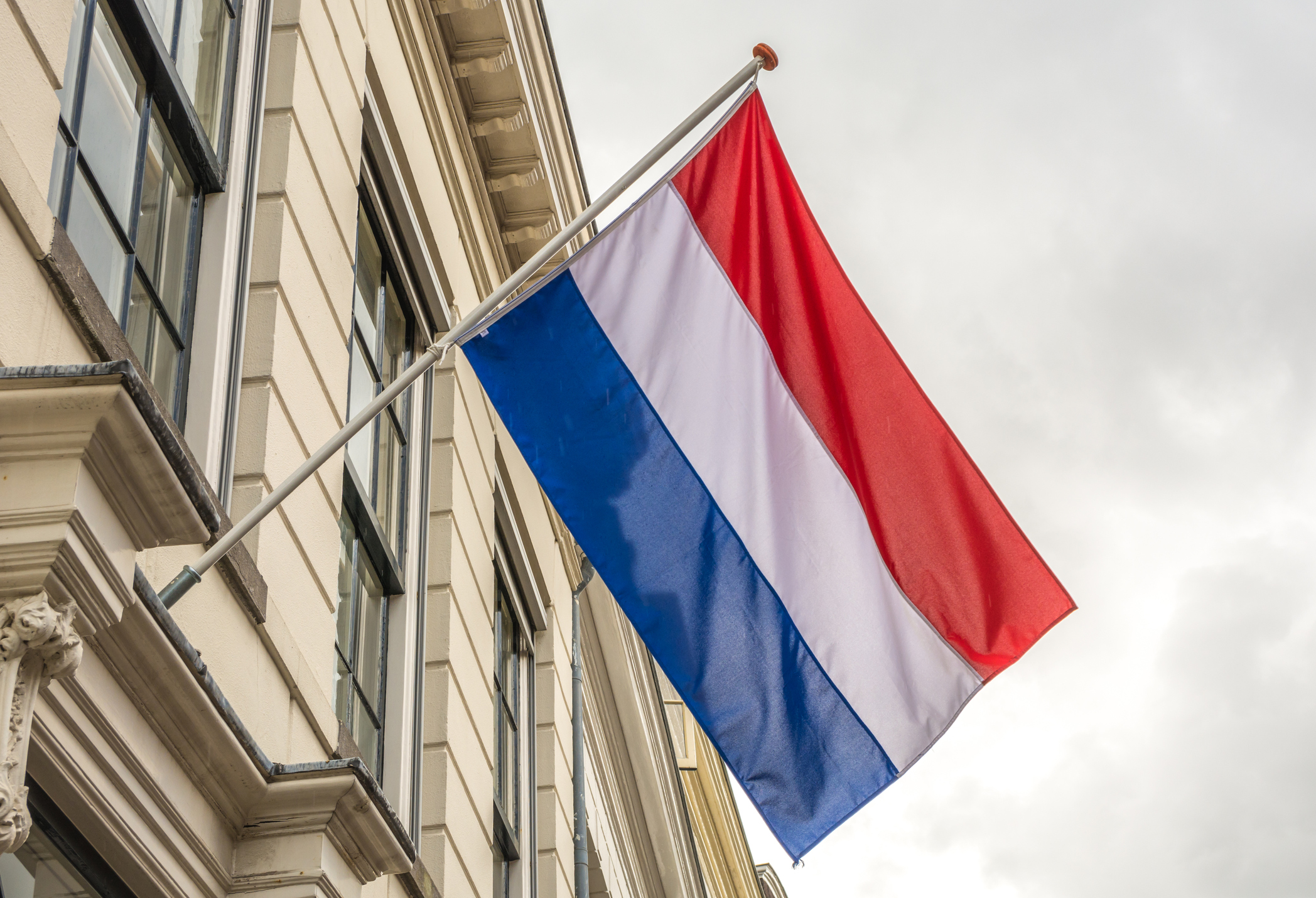
As the Netherlands prepares for its licensed market to go live in just four months’ time, EGR Compliance talks to chairman of the regulator, René Jansen, to find out how it is getting ready to welcome operators from 1 October and its plan of attack to crack down on illegal offerings.
EGR Intel: How is regulating progressing and how confident are you of hitting the launch date?
René Jansen (RJ): We are well on track. It has been possible to submit licence applications since 1 April. We are confident that we will manage to process the applications in time for the online gambling market to open up on 1 October 2021 as planned.
EGR Intel: Despite 125 operators showing interest in Dutch licences at the outset of regulation, you’ve only received 28 applications, why do you think this is?
RJ: These may have been potentially interested parties who did not know exactly what a licence actually involved. I think that many potential operators only started to become fully aware of what is involved in applying for a licence in the Netherlands and the associated costs during the course of 2020 and the first few months of 2021. An application costs €48,000. Twenty-eight applications have now been submitted, so these are companies that are genuinely interested. We consider it particularly important for there to be a sufficiently attractive and varied legal range. In other words, that there are sufficient legal operators with whom players can be assured of fair play and enjoy adequate protection from gambling addiction. That seems to be the case with this number of applications.
EGR Intel: Were you surprised at the lack of applications given the high appetite?
RJ: Based on the latest interest polls and estimates, we said that we were assuming to receive around 35 licence applications in early April. We currently have 28 applications, but more could still be on the way. Do not forget that the requisites are fairly demanding; it could well be that companies are still in the process of fulfilling the licence conditions and have therefore waited a while longer. In addition, we are expecting further applications in the second half of the year from operators who are subject to a mandatory cooling-off period. These are operators that have offered illegal services in the past; services that were aimed specifically at Dutch consumers.
EGR Intel: How would you describe your relationship with Minister of Justice and Security Sander Dekker? How do you collaborate on a day-to-day basis?
RJ: We have an excellent relationship. The Netherlands Gambling Authority (KSA) has always fully supported the Minister’s intention to legalise and regulate online gambling. We are pleased that Minister Dekker steered the Remote Gambling Act through Parliament in 2019. Now, you mention collaboration on a day-to-day basis, but that would be an exaggeration. The KSA is an independent regulatory authority that implements the gambling policy by order of the Minister. The Minister is responsible for the gambling policy and the KSA applies it. These are separate responsibilities.
EGR Intel: The KSA has been famously profuse with its fines against operators for offering unlicensed gambling in the Dutch market, but at the same time you have also previously said that fines were not proving effective in discouraging illegal operators. Now that the market is going to regulate, do you plan to change your stance towards the sanctioning of operators?
RJ: The core of the Dutch gambling policy is that parties are not permitted to offer gambling services without a licence. This is the case and will remain so. The purpose of the Remote Gambling Act is to enable Dutch players to gamble by means of legal operators. We usually call this ‘channelisation’. The KSA will also be given new powers to tackle illegal operators. We will continue to do so unabatedly. For example, we can force payment service providers to stop providing their services to gambling operators who are operating illegally.
EGR Intel: What do you say to those who have mocked the Netherlands for how long it has taken to get a licensed and regulated market up and running? Why has it taken all these years?
RJ: I am actually not the right person to answer this question as this is a more political issue. What I can say in general terms is that gambling is quite a controversial subject in the Netherlands. Political parties and social groups have very different opinions on this topic, and the differences of opinion do not only run along lines of religious conviction and social visions. However, the result of the many years of political discussion is that we now have a thorough and detailed law that leaves nothing to chance.
EGR Intel: In your opinion does the Remote Gambling Act go far enough in giving the KSA the tools it needs to keep illegal operators out of the Dutch market?
RJ: Yes, we think so. Among other things, it will give us the power to cut off payment traffic between players and illegal operators and illegal advertisers. Tackling residual illegality will therefore remain a key focus after 1 October. The operators who do manage to obtain a licence are entitled to this. Experience will show whether we still need additional instruments to minimise the illegal range.
EGR Intel: Are you confident you will achieve the Dutch government’s target of a 90% channelisation rate to the Dutch licensed market within the next three years?
RJ: Yes, we are positive about this. Recreational players in particular like to play with reliable and therefore legal operators. We published a report on this topic in February, in which we developed various forecasts for the online market. Among other things, we based our forecasts on what happened in Denmark and Sweden after the legalisation of the online gambling market. We expect to make a great deal of progress. Now, I would like to note that, while you state that the government’s target is 90% channelisation, to my knowledge, an 80% target was mentioned. Of course, a higher percentage is always better. But we will first aim for 80% of players and then raise our ambition.
EGR Intel: In what ways will the KSA’s mandate change after regulated operations launch in October?
RJ: It is true that a whole new market will be added to the KSA’s supervision tasks. Some operators will be internationally active, which will be a new area for us as well. We are already hard at work building a supervision structure for legal online gambling. This will be data-driven. It is the only way to assess accurately what the main risks are. Soon, every gambling operator will be required to register gaming system data in a data safe and supply the KSA with data that will allow it to carry out its remote supervision task. As you can see, data will play a key part.
EGR Intel: How has Covid-19 affected the KSA’s day-to-day operations?
RJ: Like all organisations, the KSA has also been affected as a result of Covid-19. Since March 2020, we have mostly been working from home. This was not ideal during the preparation for the Remote Gambling Act, but you get used to it to a certain extent. Things are naturally much worse for land-based operators, as they have been unable to operate for a significant part of the past year. We have also seen that many illegal poker meetings have been discovered and that some entrepreneurs have looked for ways to operate online, sometimes breaking the rules. As a result, there have been consequences in various areas. For everyone’s sake, we hope that the situation will soon return to normal; I mean in the sense that the coronavirus measures will be relaxed to a large extent or abandoned.
[quote]Our expectation is that three years from now, we will have achieved at least 80% channelisation to legal operators. Our efforts to tackle illegal operators will certainly play a role in this.[/quote]
EGR Intel: The pandemic has obviously affected the rollout timetable for the Remote Gambling Act, in what ways has the KSA taken advantage of the delay to better prepare for regulated operations?
RJ: More time to prepare has been particularly useful for setting up processes and systems to ensure the efficient processing of licence applications. However, at a certain point we also started thinking along the lines of ‘bring it on’. As the KSA, we have been pushing for the legalisation and regulation of online gambling for quite some time. Once the law has been passed by parliament, of course you actually want to get started. The subsidiary legislation to the act and the advice of the Council of State on the matter took quite a long time. We were ready as a result.
EGR Intel: What would you say is the crucial aspect of the Remote Gambling Act for operators looking to expand into the Dutch market?
RJ: I have already expressed the hope on several occasions that operators will jointly take responsibility for not pushing the boundaries of what is permissible. In several countries around us, we have seen the governments feel the need to tighten the rules. Look at Italy, Spain, Belgium and the United Kingdom, for example. I would say: let us all make sure that this will not be necessary in the Netherlands. That means operate responsibly. ‘Safe gambling’ is the KSA’s mission; we therefore assume that our licensees will choose a safe and responsible gambling environment as an essential starting point for their range. This is what we will focus on in our monitoring.
EGR Intel: Germany is due to embark on its own regulatory journey in July, what advice would you have for a prospective German regulator?
RJ: I find this a difficult question. Every country has its own gambling legislation. Germany – unlike the Netherlands – is a federal republic in which the gambling policy is and remains highly decentralised. I understand that a central coordinating body is being set up, but that much of the implementation will remain decentralised. However, a general piece of advice that is always appropriate is the fact that thorough preparation is crucial when legalising and regulating online gambling. This applies to legislation, but certainly also to implementation and supervision.
EGR Intel: Where have you looked for a potential regulatory model for the Dutch market?
RJ: If I had to name two, I would say that we looked at Denmark and Sweden in particular. They have already been doing this for a while in Denmark, whereas in Sweden this step was taken more recently. Moreover, our gambling laws appear very similar. We have made grateful use of the lessons learned there. We have also received useful information from several fellow regulators in Europe. The KSA is therefore a strong proponent of good cooperation between European regulators. Bilaterally, but also in the Gaming Regulators European Forum, GREF.
EGR Intel: Do you feel the KSA has the resources to enforce the cooling-off period for previously sanctioned operators looking to enter the Dutch market?
RJ: Certainly. We are constantly monitoring this. Incidentally, the cooling-off period does not only apply to parties that have been sanctioned. As you know, a period of 33 months applies, i.e. back to 1 July 2018 if we count back from 1 April. During this period, the range of gambling services may not be aimed specifically at the Netherlands, for example by using the Dutch language or accepting Dutch payment methods. Whether or not a fine was imposed, and when, is irrelevant. It is those 33 months that are decisive. We do not tell operators whether they should wait, this is their own responsibility. Applications received too early will be rejected. We cannot say how many companies will have to wait, as we do not know which companies will apply.
EGR Intel: What do you think will be the KSA’s biggest challenge between now and the market launch date in October?
RJ: Our biggest challenge will be to process the 28 applications and issue licences in time for operators who fully satisfy all the requirements so that they can operate from 1 October onwards. In addition, of course, we have to be ready to supervise online licensees and employ strong enforcement to combat illegal offerings when 1 October comes around. But, as I said, we are confident that we will succeed.
EGR Intel: What are your ultimate expectations for the Dutch market in the long term?
RJ: The political objective of the act, as I said before, is to channel players from illegal operators to legal ones. Consumers must be able to play safely. They must be protected from gambling addiction and from spending too much money and be assured of fair play. This will only be possible with legal operators who are regulated by the KSA. Our expectation is that three years from now, we will have achieved at least 80% channelisation to legal operators. Our efforts to tackle illegal operators will certainly play a role in this. We will see how many licensed operators manage to gain and maintain a sustainable position on the Dutch market in the long term. I find this very difficult to indicate right now. What I consider important is that the opportunities for entering the Dutch market are and remain sufficient to ensure sufficient dynamism in this market. Dutch players will benefit from this. But here too, safe and responsible gambling must always be ensured. Quality is much more important than quantity.