
Reflecting on Q3 and a look to the future
Alun Bowden assesses the numbers from the biggest operators and what they tell us about where the industry is heading


There was something a little uneasy about the success of the online gambling industry in 2020. It was perhaps best summed up by a headline on EGR that read: “Shares in online gambling firms tumble on news of vaccine breakthrough”. What is good for humanity is, apparently, bad for online gambling. Thankfully, that is not quite the case, but what is happening is an industry moving at a different speed to wider society and a post-pandemic shuffling of expectations with real uncertainty about what comes next. The sudden shift in fortunes for the online gambling sector was extraordinary to watch, with the initial sports shutdown and retail lockdown leading to dire profit warnings, but it didn’t take long for a new narrative to form. People seeking some entertainment during lockdown flocked to online gambling sites, poker in particular, and at the same time a generation who had been reticent to shift from the cash-based offline world now found no reason to put it off any longer. But there is a sense that perhaps this hasn’t been a long enough period of disruption to lead to seismic changes and things might gradually return to pre-pandemic normal over the next year. So, while the rest of the world celebrates the news of the return of the old normal, the industry’s investors rue their luck at the potential deceleration of the trend seen during Q2 and Q3. That said there is plenty of evidence that the slowdown has been pretty gentle so far. The likes of Kindred reported revenue up 42% in the fourth quarter so far and both Flutter and GVC upgraded profit forecasts. Speaking to operators off the record and you still hear that gaming is “flying” in various European markets, and sports betting seems to have emerged stronger than ever from the disruption of the year. What is challenging for the sector is managing the narrative around this, however, with gambling reform campaigners quick to jump on this growth as proof of a sector preying on the vulnerable. As a result, we’ve seen regulators exercising caution with various limits imposed across Europe’s regulated markets from advertising bans, to deposit limits to entire bans on the sector. And in many ways the performance of the sector in both Q2 and Q3 should be measured against this. But allied to the existing push for stronger regulation it does present a less certain outlook when we begin to return to a new, old normal.
The hidden hand
Looking at the broader picture in Q3 2020 it’s hard to see anything other than a buoyant sector, with Kindred up 24%, GVC up 26%, Betsson up 27% and Flutter up 30%. Gamesys was the best performer of the bigger operators, up 31%, although this was likely driven more by Japan than its UK, Spanish and Nordics-facing businesses. GVC and Flutter also felt some uplift from the huge online growth seen in Australia during its lockdown as well as the ballooning US market. But the European numbers still look very strong. Rob Wood, GVC’s CFO, noted how growth had been strong throughout its global business in an analyst call following its Q3 results noting Italian growth was in the high thirties and the UK in the twenties. “The main message is nowhere underperformed. It’s fairly consistent trends across both sports and gaming, pretty much all around the world,” he said. But as with the H1 results, he was keen to downplay the growth trend continuing into Q4 and the new year suggesting mid to high teens as a growth rate for gaming overall. And throughout the sector there is an overriding sense this new normal is not going to remain. The share price jitters hints at a wider malaise within the sector, where the underlying health of the industry has been possibly overstated a little during what has been an extraordinary 2020 so far. Gains seen in Italy and Spain are tiny relative to the wider land-based gaming sector and in the UK there really isn’t that large a land-based sector to steal in the first place. But more importantly than this, the regulatory winter is coming and it’s less clear how prepared the industry is to cope with the freeze. Interestingly, GVC called out bingo specifically as a key driver of land-based migration and this does feel an area that may continue to overperform in the short-term. There will also be some key advantages in building up a database now before any Gambling Act review that will surely shut the door on the bingo TV advertising loophole that currently exists. But its growth story continues to be one that is driven by gaming and catch-up growth in a number of brands that retain strong brands but weaker operational histories such as Ladbrokes and partypoker.Flutter flying high
The story at Flutter is a little more complex and is really five or six different tales all wrapped into one. The old Paddy Power Betfair (PPB) business was up 14% YoY online, with all the growth coming from the Paddy Power business in sports and led by 31% growth in gaming. Meanwhile Sky Betting & Gaming (SBG) was up 26%, Australia up 76% and PokerStars up 5% with the US business up 82%. The Australian segment was the largest online revenue contributor in the period with £320m, followed by £278m for PPB, £262m for PokerStars and £231m for SBG with £161m for the US business. It’s useful to pause for a second to consider those numbers in a bit more detail. Australia, which is solely sports and horseracing betting, generated more revenue than the global PokerStars business. This was largely due to the strict lockdown in parts of Australia and big influx of land-based gambling revenue that is unlikely to remain through Q4. But it’s still an extraordinary number. The US too is also now a significant contributor to the top line, with once again horseracing betting playing a big role here with TVG making hay while the sun shone, and sports was shut down. But Flutter is a sprawling enterprise now with so many moving parts, it does well to focus on just a couple and Europe seems as good a place as any to start. Management talked of the Paddification of the Paddy Power business, rediscovering what was great and different about the brand, and there are some signs of that already. But what we’re also seeing is the influence of the SBG business on the way it operates. Sky Betting & Gaming is now the powerhouse behind the growth of its European business and its influence both in culture and operations is starting to spread to the wider Paddy Power Betfair business.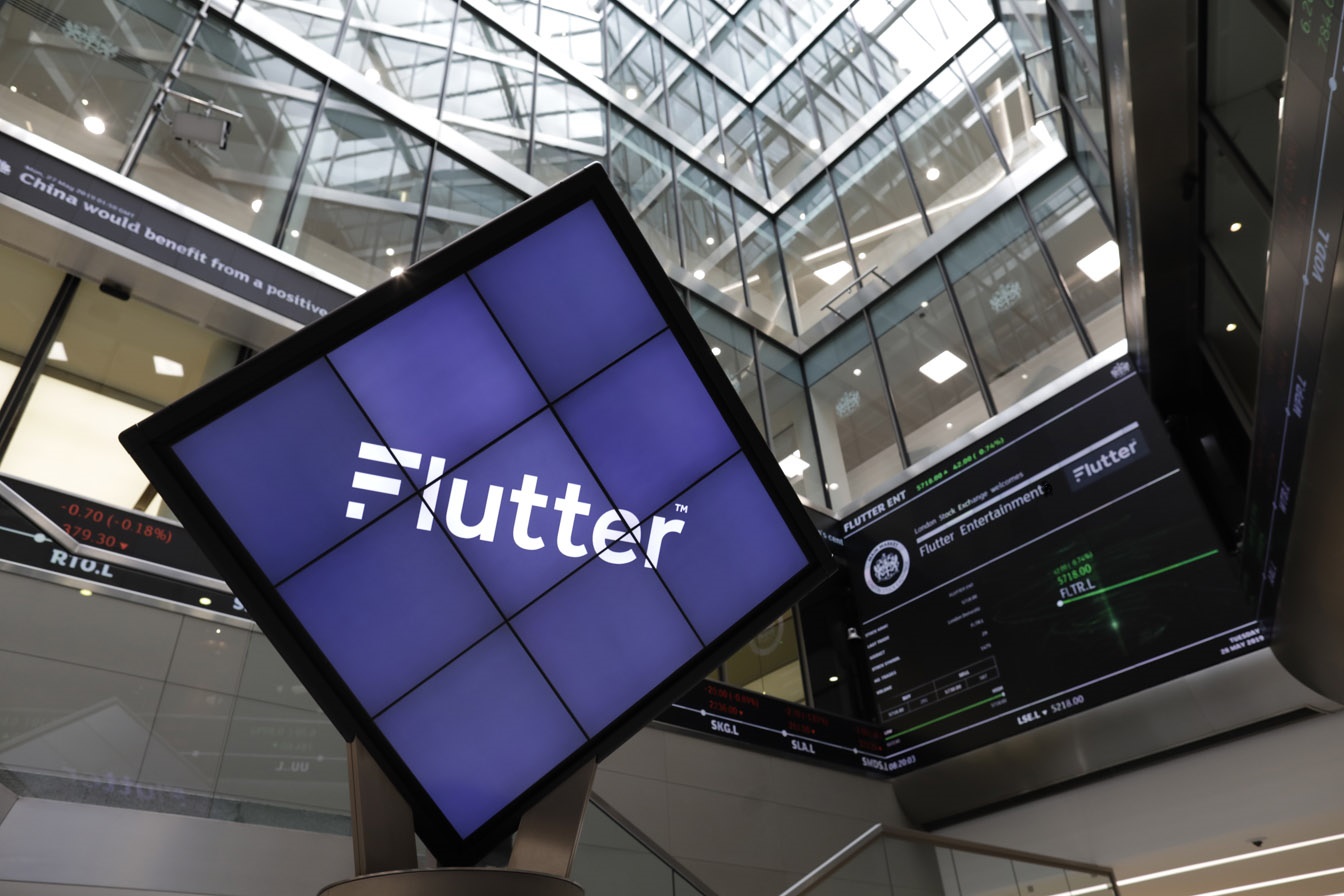 Betfair, however, is still a tougher problem to solve. The exchange and B2B business fell 7% in Q3 2020, which is a poor performance bearing in mind the market conditions. You sense this is going to be a much longer-term project to course correct that business over the next one to two years and if it wasn’t so embedded in the technology stack of the wider PPB business you would wonder if selling it off would not be the better form of valour in this spot. PokerStars also looks once more like a business of fading glories, with only the impressive online casino business holding it up in the quarter.
Management talk of market shut offs and it’s likely that played an outsized role in the reduction in poker revenue in the period, but it’s also a business where you see poker growth as being hard to come by in the near term. Even if the market was hot once again, it faces the dual pressures of GG Poker and partypoker snapping at its heels and you feel it desperately needs some meaningful intrastate US liquidity to have a hope of recapturing the brief period of rapid growth seen in Q2 once again.
Betfair, however, is still a tougher problem to solve. The exchange and B2B business fell 7% in Q3 2020, which is a poor performance bearing in mind the market conditions. You sense this is going to be a much longer-term project to course correct that business over the next one to two years and if it wasn’t so embedded in the technology stack of the wider PPB business you would wonder if selling it off would not be the better form of valour in this spot. PokerStars also looks once more like a business of fading glories, with only the impressive online casino business holding it up in the quarter.
Management talk of market shut offs and it’s likely that played an outsized role in the reduction in poker revenue in the period, but it’s also a business where you see poker growth as being hard to come by in the near term. Even if the market was hot once again, it faces the dual pressures of GG Poker and partypoker snapping at its heels and you feel it desperately needs some meaningful intrastate US liquidity to have a hope of recapturing the brief period of rapid growth seen in Q2 once again.