
Q&A: Will new, crypto-based products shake the market?
This year, FunFair Technologies closed its online casino platform and launched its R&D division FunFair Labs while continuing to run its products on crypto. COO Lloyd Purser explains why he thinks player habits are changing and how FunFair can be at the forefront of a market shift

Before 2016, the idea of a company operating within the gambling industry purely with a suite of blockchain solutions would have likely been met with some degree of surprise in many industry boardrooms. At the end of that year, the price of bitcoin stood at $971.64, up from $419.34 at the end of the previous year. While the trend was clearly moving in the right direction, you would still have been hard pressed to find many industry suppliers that would tell you it could be the future of the market.
FunFair Technologies has been attempting to challenge any trepidations people may have about blockchain technology since its foundation in 2016, when it built an online casino ecosystem on the ethereum blockchain. Developers could build games on the platform, an affiliate system was built on it, and customers could integrate their crypto wallets, all using blockchain. Customers’ funds were never held by the casino and all interested parties could be paid instantly.
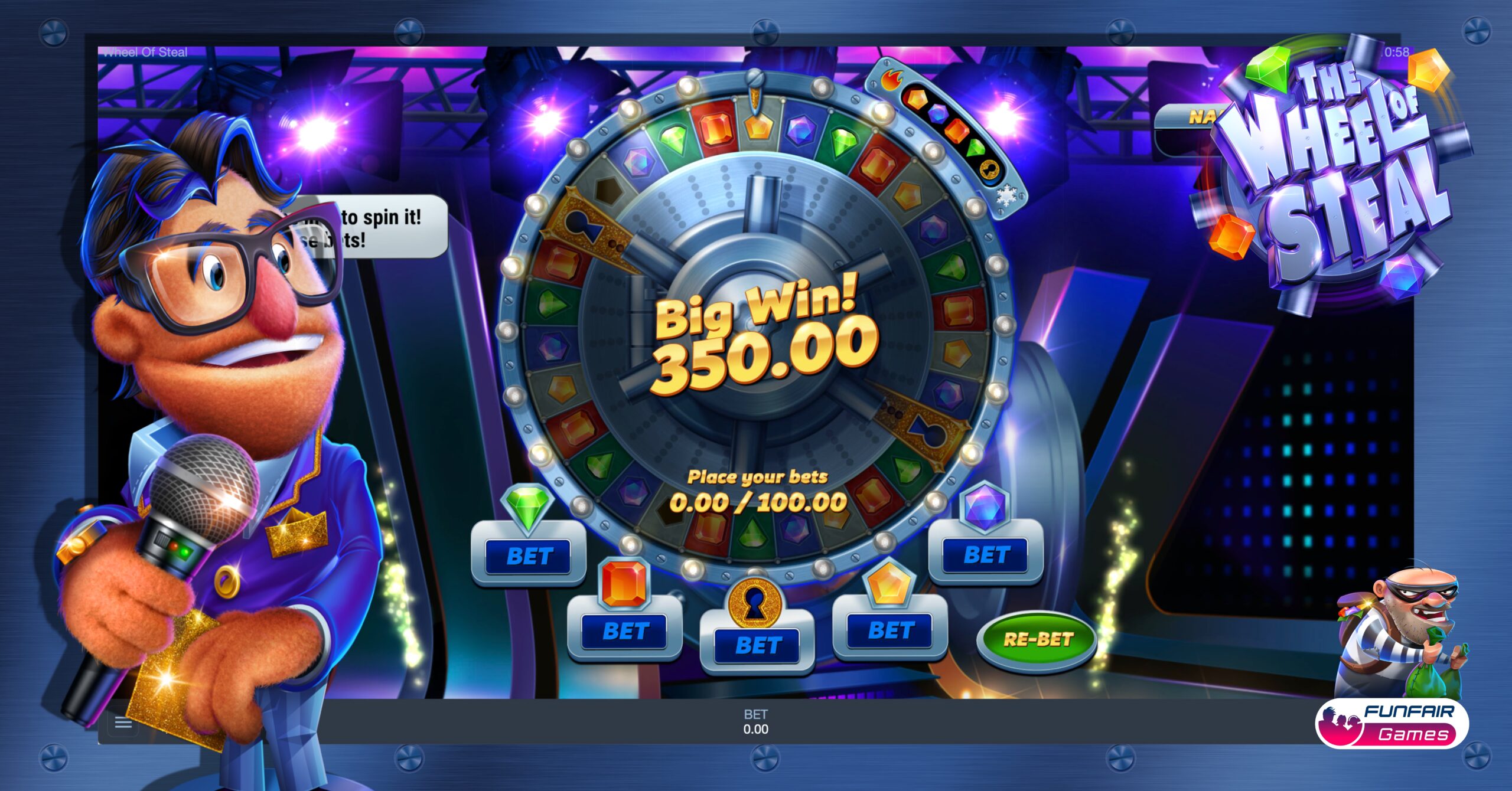
This year however, there have been some alterations to the business plan. With FunFair realising its online casino solutions were becoming too costly to run, the supplier decided to close that side of the business and take on new challenges. This year has seen the launch of FunFair Labs in March; a research and development (R&D) project looking into how the business can create more blockchain-themed products. Then came the launch of FunFair Games’ multiplayer games, with AstroBoomers: To the Moon! being released in May and The Wheel of Steal following in June. FunFair Labs, FunFair Games and FunFair Wallet are now the three core divisions of the business.
Lloyd Purser, FunFair’s chief operating officer, explains to EGR Technology how the lack of crypto regulation across the industry was always going to create challenges for the running of its online casino platform, but the business is now showing dynamism by following through on fresh ideas. “Regulation hampered us, because regulators weren’t ready to regulate a system as innovative or as different as what we had,” he says. “At the beginning of this year, we were paying hundreds of thousands of dollars to operate the casino, and that became untenable, so we closed it down. We continue our R&D efforts with blockchain. We’re looking at what technologies exist that can still provide the benefits of blockchain, such as decentralisation, trustless transactions and high levels of security.”

Time for multiplayer?
Looking more closely at a game like AstroBoomers: To The Moon!, this is the type of product FunFair is hoping can act as a catalyst for a shift in gaming tastes towards multiplayer crash games. Several players can play together at one time against the house for individual prizes (think of it as being like players sitting at a blackjack table, but each playing their own individual game against the house). Players watch a rocket travelling through space, and they place a bet where the multiplier increases. They then have to cash out before it crashes. The Wheel of Steal provides a different concept, more aligned to live casino games, where players can pick gems which have random multipliers and can also level up to take a share of a thief’s swag bag, combining elements of luck and perceived skill.Purser notes: “What two research articles showed us was generally the current portfolio of games doesn’t cater to the majority of under-35s. That age group is used to a different experience and is playing single, solitary games at a significantly lower volume to the over-35s. The key thing is to play something that is strategic, where there is a community-driven aspect.”
This is not the first time these types of conversations have been had in this market. Anyone within the gaming industry around five years ago who was regularly attending trade shows would have likely heard about how skill games could be the future of the industry, for both land-based and online, with millennials supposedly being unlikely to have the same level of interest in traditional casino games — particularly slots. A counter argument that was often made against this is that everyone turns into their parents eventually and player tastes will change as they get older. So, will these games always remain a niche product?
Purser says: “Millennials and Gen Z are the first generations to have been brought up playing fully social video games, and that was before they got to an age where they could legally gamble. You go from that to being presented with single player slot games, and it’s probably not the experience that you have been used to.
“Clearly, the challenge is educating the players and operators. There has to be the correct type of marketing behind that. There has to be better understanding of what excites and entertains players. The more we can work with operators, the more this will grow, and that is a problem really for a small studio, because we don’t have access to a lot of data, and operators don’t always share their data with game studios.”
NFTs the next differentiator
The next step for FunFair will be another industry buzz term: non-fungible tokens (NFTs). For anyone still slightly confused about NFTs, they could be best described as a digital token that can represent ownership of unique items. One of the standout examples of how they work in a marketplace is NBA Top Shot, where basketball fans can buy, sell and trade NBA moments packaged as highlight clips that operate like trading cards.FunFair Labs is currently working on Wreckless Racers; a racing game that uses NFTs. Purser believes these products provide more benefits than the comparable loot boxes — virtual treasure chests containing items that can be used within games. Purser says: “The big difference with NFTs is they are decentralised. If you’re in the game and you win a weapon in a loot box, the games company can delete the weapon. With an NFT on blockchain, you own it and can trade it and do what you want with it. It’s a different idea of ownership and control which makes it more valuable.”
Hurdles to clear
Going back to Purser’s earlier point about regulation, this is likely to be an ongoing discussion within the market across the next few years, as has often been the case with new industry trends. “Gambling regulators are not ready to regulate blockchain, even though it will highly benefit the speed and security of games,” Purser adds. “It will probably grow out of grey markets. The projects we’re working on will have a significant benefit for the industry in the long term, and products like NFTs are so cool and complex that they can have benefits across far more markets than just the gambling industry.”At the time of writing, the price of bitcoin stands at $32,386.94 (£23,330.42), having decreased from a peak of more than $63,000 in April. The future of the company is dependent on the price of bitcoin, and Purser admits that is a challenge for any crypto business, although there has still been a marked uptick in the last five years.
Those who made the case for investing in bitcoin in 2016 have been proved right to an extent, and should some of FunFair’s predictions come to fruition, the 2020s gaming landscape could be set to provide plenty of excitement.