
Q&A: Betsson AB's CEO lifts the lid on struggles in Sweden
Pontus Lindwall discusses opposing the recent limits on deposits and bonuses and how the Swedish regulator might end up working against the market


The worldwide gambling industry has faced perhaps its biggest challenges ever during the Covid-19 lockdown, not only from working to address the substantial impact of sports betting being curtailed, but from the increasing challenges of governments dealing with the consequences of the pandemic.
Regulatory approaches have varied across jurisdictions, but in acting to preserve public health, many regulators have pursued a zero-tolerance approach to an industry perceived, at least at a public level, to be harmful to players affected by the lockdown. In addition, the pandemic has magnified and enhanced pre-existing hardship towards gambling firms, no more so than in Sweden, where already strained relations between licensed operators and the Swedish Gambling Authority have declined even further.
This Cold War between the authorities and operators in Sweden has turned decidedly frostier in the past two months, with the decision to impose deposit limits and bonus caps on a market already polarised and widely condemned by all corners of the market. Betsson has been one of several operators that has taken the fight public, but now the proposals have been given put into place, CEO Pontus Lindwall discusses the potential consequences going forward.
EGR Intel: You have added your support to the group of Swedish-licensed operators that have criticised the deposit and bonus limits for online casinos. Now that they have been brought into force, does this effectively end your opposition?
Pontus Lindwall (PL): All operators, [trade body] BOS and the regulator, have opposed these new restrictions and there has been a unified ‘no recommendation’ against this proposal. We therefore find it very hard to understand why they chose to push it forward regardless. The timing is also off – they came when all other countries and other sectors are easing pandemic restrictions – restaurants are open, Spain removed the gambling ban, etc.
Our role now is to continue explaining and expressing our view on these changes, and for me that is about educating Swedish society and politicians as a whole. The message is that when you enforce a limit on how much players can deposit, they will search for alternatives. It’s common sense that these limitations will impact channelisation and push players out of the Swedish market – that’s a fact.
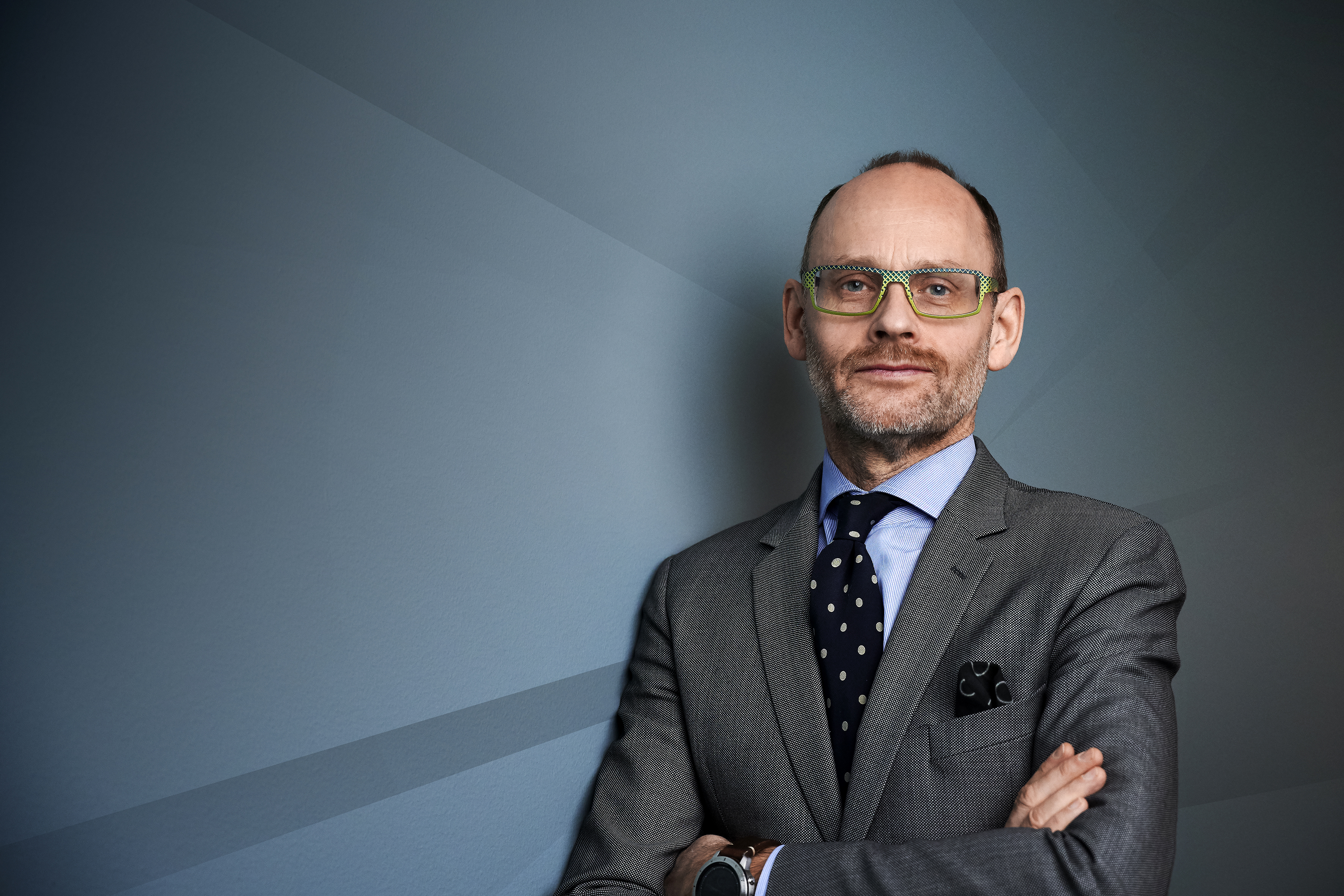
Bettson AB CEO Pontus Lindwall
EGR Intel: Can you provide more information on Betsson’s work within BOS, and what does this involve on a day-to-day basis?
PL: There is not much we can do as individual operators, but we can act collectively through BOS. BOS is a really important tool because it gives us an important channel to talk to government, the gaming authority and the media when things like this happen. It’s simply not doable to have operators shouting individually; it would get too crowded.
BOS is one of our tools to try to impact the regulator and authority and support them with knowledge from our industry, which is a new one for this country. We need to do that in a structured manner to collect information, make investigations and support them with this data.
EGR Intel: Would Betsson ever consider leaving the Swedish market because of the increasingly tough regulations being imposed on operators?
PL: We haven’t discussed leaving the Swedish market as such. We’re a company with the aim of providing great internet games to the general public. We are a publicly listed company with the aim of earning money for our shareholders. With that thinking in mind, we have therefore chosen to leave other markets when regulations became very restrictive.
EGR Intel: Do you think other operators will choose to leave the market?
PL: Yes. Cherry has already left the Swedish market with one of their brands [SveaCasino]. I think that if players disappear from the market, other operators will undoubtedly follow as well.
EGR Intel: Channelisation rates are continuing to decline and will be impacted further by the new deposit limits. What actions would you take to restore them?
PL: There is only one way to go for governments to make that happen: to make the regulation attractive enough so that players can enjoy the games in the way they want to enjoy them. If there are too many restrictions, then players will search and find alternatives, and they will opt for those alternatives with no limitations, to the detriment of the regulated market.
The Swedish government has all the tools in the world to increase channelisation but needs some strong political decisions to achieve that. We’ve seen decisions going the other direction.
EGR Intel: Will the Swedish government reach its aim of 90% channelisation by 2022?
PL: The government’s goal was to have a 90% channelisation, and we have seen several reports showing that it’s way below that, and the estimates are that with these new measures, it will go down even further. It’s trending in the wrong direction. If this continues, it will be impossible to reach a 90% channelisation rate by 2022.
EGR Intel: Is the Swedish market diverging from the aims of the re-regulatory process?
PL: Yes. The aim was to bring the Swedish gaming market under supervision of the Swedish authorities and get it under control, but if your measures push players out of that, then you lose control. It’s important to protect players but if they chose to play elsewhere, then you have no control. So, the measures go against the whole aim of the re-regulation.
EGR Intel: Betsson has said that it was surprised by last month’s fine of SEK20m from the SGA for offering unauthorised bonuses through branches of 7-Eleven and Pressbyrån. Do you feel that the Swedish Gambling Authority has ignored your cooperation and transparency in its decision?
PL: We always try to act in a very transparent way and have a good relationship and cooperation with all regulators, but I have to say that the SGA stands out when we compare it with other authorities. In the sense that they don’t discuss and they’re not open to listen to our answers to their questions. They immediately go with a hefty fine. That’s the wrong signal to send to the industry. The authority has been around forever, but the part about online gaming is new and they could benefit from listening and discussing certain issues. It’s in our interest that Sweden develops into a healthy market – we’re not aiming in that direction when things like this happen.
EGR Intel: Do you think it’s due to a lack of knowledge?
PL: I think they have limited knowledge about online gaming as it’s a new thing for them. But it may also be a difference in the traditional way of working like other authorities in Sweden that are usually less open to communication, which is unfortunate.
EGR Intel: What actions has Betsson taken in response to the SGA’s decision?
PL: We will appeal. We ended the partnership with 7-Eleven and Pressbyrån when we got the question [to explain the partnership], even though we did not find anything wrong with it. The cards have never been used to give any kind of extra value, so we are convicted for a crime that has never happened.
EGR Intel: Based on your experiences with the SGA, is the Swedish Gambling Act allowing regulators to be too broad in dealing with operators?
PL: We have said from the start that the gaming act is broad and leaves room for interpretation, and we know that it’s very hard to make a regulation that covers everything in detail. So, it has to be open, but then you need to educate around that regulation over time by having open discussions. In some cases, these perceived regulatory breaches end up in court and only then you understand how to interpret that part of the regulation. But the SGA are not discussing – they just go ahead with fines and that’s not a very good way of doing it. It is not helpful. All operators are very open for cooperation and discussion, but this has not been the supervisory route chosen by the authority.
EGR Intel: Does the Swedish Gambling Authority need to be overhauled?
PL: I am not in a position to answer that. But from an operator’s perspective, we would welcome a more open climate in terms of dialogue. That would benefit everyone, including the authority.
EGR Intel: What does the future hold for Betsson in the Swedish market?
PL: We will see. We struggle. We have several cases in court, and Sweden is our home market so we will continue to struggle here. But I really hope that we can cooperate in the industry to make the channelisation meaningful and change the trend into a positive one. That’s what I hope for Betsson’s perspective on the Swedish market.
EGR Intel: Anything you want to add on deposit limits?
PL: The proposal to put a deposit limit in is not based on any investigation, statistics or figures. It’s a political decision, not a rational one. And on a personal reflection, the Swedish government is working on these changes to be implemented in July while in other countries they are lifting their restrictions, like in Spain. It doesn’t make sense.
EGR Intel: Any further comments on the SGA fine?
PL: We see it like a systematic harassment on us from the authority. Do they really want a regulated market or is it all a political theatre? Other operators eyeing Sweden will think carefully before entering Sweden and go for a licence. For companies already licensed, they are scared to death to make any sort of mistake and get a hefty fine. I have a hard time to see how they are thinking about it.