
Power of the press: Tracking the perception of the Ladbrokes Coral brand
YouGov's Amelia Brophy analyses how negative headlines can impact the public’s perception of an egaming brand


Previously in this column I discussed the impact the fine imposed on 888.com had on its brand perception among the public and, more specifically, its target demographic.
At the time I speculated that the controversy surrounding ‘vulnerable gamblers’ could very well rumble on and affect other betting companies.
Now, the story has drawn in Ladbrokes Coral. The Gambling Commission ruled that the bookmaker failed to intervene when two ‘problem gamblers’ lost £1.3m in stolen money on its casino website, despite warnings. As a result, the firm has been fined £2.3m.
The story has already had a negative impact on Ladbrokes’ consumer perception. YouGov’s Buzz score (which measures whether someone has heard something positive/negative about the brand) indicates that the public has noted the bad headlines. In the space of a week, Ladbrokes’ score declined by six points and it now stands at -10.
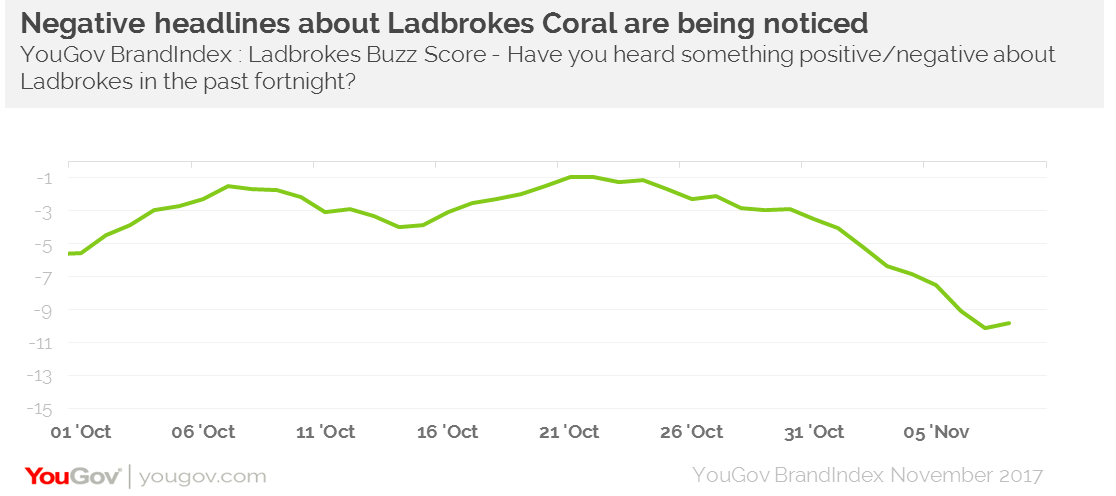
However, it may not just be the fine and the associated details that are behind the decline. This is because the betting watchdog’s report coincided with the government’s announcement on fixed-odds betting terminals.
On the issue of fixed-odds betting terminals, public opinion is at odds (no pun intended) with the gambling companies. Back in April 2014, YouGov research indicated that seven in 10 (70%) Britons believed there should be extra restrictions on high-stake gambling machines, compared to 15% who thought there shouldn’t. Added to this, six in 10 (61%) said they would support a £2 cap on gambling machines in betting shops, against just 13% that would oppose a cap.
YouGov brand tracking data indicates that this combination has had an impact on Ladbrokes Coral’s Impression score (whether someone has a positive or negative impression of the brand). This score has also declined, dropping by eight points (from -19 to -27).
The issue is a tough one for gambling companies. Lobbying against new legislation too publicly may run the risk of the public associating a particular brand with this specific issue and potentially damaging that brand’s perception.
Whatever the exact reason for the negative views of industry players that we have noticed, online and offline gambling firms have faced a succession of negative headlines in recent times. While the stories may not put off regular customers, it may be more problematic for them to attract new consumers.

Amelia Brophy is UK head of data products at YouGov, where she has been working since January this year. Prior to joining YouGov, Brophy worked in senior research roles at companies including Nielsen, Repucom and Allianz.