
Market focus: Just how attractive is Colombia’s online gaming market?
Colombia’s latest move to regulate egaming offers tremendous opportunities for international brands. EGR Intel explores the market’s latest regulatory movements, hitherto stumbling blocks and regulatory progress being made elsewhere across Latin America

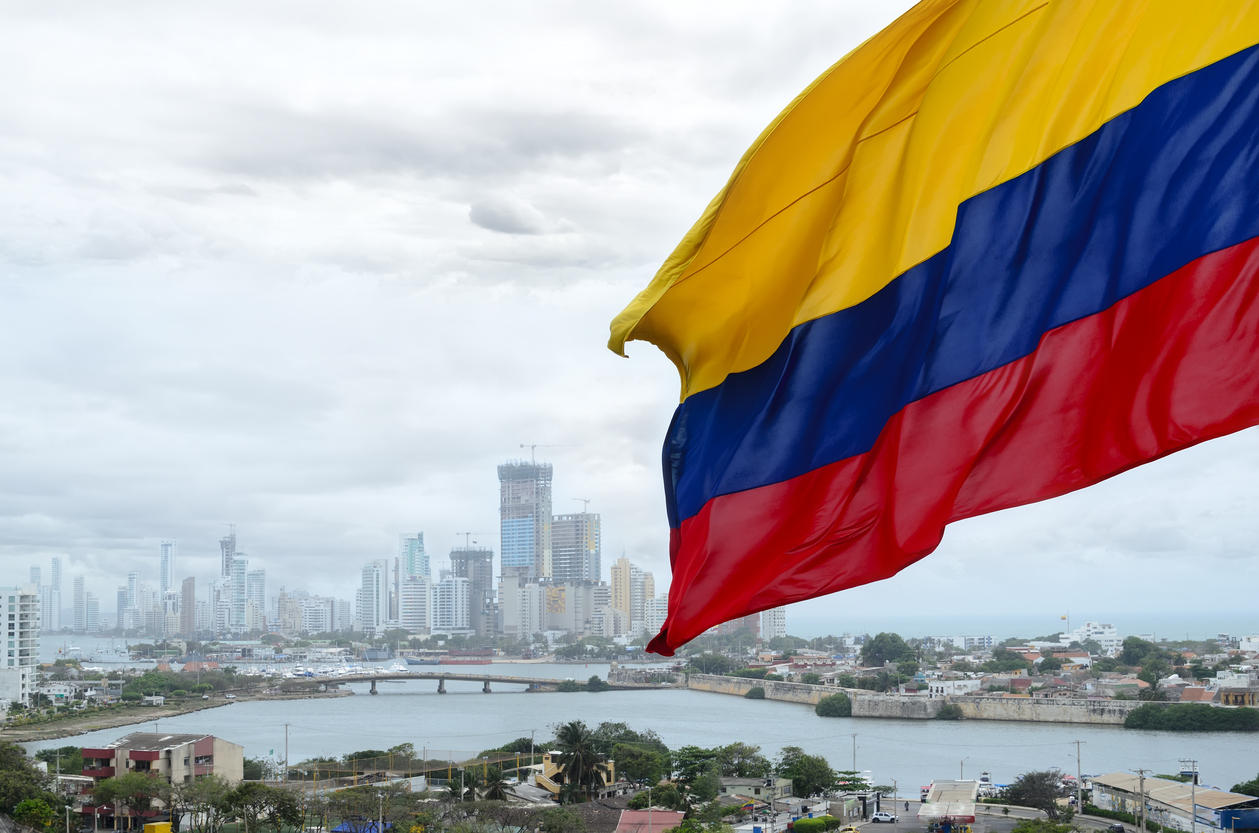
It has long been established that Latin America is a hugely promising region for online gambling, predominantly due to its sheer size and population. Yet complications and painfully slow regulatory progress has hindered this part of the world’s capacity to be the next gold rush for online gambling operators.
However, Colombia shines like a beacon of light in an otherwise gloomy market that is plodding towards regulation at a pedestrian pace. Colombian regulator Coljuegos rolled out its official online gaming legislation in May 2016 and has since carried out two public consultation processes to assess the expectations of its stakeholders.
At present, Coljuegos is gearing towards adapting the feedback and using it to establish a series of amendments to the gambling bill to ensure the market is attractive to the widespread industry. And as regulations have progressively become more operator friendly, Juan Camilo Carrasco, a lawyer for Colombia-based law firm Asensi, predicts up to 20 operators will secure licences in the South American country by the end of the year.
Rule of law
The initial licensing framework dates as far back as 2001 and initially included VAT on top of the standard 15% GGR tax on online operators. Yet this was scrapped in January 2017 as part of a national tax reform.
After the law passed in 2016, it was met by varying contradictory opinions, Asensi’s Camilo claims. And as a result, a draft of the amended law was published for public consultation in November 2017, while the period of public comment was subsequently extended to mid-January and then again to mid-February.
However, the process has been slowed down as a result of delays in Coljuegos publishing its white paper, following which the draft will be tabled by the Coljuegos board of directors and subsequently voted on.
Camilo says further delays in passing the gambling act amendment are expected as the country is facing an election period for a new chamber of representatives and Colombian presidential elections in a couple of months.
“As the president of Coljuegos is a political post, I don’t know if he will resign with the new government,” Camilo comments. “It is also possible that the changes go very fast, but nobody knows really. With approval from the board of directors, the technical team of Coljuegos will have the power and tools to go through and publish the final draft.”
Nevertheless, he says the process is extremely participative and operator friendly, and both Jackpotjoy’s general manager for LatAm, Sebastian Perrier, and iGaming Consulting LatAm’s Juan Ignacio Juanena strongly agree.
“The Colombian government has been open to the opinion of [online] operators as well as land-based operators,” Ignacio says. “To develop the law, they have considered the opinions of all the stakeholders. They respond to emails and make changes based on recommendations.”
“Operators [entering the market] are causing locals to review [their strategies]” – Juan Camilo Carrasco, Asensi
Perrier says he has met openly with Coljuegos and the regulator is extremely forthcoming with suggestions on the right lawyers and accountants to assist those operators plotting their entrance into Colombia.
Liquidity spirit
Along the way, though, the process has received its fair share of backlash, particularly when Coljuegos announced it was introducing ISP blocking to all operators that had not received a formal technical certification from a regulator-approved game lab.
It was the growing complexities of these technical requirements within the law that drove PokerStars out of the market in November 2017. “Restrictive regulation within a closed market creates a situation that is not viable for operators or attractive for customers,” director of corporate communications for The Stars Group (TSG), Eric Hollreiser, told EGR at the time.
It was also the jurisdiction’s lack of international poker liquidity that put TSG off, and Camilo says there are presently no online operators offering poker in Colombia. “There have been lots of public comments regarding international liquidity and live casino, the stuff that creates controversy. For some operators they find it could jeopardise their position. Most of the [local] operators think international liquidity or live casino will be bad for their businesses. [And at present] nobody is offering poker services,” he notes.
In an effort to appease international operators, Coljuegos pledged it would allow liquidity sharing within the latest draft of its legislation, but as Camilo suggests, public comment from those operators already present in the market will likely be very negative and could result in the regulator scrapping the idea entirely.
Camilo says the first draft amendments to go public in 2017 were met with opposition from the land-based casino industry as operators considered it a threat to their businesses. Since then, the majority of operators to be granted licences are already operating brick-and-mortar casinos in Colombia.
However, Ladbrokes’ Spanish joint-venture, Sportium, has bucked the trend and picked up Coljuegos’ ninth online licence last month. Since then, momentum amongst other international firms appears to be gathering pace ahead of the World Cup, which Camilo predicts will be an immense opportunity for attracting Colombian punters.
“FIFA [has] issued statistics saying Colombia is either the second or third ranking country for the highest number of tickets bought for the World Cup. People here are very much into their football,” he tells EGR Intel.
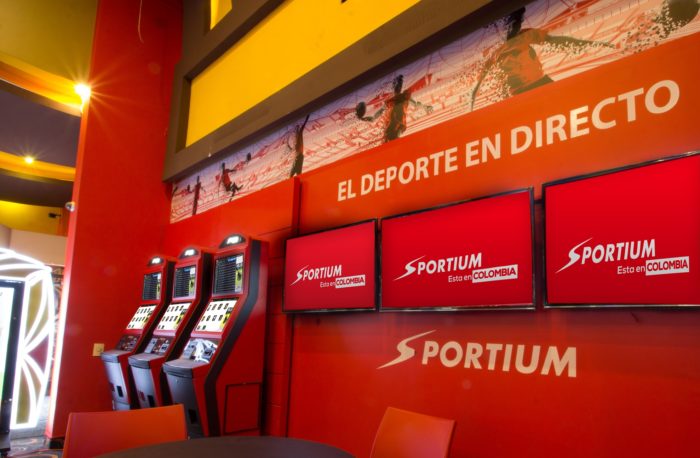
“Operators who already have licences are also working on having their terminals ready to operate in bars and other premises, so they are not just operating online. The regulation permits having these terminals in bars, restaurants, hotels and other places. So many of these operators are trying to secure commercial agreements. Coljuegos is busy getting those concessions ready.”
Camilo adds: “The initiation of international operators [entering the market] is causing local operators to review [their own strategies]. I also know there is a lot of consultations on other topics, like operating under other brands or doing commercial agreements with other big operators.”
Buddying up with the locals
Sportium has adopted such a strategy, and has, as part of its licencing agreement, pledged to roll out over 100 betting terminals across a host of retail locations, including bars and restaurants, in the run up to the World Cup.
In the first instance, Sportium has partnered with Dubai Casino to provide terminals to the well-established Colombian casino group. Many of the operators looking to LatAm are considering the benefits of forging these partnerships, particularly with regards to securing databases on local players.
But for Jackpotjoy’s Perrier, the key to growing an online customer base in the region is through brand awareness. He suggests that forging partnerships with land-based operators is playing with fire as online and retail operators have extremely dissimilar customer acquisition targets. “It’s not easy because they are very different businesses and you need different skills to run either,” he explains. “Land-based is more focused on monetising square metres according to the space they have, but that doesn’t happen online.”
In Brazil, where Jackpotjoy currently operates under brands the operator declines to reveal publically, Perrier says sports betting is not available in land-based venues so it could present an interesting opportunity for online operators looking to score deals with their land-based counterparts.
“We try to form partnerships where land-based companies have licences and [we] have conversations with governments and agents in the market so we can be the first to move,” Perrier continues.
“It’s more about brand recognition for the time being. It’s very difficult to measure [how well the brand has been doing],” Perrier says of Jackpotjoy’s presence in LatAm. “I would say in those terms, people overall know us better than other operators within the ecosystem.”
Similarly, Asensi’s Camilo is of the opinion that international operators need not jump into bed with local brands to best establish their business. “For international operators [whose] strategy is to get into Colombia with their tools or their team, it would probably be smarter to interact with the networks of payments and distribution,” he says.
Q: What about the Colombian market attracted you to it?
A: Colombia meets all the requirements for sports betting to be successful. We want to take advantage of our experience, technology and business model, which have been key for us to achieve a leading position in the Spanish market, to face this new challenge. The key condition to be in Colombia is the regulation that Coljuegos published in 2016. In addition, Colombia is a very stable country both politically and economically with a huge potential given its dimension, culture and love for sports.
Q: What was the regulatory process like?
A: Coljuegos is an outstanding entity with a high level of integrity that has done a great job regulating online gaming in Colombia. They have been very open to feedback from operators and the outcome has been really positive for us. Regulation of online gaming in Colombia is clearly a success case that all regulators in the region are paying attention to.
Q: How will you adapt your online product for the Colombian market?
A: The Colombian regulation favours a multi-channel operation of online gaming, and this allowed us to have clear synergies with both our online and retail products. However, the most important asset for us to leverage is our team and the knowledge we have on operating a multi-channel business.
Q: What is you partnership with the land-based operators? Does it have any impact on the online product?
A: Our business model has always been to partner with traditional land-based casino operators to complement their core activity and add value to their venues by contributing with our technology and sports betting unique offering. Sportium brings them not only more revenue but also new clients who want to bet with us. It is a partnership based on a win – win business model.
Q: Can you find any similarities between the Colombian and Spanish markets?
A: We believe the key to succeed in Colombia will be determined by our ability to adapt our product and value proposition to the market and to understand our customers as well as our partners. Only by doing this we will be able to deliver what they expect from us.
Q: What advice would you give to other European operators looking to the Colombian market?
A: My advice would be to incorporate local talent to the team, people who know the culture, who know what Colombians want and what they don’t want, people who can connect to the end customer, because, as I mentioned earlier, adaptation to the local market is very important.
“I agree that an international operator should do a very strong study of the distribution networks, payment processes for collecting prices and publicity, because they know the market, but for a local land-based brand, I really don’t think it’s going to make a lot of difference if an international operator starts its own brand.”
Elsewhere, Ignacio believes operators launching fresh brands will have to invest generously in marketing. He attributes the slow race for licensing to operators waiting on the results of their competitors’ first year in the Colombian market as a precursor for plotting their own strategies. “Then when they have a more confident vision of Colombia, they will decide whether to enter the market or not,” Ignacio elaborates.
Unlike his peers, Ignacio believes best practice for new entrants is to partner with local brands. “If you don’t make an agreement with a local brand, it will not be so easy for you to compete in the market. We don’t see any of the bigger brands like bet365 in the market because most of the operators are local and have retail stores where most local people can place bets.”
Booming Brazil
Colombia is not the only Latin American jurisdiction that has piqued the interest of the global online industry. Brazil has also become a hotbed for operators and suppliers in recent years thanks to a massive population (208 million) and classic Latin passion for sports. And bingo is one product in particular that has become increasingly popular among Brazilians.
In fact, Jackpotjoy hailed triple-digit growth in Brazil in 2017. Speaking to EGR Intel after the firm released its full-year financial results last month, executive chairman Neil Goulden said interest in bingo had grown and the firm was considering expanding its reach into neighbouring LatAm markets.
But the state of regulation in the birthplace of Carnival is dissimilar to that of its much stricter Latin brother Colombia. Although there is no formal framework for online gambling, a loophole in the law enables foreign firms to operate through an offshore company.
Ignacio says: “In Brazil the senate rejected one of the projects for online regulation. If in my country [Uruguay] it’s considered a big problem and we are just three million citizens, imagine the impact in a country of 200 million. There is a lot of politics around online gambling and it seems they are not going to approve the new law anytime soon.”
A key senate committee rejected the latest round of regulation in March. The bill, outlining plans to legalise both online and retail betting, was first introduced back in 2014 by Senator Ciro Nogueira. Yet it seems operators are happy providing their services to local customers via their foreign licences.
“I’d say it’s difficult for them to regulate at this time in Brazil because there are so many stakeholders who will continue to operate as they do now,” Ignacio says. “Most operators in Brazil are doing so through an offshore company. They are not paying taxes.”
Growth potential
In terms of its population size and potential, Jackpotjoy’s Perrier believes Brazil’s gaming GGR could be on par with the UK, but he says the country is far behind in online card payment usage. Proper regulation would help build trust amongst players who are wary of offering up card details and personal information to unlicensed websites.
GVC is another operator that has highlighted its strong growth in this grey market, where the FTSE 250 company operates both its Sportingbet and Betboo brands. CEO Kenny Alexander recently told investors the Brazil-facing business grew 26% last year and the group was actively involved in lobbying for regulation and the introduction of taxes.
“The Brazilian regulatory environment makes it difficult to get things through there, but we are lobbying and trying to help them, and I expect regulation within two to three years,” he said. “We are the biggest there for sports betting and probably the biggest full stop. We would welcome regulation and taxation, as long as it’s sensible. They were talking about a 15% tax [rate] which is pretty reasonable and we would be very supportive of that.”
Despite the regulatory roadblock, Perrier assures EGR Intel that the movements are positive and discussions are happening. “I think the industry is happy overall to see the movement in Brazil, but we have to be more patient before anything else is approved.”
A watching brief
Operators have had their sights set on LatAm for a number of years now, with the likes of European online operators LeoVegas and Mr Green both establishing one-person operations in Uruguay to scout out regulatory cases as they unfold and build an understanding of the consumer markets.
Perrier has been given a similar task, and with his knowledge and previous experience penetrating the Argentinian, Peruvian, Chilean and Mexican markets as a consultant for Scientific Games, he urges operators to have patience. “It’s not like Sweden in that they know in 18 months the regulation will be in place; here, we don’t, but the conversations are going in the right direction, so it could be one, two, or three years,” he says.
Otherwise, his advice is to properly prepare for future regulation by adapting to the needs of LatAm players. By this, he means harbouring their passion for football and personalising customer service processes.
Considering some of Europe’s most prominent gaming jurisdictions were still mulling over the concept of regulation a decade ago, and now almost all of the continent adheres to relatively similar requirements on taxation, technology, social responsibility and marketing, the outlook for Latin America is not all that glum. And with Colombia the first to shift into gear, it is more than likely its Latin neighbours will, in time, follow suit.