
Let the games begin: how esports is drawing in the crowds
With Covid-19 decimating traditional sporting events across the globe, esports is ready to launch itself into the upper echelons of sports betting. So, can bookmakers capitalise on the golden opportunity?


The spread of Covid-19 has caused sporting events worldwide to be suspended, postponed or cancelled in their droves. Operators are expecting to lose millions from the lack of action and a slimline market. But – as the adage goes – as one door closes, another opens.
Esports, with its dedicated core following coupled with derision from the peripheries, has found itself in the right place at the right time. Tournaments are ongoing, wagers are being placed, sponsors remain involved and viewing numbers are up.
It is perhaps contradictory to label an industry that saw over $1bn in revenue last year as underground. Snobbish even. But it is undeniable that esports has a chance to break through and solidify itself as a mainstay in sports betting – and the sporting world. Esports, from humble arcade games beginnings, is a deeply entrenched part of culture across the globe.
Martin Rosenbæk, founder of HLTV, a Danish esports website recently purchased for €34.5m by Better Collective, tells EGR how Danes have latched on to esports. He says: “Denmark is a proud esports nation. For Denmark, it is recognised politically, and in sports clubs they are embracing esports.”
HLTV is an information hub for popular title Counter-Strike: Global Offensive (CS:GO) and regularly breaks into the top thousand most-visited websites in the world. The acquisition by Danish affiliate Better Collective compounds the importance and rise of the vertical. Speaking on the deal, Rosenbæk referred to this as “validation” of esports’ place in the world.
Meanwhile, Sergey Portnov, Parimatch CEO, explains how esports is woven into the societal fabric of the Commonwealth of Independent States (CIS) region. “Computer gaming is integrated into the DNA of generation X and Z. It has been present in their genes since childhood, so with the development of esports it is easy to say why they are so interested in it.
“People in the CIS are naturally drawn towards gaming and technology. There are top technology companies and cyber teams across the region. Brazil might have football, but the CIS has esports.” Soon, if not already, Brazil will join the esports party, as well as countless others as the industry continues to snowball in size.
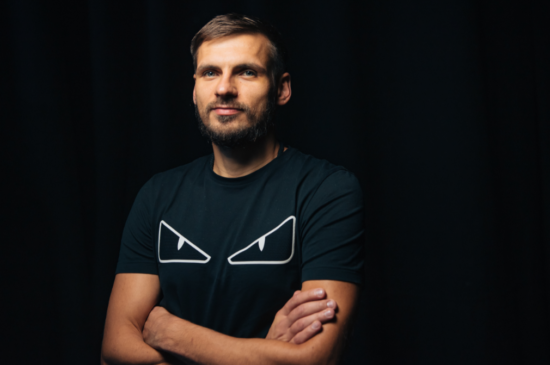
Sergey Portnov, Parimatch CEO
Up, up and away
The $1bn in revenue esports generated in 2019 was a rise of nearly $150m over the previous year. The figures are mind boggling, and for Luke Cotton, COO at esports agency Code Red, this is just the start. “I don’t think there is a ceiling on it. I think we haven’t got anywhere near providing any kind of forecast as to where it can go,” he says. “I think that growth… is limitless.”
Paris Smith, CEO of esports pioneer operator Pinnacle, agrees: “The way in which esports has developed over the past decade and the willingness shown by the industry to evolve to cater to its customers’ needs means it is like no other sport out there,” she says. “The fact that esports can so easily adapt and grow with technology is what makes it so difficult trying to envisage there ever being a glass ceiling.”
Stepan Shulga, Parimatch’s head of esports, believes “the sky is the limit” with the vertical. “The transformation is possible because of new technologies. Fifty percent of the planet will be covered by 5G in 2024. This industry will grow along with the continuing development of content consumption via the internet, and slow down only with a corresponding slowdown in technology growth.”
Of course, Shulga’s point is correct that the growth of technological development will facilitate the growth of esports. However, what may now give esports the adrenaline injection to launch into the stratosphere is the coronavirus, which has currently put traditional sports on hold. Tournaments and betting can continue remotely, and Cotton argues this is a perfect storm for esports betting.
“It is very unfortunate but there is high-quality sport that operators should be focusing on. It is a pretty small punt if someone wanted to go and attack it right now. There is a story that can be told and there are customers that can be acquired.”
While the shutdown of traditional sports could exacerbate a heavy lean on esports from operators, for Cotton this is a product that remains “partially untapped”. He says: “It is whether operators want to put spending into esports, perhaps beef up their products and marketing strategy to make them more presentable and attract those customers,” he says. “It is whether companies want those customers. You know there is an audience; it is an online audience. It is an audience that has already shown it has a very high propensity to gamble.”
Rosenbæk, meanwhile, holds the notion of audience in a similar vein to Cotton and points to esports’ core demographic as a key reason why it is suitable for sports betting.
“It is a new audience. It is young men aged 18-35; we don’t watch TV or listen to the radio – if you want to get to us, we are probably watching esports somewhere,” he says. “I think esports has a bright future and traditional sports should look into why esports are hammering away and basically stealing audiences from them.”
Missed opportunities?
Despite Rosenbæk’s reference to esports’ rise, many operators are not fully engaging with the vertical and instead remain focused on traditional sports. Pinnacle’s Smith feels bookmakers will rue missing the opportunity. “They’d certainly be missing out on something that adds clear value to the business,” she adds.
“If you’re going to offer esports, you need to do it properly. Esports customers are like no other, and without a genuine connection with your customers and a complete understanding of the esports ecosystem, you won’t get very far. Unfortunately for any operator trying to gain traction with esports betting, it takes a lot of time, energy and domain-specific knowledge to really get the most out of it. What’s more, they are already playing catch up.”

Paris Smith, CEO, Pinnacle
While there are huge viewing figures for esports events, due in part to their popularity and easy and free access, sports betting is still skewed to the traditional sports that Rosenbæk refers to. Yet Cotton does note that esports betting is, in fact, one of the major markets across the globe, pointing out that the industry is an established entity – beyond the need for attention as a fledgling struggler.
He adds: “From a betting industry perspective, in the UK it is a top-three sport waiting to happen, along with football and horseracing. I think in the US it is going to be there with the likes of American football and basketball.” Smith comments on how esports is a major sport for Pinnacle, which has seen over 15 million esports bets placed after nearly a decade of operations.
She says: “The amount of volume we’re taking on esports shows just how serious people are about betting on it. It’s now comfortably our fourth most-popular sport by volume and is mounting a serious challenge to break into the top three. The beauty with esports is that you never know how big it can get.”
Portnov also explains how esports is key for Parimatch as the operator is seeing the growth of bets on esports matches growing two to three times faster than other popular sports.
“It has almost entered our top four,” he points out. “In some regions, it is in the top two, second only to football. It is too early to tell if it will eventually catch up with football. We think it could take at least five years. We believe that esports will consolidate its position in the top three over the next three years in the CIS region.”
Shulga adds a quantitative element to his response and expects to see esports account for a significant minority of Parimatch’s business. “The growth in esports continues every month. We predict that, by the end of this year, up to 12% of all bets will be on esports matches,” he notes. Esports betting has an evident upwards trajectory. Organic growth coupled with the impact of Covid-19 puts esports betting as a significant top-tier vertical for operators in the short and long term.
The (mis)conception of youth
A common theme has cropped up throughout this exploration: the audience. They are the passionate groundswell that has helped deliver esports to its mega-millions standing. They are the dedicated fans that support players and teams. They are also young, with a prominent percentage under 18, and so must be approached with a duty of care by the gambling industry.
Portnov accepts the reality of the industry and highlights that it is a joint responsibility of regulators and operators to ensure that potentially vulnerable individuals are not impacted. “It is absolutely right that fans of esports are young. This is why it is important to restrict access to the game for the minors.
“It’s not only the responsibility of the operator, but also the government, which must regulate the industry. If the government neglects these issues, then there may be various unscrupulous companies that will abuse the ease of access to an audience of minors. The government must regulate it strictly and then it will be the responsibility of the operator.”
Portnov’s comments come with a serious determination and don’t just pose as lip service to responsible gambling. Parimatch is a member of the Esports Integrity Commission (ESIC), a body consisting of key stakeholders with a mission statement of investigation, prevention and prosecution of all forms of cheating in esports. These forms of cheating include match-fixing and manipulation, crimes that have found themselves intertwined with sports betting historically.
In August 2019, after an investigation led by the ESIC, six individuals in Australia were arrested in connection with esports betting fraud. Shulga says: “ESIC will be the regulator between betting firms, teams, tournament operators and game developers. The challenge that they are undertaking, and the ambitiousness of their goals, is embedded in the mission and values of Parimatch. We approach things from the same point of view.”
Parimatch CEO Portnov adds: “Due to the fact that young people play esports, the possibility of rigged matches is higher. It’s easier to succumb to temptation, and it is important for the game to be clean. If there is no clean game, not only does the betting market suffer, the sport becomes discredited.”
For Smith and Cotton, this is an unfair label that esports has been laboured with. Both take exception to the notion that esports is youth-heavy and argue it is instead an industry misconception. Smith says: “The average esports fan is actually a lot older than many people think. Given the perception of esports, esports fans and potential esports bettors, I can understand why people may think this requires more attention than other sports. However, we have strict internal policies that ensure things like this won’t become an issue for us or our customers.”
Cotton adds: “There are nuances. CS:GO, Dota2 and League of Legends have older audiences. Of course, there are under-18s who watch those titles, but there are under-18s who watch football and every sport. It doesn’t skew that way.”
Misconceptions and nuances are what have dogged esports. Peering behind the curtain shows the gargantuan nature of a vertical many view as eccentric and affirms esports aren’t as black-and-white as some would argue. Only time will tell if operators will commit through the esports door or merely stare forlornly upon the missed opportunity.