
Kindred spirit: CEO Henrik Tjärnström discusses Sweden’s new-look market
As he approaches a decade in the top job, Tjärnström discusses the early warning signs in Sweden’s new-look egaming market and regulatory enforcement in the UK
Kindred’s ability to consistently deliver growth ahead of the wider market average resulted in the operator penetrating the top five of the EGR Power 50 this year. This was arguably long overdue, as the operator has significantly kicked on in recent years, doubling the size of its international business since 2015 and expanding into new markets with alarming regularity under CEO Henrik Tjärnström, who has been at the helm since 2010. Entering his ninth year in the job, Tjärnström has not lost his enthusiasm for the industry. “You are making me feel old,” he laughs. “I absolutely cannot imagine a more fun job than the one I have and we are definitely heading in the right direction.”
One of those new markets is Sweden, and it is impossible to talk about Kindred Group without mentioning the Scandinavian country. The operator was founded in London and is listed on Nasdaq Stockholm with a major tech office presence in the same city. Sweden’s re-regulated market has only been live for a fortnight at the time of writing, so it is too early to draw any concrete conclusions – even if Kindred did go live at quarter past midnight on New Year’s Eve.
“The market, with around 100 licensed companies, will be much more competitive than Kindred and the other Malta-based Swedish firms expected from the beginning,” says Swedish egaming consultant Rolf Andersson. “Can they cope? I think no-one knows at the moment but it will be a consolidated market sooner rather than later.”
But according to Tjärnström, the market is moving just as Kindred suspected it might. Some studies suggest that between 300 and 500 egaming brands were all jostling for a slice of the gambling pie before regulation. It is likely that half that number are doing the same in the first few weeks of January, especially through above-the-line marketing activity, with most operators in direct competition with each other across television, radio and print. Tjärnström says: “It is completely in line with what we expected, which was lots of competition and lots of marketing in the second half of 2018 and now in 2019.”
As was experienced in the UK towards the tail end of 2018, there was a growing feeling in public circles that the sheer volume of gambling advertising on television in Sweden was becoming an issue. It came more from individual feelings of annoyance than concerns over gambling-related harm, but many were hopeful that once the market regulated, the amount of marketing activity would slowly begin to die down. “People outside our industry thought this re-regulation would be the end of marketing pressure on TV, but we have had to educate them to say that will take some time,” says Tjärnström. “Throughout 2019 we will still see lots of marketing pressure with everyone fighting for position in the market.” But will it slow down eventually, as people had hoped?
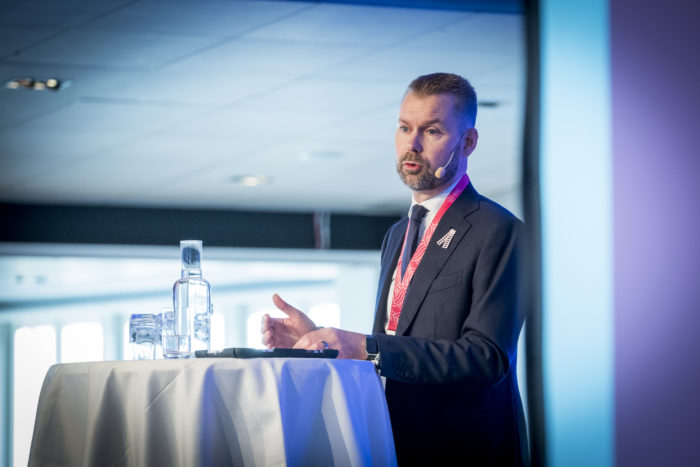
“My expectation is that overtime the marketing will calm,” adds Tjärnström. “The main benefit of the re-regulation is that the entry barriers will be lifted, but the barriers have been far too low prior to January. That has seen a lot of newcomers. You have 60 companies getting a licence and you can expect there to be around 100 to 120 brands. The culling has started already and as the days go by, the number of brands will slowly decrease over time, as we saw in Denmark. But it will be some time before it goes down in the perception of the general public,” he concedes.
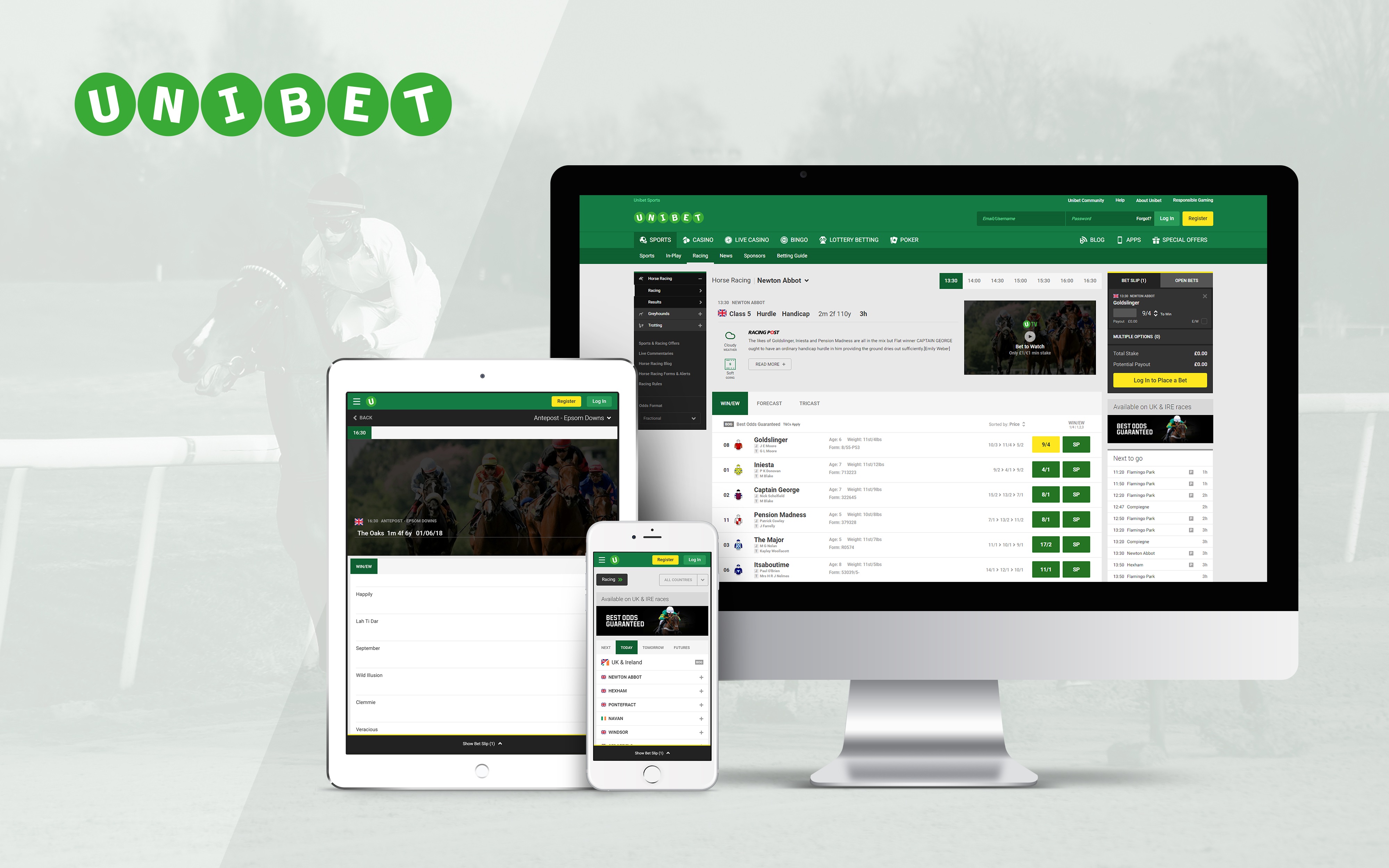
Kindred currently offers five brands in Sweden: Unibet – the operator’s only sportsbook brand – alongside Maria Casino, iGame, bingo.com and Storspelare, which translates to ‘High Roller’.
Tjärnström is pleased with the portfolio and is confident the mix will allow Kindred to build on the strong position it established in Sweden pre-regulation, although he admits it is still too early to produce any worthwhile figures regarding market share.
“It is a little bit too early for that,” he says. “We will have to wait and see what numbers the regulator comes up with. It is also a question of channelisation and how much of the gambling is actually taking place within the [regulated] system. We have high expectations that the gambling authority will step up and enforce the rules to make sure operators without a Swedish licence are stopped. We need the regulator to oversee that and act on it appropriately,” he adds.
Work in progress
The Swedish Gambling Authority, or Spelinspektionen as it is now known after rebranding from Lotteriinspektionen on 1 January, has not had the most enviable of tasks. Having to introduce an entirely new legal gambling framework in the six months between July 2018 and January 2019, while processing lengthy licence applications from hundreds of perspective operators, is no mean feat.
“The licence administration process time-wise has been a big task for the Swedish Gambling Authority,” says egaming expert Andersson, producing one of the understatements of the year, and taking on such a mammoth task in such a short space of time has inevitably led to teething problems. Spelinspektionen confirmed that 10,000 people signed up for its voluntary self-exclusion register, Spelpaus.se, within the first week of launch. However, it soon became clear that there were shortcomings in the regulator’s cross-checking mechanism. Some licence holders did not possess an active connection to the register and self-excluded players were still able to access egaming sites.
Operators Aspire Global and Genesis Global were asked to provide an explanation as to why they failed to connect to the register, with Spelinspektionen confirming that licences could be stripped for repeat offences. Tjärnström sympathises with the size of the task for the regulator, but it is obviously in the best interests of Kindred that non-compliant operators are filtered out of Sweden as soon as possible.
Asked whether the regulations were still a work in progress, Tjärnström says: “Absolutely. To some extent, that isn’t a surprise because they were really pressed for time, as they only had six months to handle all these applications and the downside of that is that they didn’t leave themselves time to do really rigorous checks.” He adds: “We have been monitoring the market and there are some questionable operations that are ongoing, but we are encouraged by the fact Spelinspektionen is monitoring the situation and taking action. We expect much more action to come.”
The Nordics accounted for around 34% of Kindred’s £230.7m revenue in Q3. Sweden is the most important country for egaming revenues in the region, but Tjärnström’s comments about his home country are more sentimental than strategic. “It used to be the market for us as a group but we have much more of a global approach these days,” he says. “Sweden is important and is our native market so it is more close to our hearts, but we have a strong portfolio now of countries we operate in and we have the ability to further expand on that.”
It would be fair to assume that Kindred is looking beyond the Nordics because growth has slowed across the continent. Kindred revenues grew 19% in Q3, but as Eilers & Krejcik Gaming analyst Alun Bowden points out, this was split into 29% growth in Western European markets and just 3% growth in the Nordics. Bowden says: “Continued strong performance in Western Europe is becoming the norm now, and should not be casually overlooked, but alongside this the continued slowdown in Kindred’s spiritual home is an interesting story to note.”
The Swedish Gaming Authority pointed out that the off shore Swedish market grew by 12% in the first half of 2018. It is also important to point out that the Nordic slowdown has been primarily driven by payment issues in neighbouring Norway and bonusing rule changes in Denmark, but even so, Kindred is perhaps operating behind the market and also some of its Scandinavian rivals.
2010 – The year Henrik Tjärnström started as CEO of Unibet Group
£2m – The UKGC-imposed financial penalty for 32Red’s social responsibility failings
19% – Q3 2018 gross winnings revenue increase
12.15am – The time Kindred went live in Sweden’s re-regulated market on 1 January 2019
£19m – The price Kindred paid to purchase Stan James in 2015
Asked how Kindred can reignite growth in the region, Tjärnström again points to Sweden’s new-look framework but admits it will be tricky due to the maturity of the market. “The re-regulation in Sweden is a good thing for us as there have been too many opportunistic operators coming into the market and behaving in a more aggressive way, which is not good for the reputation of the industry and also for us being a responsible operator of scale,” he says. “The Nordic region is more of a mature region. The stats show that 40% to 45% of all gambling is taking place online and there is a smaller population base which makes things difficult, but we also know the value of being a large operator in a small market,” he adds.
January 2019 marked the arrival of significant regulatory changes to bonusing activity in both Denmark and Sweden. Danish parliament backed measures to cap gaming bonuses at DKK1,000, the equivalent of €134, effectively sounding the death knell for bonusing as an effective marketing tool for operators in the region. As an alternative strategy, Kindred tested a new payback scheme, instead offering Danish customers a 10% refund on their weekly losses.
According to Kim Oleson, Kindred’s Denmark country manager, one in every three customer queries during Q3 related to bonuses, highlighting the size of the problem. Sweden too has initiated a clampdown on bonus activity by instructing operators to offer no more than one welcome bonus per customer. Whether the Maria Casino payback scheme could work in Sweden too remains to be seen.
Tjärnström says: “We are trying and testing to see what works. Operators are only allowed to give one bonus per customer. Bonuses are part of our CRM toolbox and we try to be transparent with our customers as it will be to our long-term benefit by building long-term loyalty in a better way than our competitors.”
But are Kindred’s competitors compliant with the clampdown, ensuring a level playing field? “Perhaps a bit more than we expected, operators are not coping or adapting to the new realities and regulations,” says Tjärnström. “Again, the Swedish Gaming Authority will really need to keep their eyes open and enforce the new rules.”
The United Kindred
As Tjärnström alluded to above, Kindred Group is a truly international egaming company and there are markets to focus on outside of the Nordics that are equally important and equally complicated. The UK has proved a huge success for the operator since it tied up the acquisitions of Stan James in 2015 (£19m) and 32Red in 2017 (£176m) to boost its profile and reach in the market. Kindred hailed the immediate impact of 32Red, naming the casino brand as the key driver behind a 17% revenue rise in Q3 2017 to £193.6m.
But much has changed since 2017. 32Red was fined £2m by the UK Gambling Commission (UKGC) in June 2018 for failing to protect a problem gambler. According to the UKGC, the operator allowed a customer to deposit £758,000 between November 2014 and April 2017, without checks. 32Red also offered the player free bonuses despite their spending being flagged as problematic at least 22 times throughout the period, although most of the failings occurred before the brand was acquired.
The punishment for 32Red was dished out as part of a wider investigation from the UKGC which pledged to probe 17 different operators for social responsibility and AML failings. A raft of fines have been imposed since then, and many analysts have suggested the UK is becoming an increasingly unfriendly market for egaming operators, as proven by the well-documented reduction in FOBT stakes and subsequent rise in Remote Gaming Duty (RGD) to 21%.
The barriers to entry have risen, but Tjärnström, who called for the UKGC’s Swedish counterpart to get tough throughout his interview with EGR Intel, disagrees, insisting the regulator is simply enforcing pre-existing rules now. “In the UK, the perception is that the UKGC has stepped up on regulation but this is more about enforcement,” he says. “They haven’t moved much on the underlying regulation, they are just enforcing what was already there so it feels like a big change.”
Kindred is not alone though. William Hill, 888, Sky Bet, Paddy Power, Casumo, Stride Gaming and many others have all felt the full force of UKGC enforcement actions over the last two years. I think most would agree that Kindred is a leader in the responsible gambling space and the operator has been recognised for its sustainability measures through an AAA ESG rating from Morgan Stanley Capital International.
Andersson says: “There is no doubt Kindred’s fair play profile seems to be a high priority for the group.” But even Tjärnström admits it was the speed of the enforcement from the regulator and a rapid switch in strategy that caught out Kindred and its key competitors. “A lot of the measures and steps they have been taking are completely in line with what we support,” adds Tjärnström. “It is important to stress this is the way it should be. Gambling should be part of players’ entertainment budget and no more than that. It is for the better in the long term, but the uncertainty and the speed of that step up surprised the industry and the authorities need to be mindful about that.”
Appetite for acquisitions
Despite a fractious regulatory environment in the UK, Kindred has succeeded in the market where many others failed to make an impact, especially in gaming. Regulus Partners analyst Paul Leyland says: “In the UK, Kindred has a strong gaming brand in 32Red which seems to be reinforcing investment into sponsorship and advertising and is likely to be picking up extra betting cross-sell from a low base. However, a strong VIP focus may have caused some growth softening as regulatory-driven changes are made.”
Leyland argues that Kindred hasn’t made the same impact in sports betting however: “Betting brands have been more problematic, however, and we doubt Unibet is cutting into the mainstream despite additional focus with the shelving of Stan James. Overall, we would say that Kindred has a strong brand in the structurally fragmented casino space, but little more than a bridgehead in a much more consolidated betting sector – making consistent outperformance difficult.”
But even so, Kindred’s old foe Betsson had to pull its Betsafe sportsbook brand out of the country altogether in 2018 a er spending a fortune on marketing through partnerships with Manchester City and Conor McGregor. Former CEO Pontus Lindwall admitted the Malta-based operator would never be a big player in the UK, and switched focus to Spain, Italy and Sweden.
And for Tjärnström, it was the acquisition of two tried-and-tested UK brands that paved the path to success. “M&A definitely helped us a lot,” he says. “Building completely organically from scratch to claim market share would take a long time in such a hyper competitive market as the UK. It would never be easy for anyone to come into such a market and compete without a strong offering – that isn’t possible.
“We come from a lower level in the UK but we have been there for a few years now and it is coming up as one of our largest markets,” he adds. “We are optimistic, we have been growing faster than the overall market and we are most definitely here for the long haul.”
Kindred’s global footprint stretches far and wide – the operator has major offices in Stockholm, London and Malta, as well as key hubs in Paris, Sydney and Madrid. Kindred also set up camp in New York last year, and the true test will be whether the group can recreate its European recipe for success in the embryonic US market. Manuel Stan has been appointed SVP of USA to put feet on the ground, while Scientific Games has been selected as US technology partner. Their progress stateside is certainly worth keeping an eye on.
The group keeps on expanding into new markets and consolidating through acquisitions, and if Tjärnström retains his insatiable appetite for the egaming industry, it will take something quite special from other operators to see Kindred drop out of the top five any time soon.