
Analysis: Is online bingo ripe for disruption?
Online bingo has always tended to provide a steady revenue stream and the ability to tap into different demographics. However, EGR Technology hears from an online operator and a leading supplier on their efforts to shake up the sector

Bingo’s history can be traced as far back as the 16th century, with the first versions derived from Italy’s early incarnation of its lottery. From there, this game of chance spread to other countries and evolved to become a pastime that’s still popular in large parts of Western Europe and the US – both in the land-based online environment. Today, this peer-to-peer game is still firmly ensconced on most multi-vertical operators’ homepages, albeit often down the pecking order behind sports betting, casino and even a waning product like poker.
While bingo is that steady and reliable earner, not to mention a cost-effective means of acquiring new customers and a different player demographic, it has often somewhat been neglected in terms of product development and innovation. Instead, the attention and resources have tended to be directed at the ‘sexier’, higher-earning verticals. Of course, the fact the likes of sports betting and casino continue to steal the limelight is understandable when bingo only accounts for a small percentage, usually in the low single digits, of a large operator’s overall revenue.
Also, most operators use bingo as a vehicle to cross-sell these players into more lucrative slots and mini-games that keep them occupied – and gambling – as their digital bingo cards are ‘auto-daubed’. Indeed, the majority of bingo firms make the lion’s share of their revenue from slots and other side games. But while bingo can be leveraged as a gateway into other verticals, that doesn’t mean innovation isn’t important when it comes to creating a sticky and social online bingo experience. Product is still very much key.
A ballsy play
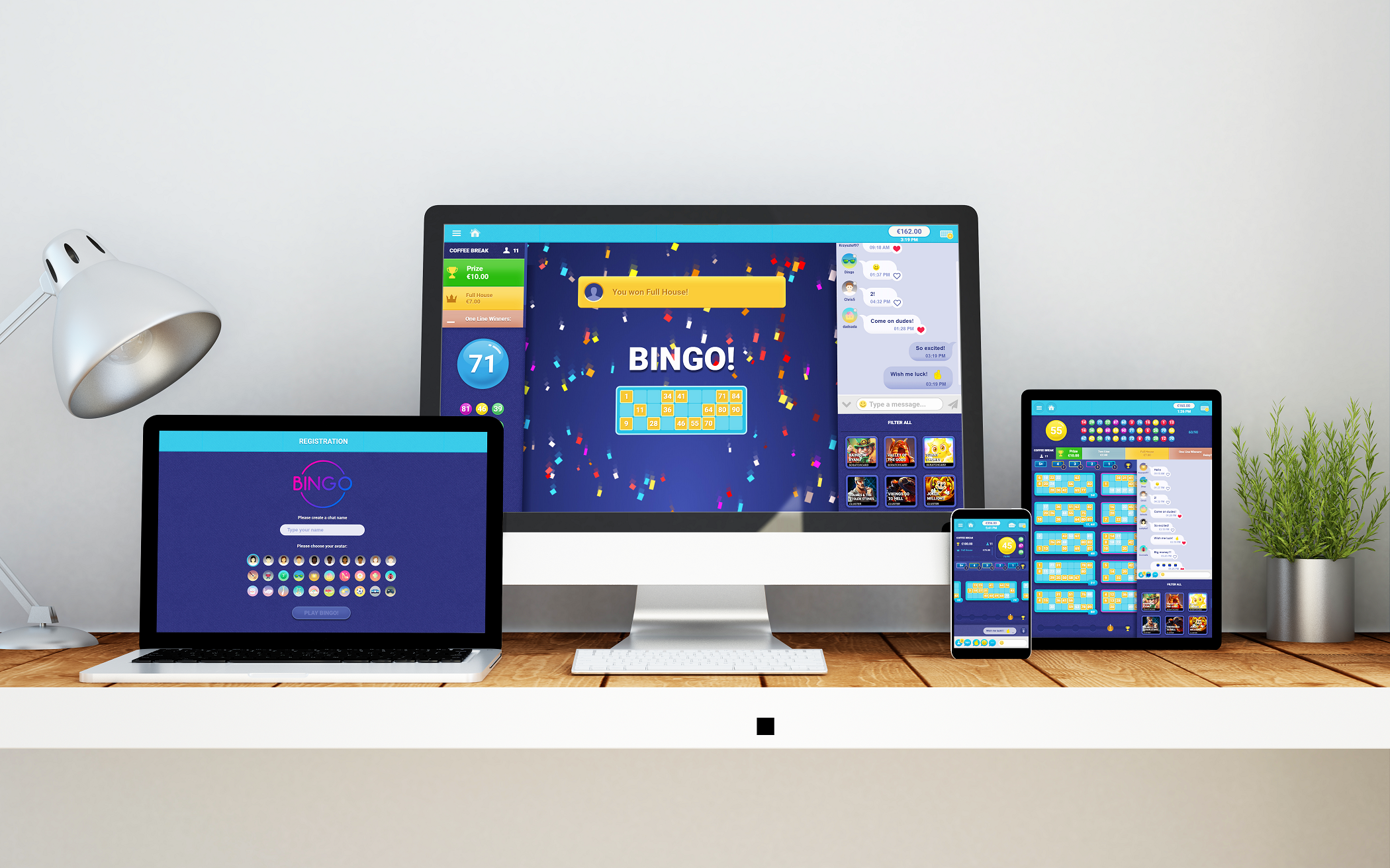
Yggdrasil is an example of one company looking to reinvigorate one of the world’s most popular and accepted gambling games. After first entering the world of multi-player bingo product development in 2017, the Swedish egaming supplier is in the process of launching a series of bingo products it firmly believes will breathe new life into the vertical. With a heavy emphasis on mobile, social interaction and innovation, the new products provide players with industry-first features such as player races, landscape and portrait modes, as well as the chance to chat with players through dynamic, contextual buttons.
Developed, for now at least, in HTML5 (native apps may come in the future) to assist with seamless deployment across a multitude of platforms, the new bingo products began life in the company’s ‘incubator lab’. The project included three “tent-poles” that had to be achieved: mobile optimisation; increased player engagement including chat and cross-sell into slots mini-games. “Mobile screen size is a real challenge for bingo, especially trying to squeeze the game, chat and mini-slots all into one,” says Yggdrasil’s head of bingo, Christopher Dean. “Inspired by notifications on mobiles, we adopted preview or summary states for chat and bingo so they could co-exist with slots.”
With the side games, the development teams tested several prototypes that worked in radically contrasting ways. This included launching thumbnail-sized slots where a portion of the screen was dedicated to slots play, and another version where the player was escorted towards a different ‘tab’ entirely. “Ultimately, we concluded that the optimal solution was to give the player control to position the game vertically and decide themselves what else they wanted to see, such as the chat or the bingo game,” Dean explains.
And talking of chat, the six-year-old supplier actually hopes to increase engagement by decreasing interaction. “By that I mean we’ve made it easier to interact with the conversation in fewer steps without laborious typing,” he remarks. “We’ve introduced contextual buttons where you can post things like the number you are waiting for with a single press or celebrate your win. You can also ‘love’ comments made by other players.” Furthermore, Yggdrasil studied products from the tech communication giants, taking inspiration from Facebook Messenger, Skype and WhatsApp for the chat functionality and other aspects of the UI.
Create a buzz
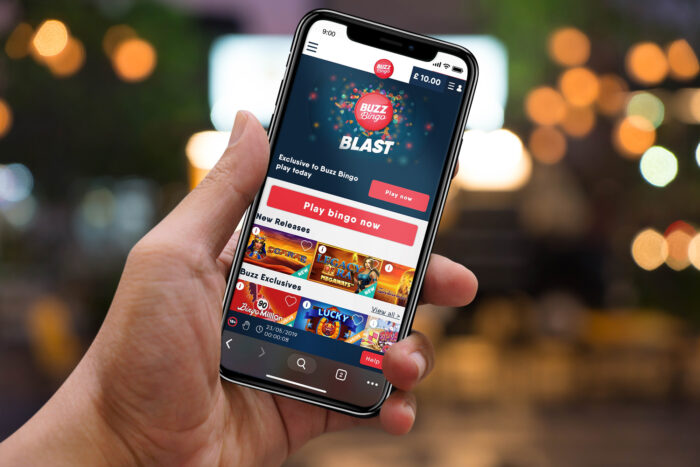
Building a standout product equipped with an intuitive and unique UI, as well as a quick and seamless onboarding process, were some of the key considerations for Buzz Bingo when recently creating its new online bingo offering, buzzbingo.com. For those not familiar of the history of this multi-channel UK operator, Gala Leisure was rebranded last year as Buzz Bingo as part of a £40m transformation, including a big online push with a relaunched brand on a new platform. The bingo operator has 119 clubs and an active customer database of more than one million players, which puts it in the unique position of being, as Buzz Bingo pledges, “the UK’s number one omni-channel bingo brand”.
The online product was unleashed last September, yet work on its design and UI, conducted in partnership with platform and content supplier Playtech, began over 18 months earlier. “We actually started the design of the website back in January 2017 [but] we wanted to make sure we took our time and delivered on our objectives,” says Stevie Shaves, Buzz Bingo’s chief digital officer. “The main objective was simplicity. From registering to logging in, playing and winning, it had to feel easy for a player, so by keeping that in mind throughout the designs and building of it enabled players to focus on the enjoyment of their experience.”
In order to launch on time, Shaves says a few undisclosed “items” were stripped off the roadmap and, therefore, the product will evolve and iterate over the next 12 months. “This has given us a really good amount of time to refine those and we’re excited to deliver these features.” Referring to the product itself, Shaves, who has previously occupied senior positions at Ladbrokes Coral, Rank Group and Playtech, says: “We made the site responsive and led with a mobile-first approach as most online bingo and slots play is via mobile now.”
In fact, as much as 84% of Buzz Bingo’s online play at any one time is on portable devices. Over at Yggdrasil, well over 60% of clients’ players are on mobile, with casino and slots especially suited to ‘snacking’. Bingo players tend to set aside longer periods to play, partly due to the scheduled nature of the game, so to neglect desktop would a strategic mistake. “In terms of sheer customer volume, mobile is the undisputed king and rightfully our starting point for the project,” says Dean. “However, there is still a core of very valuable players who remain loyal to their desktop devices and we made sure to cater for them too.” That said, the supplier is concentrating on creating speed bingo and other shorter versions to better cater to mobile users who want to play in short bursts.
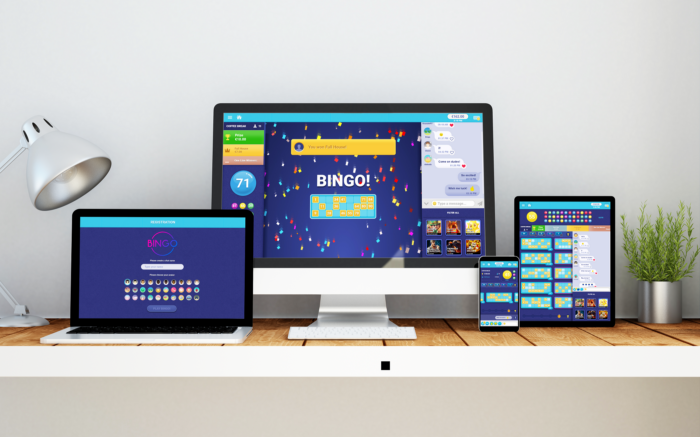
Anecdotal evidence in the past seemed to suggest bingo players were slower than your average sports bettor and casino players to migrate to mobile, partly due to socio-economic factors and because players typically didn’t own the latest smartphone and/or tablet. Despite this being less of an issue in 2019, Dean says the pace of change is rapid. “When we started out, the iPhone SE was still on sale and had decent usage statistics so was the base model we set out to support. That’s no longer the case and very quickly we have screens approaching mini-tablet size.
“Our approach was to build a responsive bingo UI that can adapt to any size. Keeping up with browser changes was another [challenge]. Part of it is being on top of forthcoming developments.” As well as a robust automated testing plan to ensure everything is working as it should, Yggdrasil’s application development lifecycle includes many quality gates, such as security behaviour. The company also uses profiling and benchmarking tools to avoid performance problems and apps are monitored for their energy consumption.
Unsung hero
Yet despite all the iterations and tweaks over the years to bingo products, the vertical doesn’t always get much of a look in when the big multi-vertical operators announce their financial results or lay on glossy presentations for a capital markets day. Many of the public firms don’t even break down bingo’s performance or plans, although at Kindred Group, where bingo accounts for around just 2% of the business, it did briefly mention in recent Q1 results that it had strengthened the capabilities of the bingo tournament tool and added more unique mini-games.
With bingo typically a low-staking product (games can be as cheap as 1p a go), it is always going to play second fiddle to other products. Yet Shaves points to the fact that although spend is lower, the LTVs of bingo players are usually higher than other verticals, suggesting bingo players are loyal. He also pulls no punches when expressing his desire to see bingo undergo a long-overdue shake-up from a product innovation standpoint: “I think it’s ripe for disruption, to be honest. It’s time it evolved as it’s been pretty stale for too long, in my opinion, and operators have allowed it to happen.
“I don’t believe in accepting that ‘this is how it is’ or ‘that’s all the system can do’. In my experience, software providers and system owners are generally good at helping to evolve their system if you are clear on what you want.” He adds: “Wholesale changes could be damaging, but it simply has to evolve.” And the direction of that evolution, he stresses, will be dictated by the players.
“This is where other operators have gone wrong in my opinion; they’ll run off and create a feature that costs thousands – sometimes hundreds of thousands – without actually checking that the player is receptive to it, and then are left scratching their heads or trying to justify it in other ways when it doesn’t work. We don’t know everything and it’s our players that will lead our innovation.” And having a close relationship with its online and land-based players is a bonus. “We can speak to them whenever we want to build on this,” Shaves states.
An increasing number of these users on Buzz Bingo’s site are male, while more and more younger users are signing up all the time. These players will already have high expectations with regards to digital gaming experiences and products. So, standing out with a ground-breaking product could be key in saturated markets like the UK where strong branding and ambassadors fronting TV campaigns are powerful UA tools (bingo TV advertising in the UK is allowed pre-watershed and often appears around programmes skewed towards female audiences). Disrupting the market with innovation and new ideas will not only rejuvenate interest in this centuries-old game but also help it to appeal to new audiences. Indeed, all eyes are down on where the bingo product is headed next.