
In the fast lane: how pay and play is taking off in Northern Europe
As launches explode across the no-registration vertical, EGR finds out what is driving its popularity in the Nordics and Baltics and how operators can compete in a crowded market


A streamlined and efficient playing experience is one of the many reasons why there has been a plethora of new pay and play brands entering the industry over the last few months. While Betsson has launched pay and play brands in Sweden and Estonia this year, other operators such as Casumo, Kindred and MaxEnt have all dipped their toes in the market for the first time over the last few months. So, what is driving this growing trend, particularly in the Nordic and Baltic regions? Even outside of egaming, a certain level of user experience is expected by customers from everyday apps and websites, says Kim Ekelund, Betsson Group’s head of marketing for Sweden. “When we look at what ‘good’ looks like, we look beyond the industry – we benchmark our registration/payment/account pages versus the best e-commerce companies in the world. “With pay and play brands, both registration and deposit happen at the same time and are a simultaneous process, which is a clear upgrade as it leaves more time to bet and play instead of a long and sometimes tedious registration process,” he adds. Betsson Group launched its Jalla Casino brand, which uses Trustly, Swish and BankID, in Sweden in March this year and SuperCasino in Estonia in August, with its main objective being to broaden Betsson’s brand portfolio to meet the demand in this segment. In Sweden alone, pay and play accounts for an estimated 22% of the online gaming market, according to data from the Swedish Tax Agency.

Betsson Group’s Jalla Casino
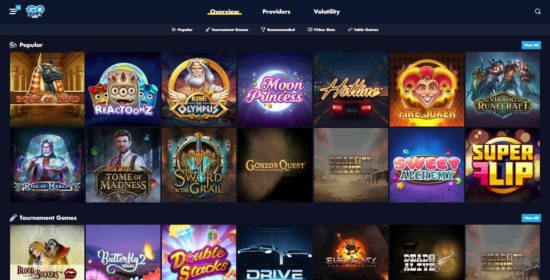
MaxEnt’s GoSlotty Pay N Play casino
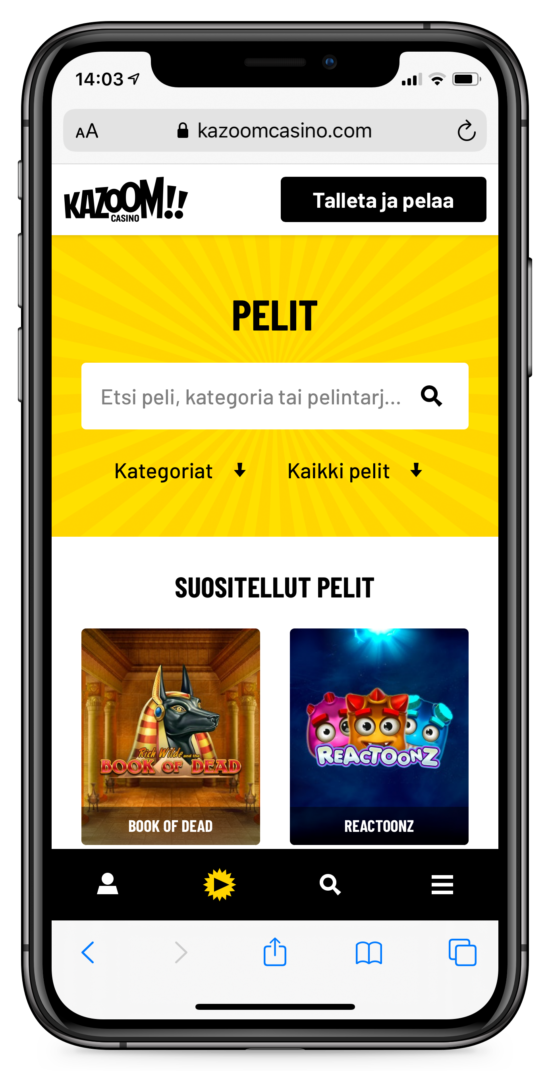
Casumo’s Kazoom Casino
Facing challenges head-on
Of course, setting up a new brand is not without its challenges. Launching a new Pay N Play brand alongside MaxEnt’s traditional casino brands like Slotty Vegas was venturing into new ground for its development team. The operator’s back-office system was not built with such a concept in mind, so much rethinking and adapting was needed. “We had to communicate with Trustly continuously to adapt the platform to the new flows and processes that are inherent in the Pay N Play concept. These changes would need to be addressed, documented, developed and integrated, and they run across all aspects of the user journey,” Minca remarks. GoSlotty, which is powered by Trustly, is primarily focused in Germany and Finland, although plans to expand the brand into new jurisdictions are in an advanced stage. Estonia and Denmark are on the cards and the operator expects further progression into these markets shortly. For Betsson’s SuperCasino brand, an added hurdle was launching a new brand in a country where casino advertising is prohibited. “Customers in Estonia are already aware of pay and play brands and how they work. Our challenge was to launch a casino brand without advertising. Our goal was to create a brand that stands out, is easily recognisable and casino-oriented. We managed that through the unique branding of SuperCasino.ee,” explains Martin Varrand, Betsson Group’s head of marketing for the Baltics.Grabbing attention
As the pay and play sector becomes more crowded, standing out from the competition by offering unique features is the key to success. For Varrand, SuperCasino’s USP is to be an entertaining platform and to provide the best customer experience in the market. “We have fun and engaging campaigns, offer sportsbook and live betting products, and we are utilising Betsson’s strength to partner with unique and exclusive game providers and launch new games to our market through SuperCasino.ee,” he explains.
Betsson Group’s SuperCasino
Safe play
On the responsible gaming side, MaxEnt has also rolled out its source of funds threshold from Slotty Vegas to GoSlotty. Trustly does not collect any extra information besides what is required for the registration and therefore it needs to be completed on the operator’s side. Due to the speed and ease of access that pay and play products offer, responsible gambling needs to be front and centre with effective monitoring in place. Casumo’s VP of growth says it has to be holistic in its approach and look at the overall gaming activity, while ensuing the platform can quickly identify players that may be showing signs of gambling-related harm. For Betsson Group’s Jalla Casino and SuperCasino.ee sites, both offer the same responsible gambling processes and features as the operator’s other brands. Players can set multiple limits, self-exclude and also take a self-assessment test. For those operating in Sweden, an added challenge has been the strict deposit and bonus limits imposed since 2 July. The restrictions for online casinos include a SEK5,000 (£428) deposit limit, alongside a bonus cap of SEK100 (£9) and time limits until the end of 2020. A former adviser to the Nordic regulators tells EGR that there could be a responsible gambling issue relating to deposit limits in certain jurisdictions and even more so where deposit limits are capped like in Sweden. “As the money goes in and out of the player account, it actually counts against the deposit limit – the operator doesn’t get to account for all the withdrawals so customers can reach their limit pretty quickly,” he points out. When asked about the responsible gambling issue in Sweden due to the deposit limits, Minca tells EGR: “While we do not operate in Sweden at this time, I can see that the current interpretation may raise some friction between operators and the regulator. What I can definitely say is that the right balance needs to be achieved between player protection and feasibility. “We need operators and regulators to work hand in hand with the player’s safety as the ultimate goal, through the implementation of well thought through requirements which protect genuinely vulnerable players,” he adds. On the other hand, for Jalla Casino Ekelund doesn’t see this as an issue as the withdrawal process is similar to its other brands in Sweden. However, he argues that the biggest concern is that deposit limits have a negative effect on channelisation in Sweden. While the rise of pay and play brands shows no sign of abating, what is fairly clear is that regulatory and responsible gambling requirements need to be a top priority in order to keep players safe and to keep them coming back for more. It looks like the need for speed will not lose its appeal anytime soon. EGR Intel: Why do you think the Pay N Play model is so popular in the Nordics?
Vasilije Lekovic (VL): The Pay N Play model is so popular because it drastically improves the online player experience by mimicking the in-person player experience, while supporting operators in their regulatory requirements. When a player walks into a casino or sportsbook, for instance, he or she can deposit money and play directly. Similarly, with Pay N Play online players can register an account and deposit funds in one seamless transaction, bypassing the traditional lengthy registration flow. Likewise, when players wish to withdraw their winnings, they can do so instantly, directly back to their online bank account, rather than waiting days for the withdrawal. This mimics the instant gratification of in-person play, while supporting operators in fulfilling their KYC requirements through providing verified KYC information on the players.
EGR Intel: How do your Pure and Hybrid models differ?
VL: The Pure Pay N Play model is one in which Trustly is the only payment and registration method available, and where we see the best resulting player experience. In the Hybrid model, Trustly sits alongside other payment and registration methods. This model is more suitable for the large brands that operate on multiple markets and cannot be stripped down to only one way of registering or paying. Although the Pure model has been the more popular one due to its simplicity and frictionless user experience, we have had several very successful Hybrid implementations, including William Hill in Sweden, Mr Green in Finland and others.
EGR Intel: Where are you planning to roll Pay N Play out in next?
VL: We’re currently looking at multiple new markets. The Payment Services Directive 2 and Open Banking initiatives across Europe are bringing new opportunities in terms of user experience and bank payment adoption that we believe will help replicate the success we had with Pay N Play in the Nordics.
EGR Intel: What are your strongest markets for Pay N Play?
VL: Sweden and Finland are particularly strong for Trustly but we see a steady growth in other markets too.
EGR Intel: What are the regulatory constraints involved with launching in some countries?
VL: The magic of Pay N Play is that in addition to processing instant deposits and withdrawals, we pass along player data to the operator, letting them register an account in the background and thus bypassing traditional lengthy registration processes. Depending on the market, different player information is available, and thus we cannot fully support in meeting necessary regulatory requirements. When possible, we supplement the player data with third-party registry data, but depending on the market there are often regulatory constraints. We’re constantly working together with relevant authorities to supply the most compliant data available.
EGR Intel: Why do you think the Pay N Play model is so popular in the Nordics?
Vasilije Lekovic (VL): The Pay N Play model is so popular because it drastically improves the online player experience by mimicking the in-person player experience, while supporting operators in their regulatory requirements. When a player walks into a casino or sportsbook, for instance, he or she can deposit money and play directly. Similarly, with Pay N Play online players can register an account and deposit funds in one seamless transaction, bypassing the traditional lengthy registration flow. Likewise, when players wish to withdraw their winnings, they can do so instantly, directly back to their online bank account, rather than waiting days for the withdrawal. This mimics the instant gratification of in-person play, while supporting operators in fulfilling their KYC requirements through providing verified KYC information on the players.
EGR Intel: How do your Pure and Hybrid models differ?
VL: The Pure Pay N Play model is one in which Trustly is the only payment and registration method available, and where we see the best resulting player experience. In the Hybrid model, Trustly sits alongside other payment and registration methods. This model is more suitable for the large brands that operate on multiple markets and cannot be stripped down to only one way of registering or paying. Although the Pure model has been the more popular one due to its simplicity and frictionless user experience, we have had several very successful Hybrid implementations, including William Hill in Sweden, Mr Green in Finland and others.
EGR Intel: Where are you planning to roll Pay N Play out in next?
VL: We’re currently looking at multiple new markets. The Payment Services Directive 2 and Open Banking initiatives across Europe are bringing new opportunities in terms of user experience and bank payment adoption that we believe will help replicate the success we had with Pay N Play in the Nordics.
EGR Intel: What are your strongest markets for Pay N Play?
VL: Sweden and Finland are particularly strong for Trustly but we see a steady growth in other markets too.
EGR Intel: What are the regulatory constraints involved with launching in some countries?
VL: The magic of Pay N Play is that in addition to processing instant deposits and withdrawals, we pass along player data to the operator, letting them register an account in the background and thus bypassing traditional lengthy registration processes. Depending on the market, different player information is available, and thus we cannot fully support in meeting necessary regulatory requirements. When possible, we supplement the player data with third-party registry data, but depending on the market there are often regulatory constraints. We’re constantly working together with relevant authorities to supply the most compliant data available.