
Going green: Why Paf aspires to lower customer yearly loss limits even further
CEO Christer Fahlstedt talks candidly to EGR about refusing to take "blood money" revenue from at-risk players despite it doing obvious damage to the company's bottom line

Back in 2006, I was lucky enough to visit the autonomous Åland Islands, a hidden gem of around 6,757 islands, during my time as a cruise ship journalist. I took a boat ride hosted by Visit Åland’s marketing manager at the time who, it turns out, now works at gambling operator Paf, based in the capital of Mariehamn. It’s a small world indeed. And the coincidences don’t stop there as not only is Paf an online gambling operator but it also supplies slot machines and gaming tables to cruise ships. This is an area that has been hit hard during the coronavirus pandemic, as cruise ships remain moored and unable to operate. For Paf, its business comprises of 70% online and 30% on cruise ships, CEO Christer Fahlstedt tells EGR Intel on a video call from his home office in Stockholm. “The cruise ship part has been more or less shut down since March/April. We’re approaching almost 12 months of virtually no operations. And we also see that not all of the ships are returning. There’s a short-term and long-term effect so that’s been a very challenging thing,” he explains. There were also challenges for the online business last year when international sports was put on hold, as well as a temporary shutdown of online gambling in Latvia from 6 April and restrictions in Spain and Sweden. However, despite the ups and downs of 2020, Fahlstedt describes it as an “okay year, all things considered” and that compared to other industries at least online gambling could still operate in most markets. For Paf’s CEO, who is used to commuting from his home in Sweden to the company’s HQ in Mariehamn, his staff adapted well to remote working in the first few months of the pandemic, but most people are keen to do a mixture of remote and office working once restrictions are lifted. The company has also introduced a new policy of ‘work from anywhere’ so if you are employed for Paf in Sweden or Finland, for instance, you can work wherever you are in that country.
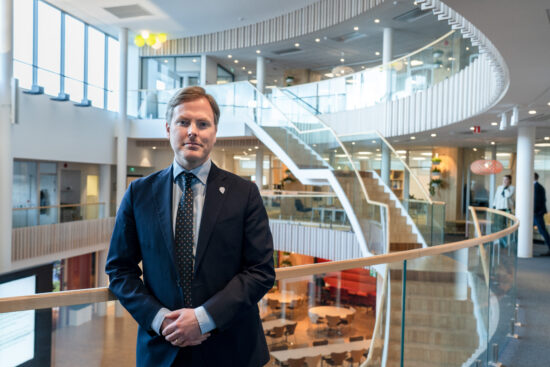
Paf CEO Christer Fahlstedt at Paf’s head office in Mariehamn, March 2020. Photograph: Rob Watkins/Paf
At a loss
One of Paf’s key pillars is responsible gaming. It is something its CEO takes very seriously. When Paf first introduced loss limits in 2018, these were set for online play at €30,000 per year. In 2019, this was reduced further to €25,000 and then dropped again last year to €20,000. Fahlstedt describes it as a “strategic decision” but it is also one that has had a knock-on effect on revenue, leading to a decrease of income by €2m-€3m every year. “Our view is that in a tightly regulated European market, we think you’re unlikely to be allowed to lose more than €8,000 per year. That’s what we see as the benchmark,” he goes on to say. Fahlstedt, who joined the firm in 2016, believes this is a sustainable level and that Paf needs to be prepared for the future. “We’ve been around for 55 years and we want to be around for another 55 years, this is where it’s going. It’s like with environmental laws, we’re a Tesla. This is where it’s going to end up, we want to be ahead of the curve and adjust. We’re going to be long-term sustainable.” Lofty ambitions indeed, yet it’s a goal that Fahlstedt acknowledges will take some time to achieve. While Paf hasn’t had top-line growth in the last three to four years, it has had growth in the “green segment”, i.e its sustainable players. In September, the board will make a decision about how it will move forward with this strategy and at what pace. “It’s a fine balance. We have a lot of obligations we need to serve. We have to generate funds. We need to be competitive and to grow and survive in the market. But, at the same time, we have a moral obligation to do everything we can to make sure we don’t generate money from the wrong customer groups. It’s as simple as that,” explains the Swede.True colours
Using a colour-coded system in its annual reports, ‘green’ refers to revenue from players who lost up to €8,000 during the year while ‘red’ relates to revenue from players who lost over €30,000. And Fahlstedt is not afraid to admit there is still a long road ahead to achieve its ambitions for green revenue: “We still have a lot of money that is wrong in our numbers. There’s no denying that and we should say no to more money. This is a journey we have started and there is going to be many years left on this journey before we reach our green revenue.” Paf made €14m from the red segment in 2017, but last year this was €0. With 80% of this hitting the bottom line, Fahlstedt concedes that it “is a massive thing to say no to but it’s the right thing for us to do”. He says it makes him very proud to be the only company in the world that publishes these types of numbers in its annual reports with total transparency. “For sure, it’s a lot of money that has been lost for the owners. But we’re all in agreement that this is money we shouldn’t have. You can sugarcoat it but it’s blood money. It’s to a very big degree people who are sick and can’t control their gambling addiction, and that’s money we shouldn’t take,” he states.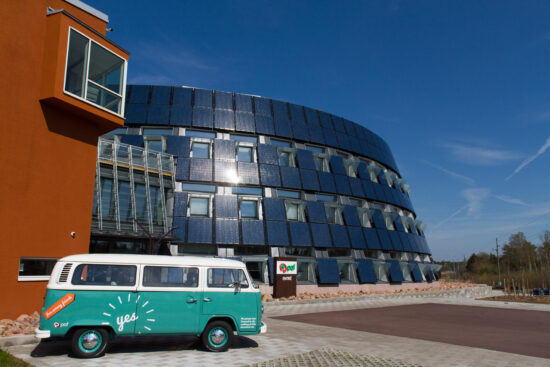
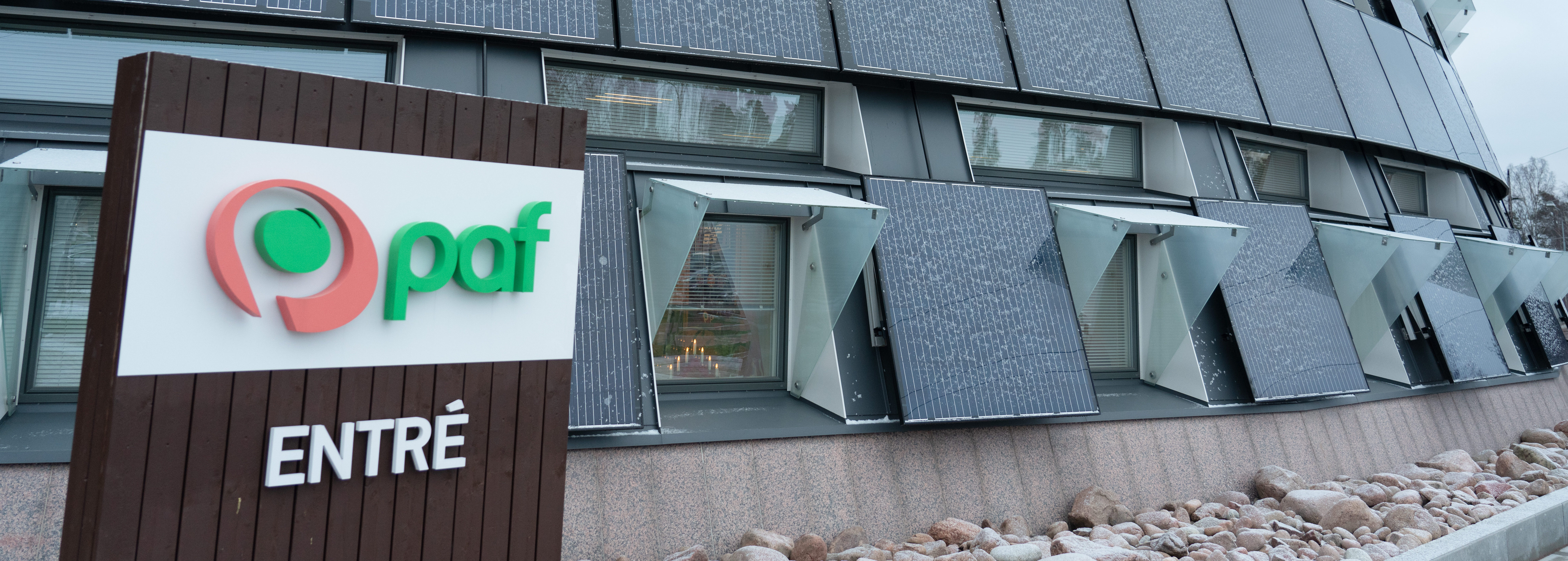
Paf’s HQ in Mariehamn was built with sustainability in mind, featuring solar panels on the roof and façade