
Game plan: Why operators are increasingly looking to craft in-house casino titles
In a heavily congested arena like online casino, operators look to exploit every angle when it comes to differentiation and reeling in new users. One ever-popular strategy is to produce proprietary games, but is this bold move really that straightforward?

It will be 10 years in November since Paddy Power made the industry sit up and take notice by snapping up a small, two-year-old casino games developer, CT Networks, otherwise known as Cayetano, for an undisclosed sum. Headquartered in the Isle of Man and with its software developers and graphic designers based 1,500 miles away in Bulgaria’s capital, Sofia, Cayetano was primarily acquired to boost the operator’s in-house games content capabilities. Just four years after the deal was announced, the studio had built and launched more than 100 titles on Paddy Power Games, including leprechaun-themed Paddy Power Gold, which went on to become the Irish bookmaker’s most-played slot ever. Fast forward to 2021 and online gambling operators are still generating headlines for whipping out their cheque books to purchase third-party suppliers, or instead opting to build in-house studios as a way of standing out in what remains a homogenous sector. “It’s the same slots, the same roulette and same live casino everywhere,” says Marc Thomas of Propus Partners on the point about the ubiquity of me-too casino products. And, of course, those operators that opt to go down this route avoid having to hand over the usual cut of revenue, typically around the 10% mark, on any of their exclusive games. US operator Penn National Gaming (PNG), the company behind Barstool Sportsbook, revealed in early May that it had acquired HitPoint Studios and its spun-off real-money gaming business, LuckyPoint, to accelerate the launch of Penn Game Studios. The goal is to create exclusive casino content and maximise cross-sell with customised Barstool-branded content. Meanwhile, LeoVegas Mobile Gaming Group unveiled plans the same month to start Blue Guru Games, with the aim to develop exclusive games for the Stockholm-listed firm’s LeoVegas brand and for other operators. LeoVegas will hold an 85% stake in the studio. At least 20 games are slated to be released in the next two years, the first of which should be completed in Q4.
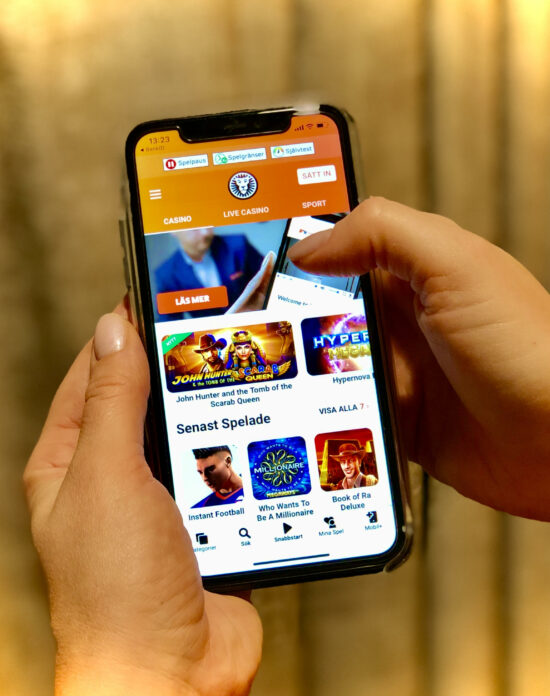
LeoVegas plans to churn out 20+ games in the next two years from its Blue Guru Games studio
Core values
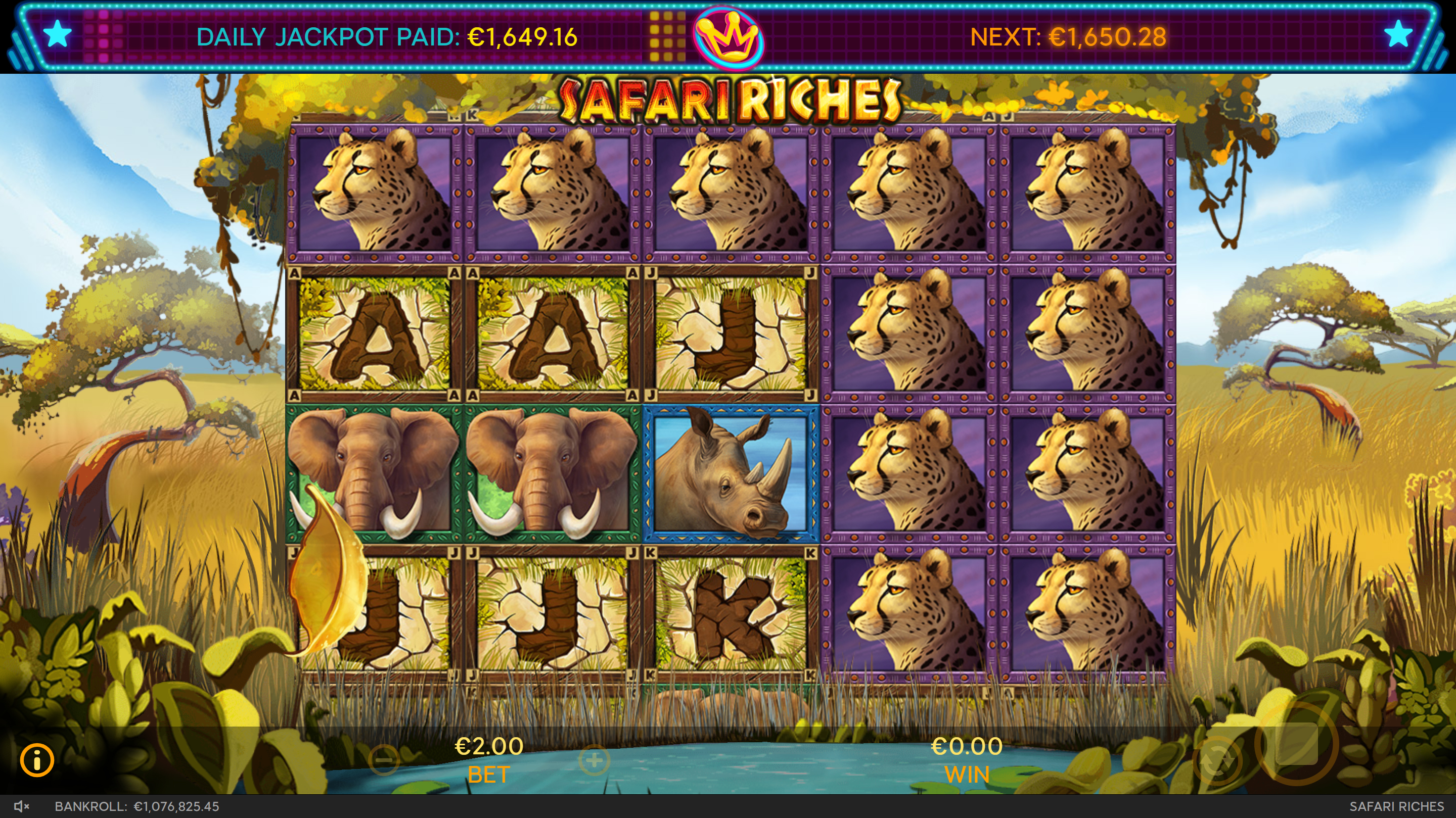
Justin Chamberlain has first-hand experience of an operator having a games content studio in its crosshairs after his previous company, West Midlands-based CORE Gaming, was acquired by Sky Betting & Gaming in 2016, again for an undisclosed fee. The HTML5 casino content developer had been crafting exclusive games for Sky Vegas and, therefore, the purchase was a logical fit. For Chamberlain, who oversaw the creation of 250 online casino titles prior to establishing studio HungryBear Gaming in 2020, these acquisitions are ostensibly about operators being in full control of, as he puts it, “games they want to develop”. “Operators invest in their own studios [because] I think they’re all getting a bit more savvy to building more bespoke content tailored to their players, or their future players. So, it gives the operator the chance to develop and hold onto that content, and benefit from the financial aspects of that being in-house content.” 888 has been building its own games for its brands since the company was founded way back in 1997. Its dedicated in-house studio, known as Section8, crafts everything from slots and table games to video poker and scratchcards. Formed four years ago, Section8 employs 30 people encompassing developers, visual artists, sound experts, testers and product managers. Exclusives to complement 888’s 2,000+ third-party games include branded games such as the recently released Mad Max Fury Road and hit titles like Safari Riches. In 2020, 80% of 888 players tried Section8 games. “Section8 games are consistently some of the best performers across 888’s games portfolio, which reflects the high-quality content that we are able to produce in-house,” says studio manager Ofir Gal-Mor. In fact, Gal-Mor draws comparisons between offering a mix of exclusive and third-party games and popular subscription TV platforms. “We see the games choice for customers as similar to how platforms like Netflix and Sky operate. They offer customers a wide range of content from third parties, including the big-branded content studios. “Alongside that, they create their own unique content that is only available on their own platforms – that provides differentiation and reasons to choose their platform. This is very similar to our approach to gaming content, where we can offer the best third-party content, as well as our exclusive in-house games. The rich data that we get from our own games also helps us to source the best third-party games.” In-house content capabilities are not just the preserve of the major players, though. Between Finland and Sweden in the Baltic Sea lie the Åland Islands, an autonomous archipelago belonging to Finland that is the headquarters of land, cruise ship and online operator Paf. The firm first went online in 1999, although slots content was limited at the time and so Paf began creating its own games out of necessity. Today, the boutique studio is still going strong, employing 15-20 people. “We have kept it over the years because it is a unique asset to have,” Paf’s chief gaming officer, Kim Johansson, says via Google Meet from his home office in the Åland Islands. “You have so much more freedom when you can decide what games to do – if you want to do a branded game or if you want to do something specific for a market that you are in. That’s why we have it and have kept it.” For instance, Paf has developed localised games for the Estonian market based on a well-known political TV show in the Baltic state. There have also been slots with hunting and fishing themes to appeal to Nordic players, while flagship game Cash & Carry, based around shopping, has been a big hit for Paf over the years. A video poker game and tropical-themed Tidal Drift also continue to perform well. “We have tried all sorts of themes,” Johansson says.On an equal footing
Across the Atlantic, PNG’s decision to establish Penn Game Studios may well have been influenced to some degree by the success rival online operator DraftKings has enjoyed with its own RNG games. The Boston-based outfit threw its hat into the online casino ring with a single blackjack game for the New Jersey market in December 2018, yet its first homegrown games were unleashed nine months later. During the firm’s Investor Day presentation in March, it was revealed that $14.2bn had hitherto been wagered on DraftKings’ casino products. More than half of this amount was staked on its expanding stable of in-house games. Besides rolling out a dedicated igaming app last year, 26 games were built in-house in 2019 and 2020, and the goal is to launch at least 20 more in 2021. In fact, more than a dozen blackjack games have been created up until now, including Draft-Kings-exclusive Spanish 21. Furthermore, DraftKings said proprietary marketing technology like leader boards and autonomous gaming credits have driven customer engagement. With 57% of DraftKings’ online sportsbook users placing a casino bet in 2020, the Nasdaq-listed gambling giant has sought to fuse sports with gaming. For instance, Slider Blackjack allows users to glide between the popular table game and DraftKings Sportsbook by simply swiping up and down on a mobile device. Another example is March Mania Roulette. This title, released to coincide with college hoops’ March Madness, features a roulette wheel and table on a basketball court. A minigame involves taking shots at the basket. Jason March, VP of gaming at DraftKings, says exclusive games have been “instrumental” in the success of the casino product to date, and that the in-house studio allows “creative freedom you can’t always get from suppliers”. He adds: “Our approach has been to hone in on areas where we feel we can improve the overall player experience, notably table games, and those efforts have been largely reflected in player data. So much of the industry’s focus has remained on slots, which is due in part to the challenges associated with building table games, but also that there are quite literally thousands of slot themes to build. Data and feedback continually indicate that as customers try their hand at our games, they are both satisfied with their experience and express an appetite for non-traditional games, which has really influenced our upcoming, exciting roadmap involving creativity and innovative game play.”Ideas factory
It typically takes Entain’s internal development teams seven weeks to take a game from the drawing board to the finished article. Meanwhile, 888 produces around 15 games a year (10-12 will be video slots), which means the operator spends, on average, three-and-a-half weeks building each one. The more complex games take far longer, though. Gal-Mor says: “Currently, 888 focuses on high-production-value video slots that integrate elaborate game design, progressive jackpots and strong visuals, challenging ourselves to expand our games portfolio and differentiate our offering from competitors. The end-to-end process of such a game can span nearly one year, from concept to production deployment across all regulated markets where 888casino is live. Conversely, a medium production clone of a legacy game can be fully deployed in half the time.”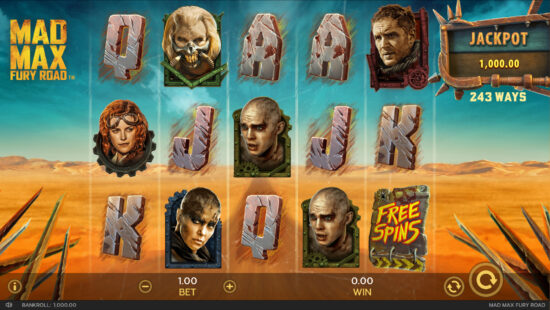
888 creates 15 in-house games a year, although high-production titles can take up to 12 months to build and roll out