
Fortune hunter: How Fortuna Entertainment Group became a multi-channel powerhouse
After seven years in the hot seat, seasoned industry professional and CEO Per Widerström discusses the opportunities and challenges in Central and Eastern Europe

About a kilometre east of the hustle and bustle of Wenceslas Square – the main plaza in the Czech Republic’s capital of Prague – is the sprawling neighbourhood of Žižkov. Long a popular haunt for artists, musicians and students, this edgy part of the city is also home to the headquarters of Fortuna Entertainment Group (FEG). The operator’s 78,500 sq ft base for 700 employees is housed in an ultra-modern complex with floor-to-ceiling windows, exposed industrial-style ceilings, spacious work environments and a fourth-floor terrace garden complete with coffee bar. The recycled and natural materials used in construction, right down to rainwater collected to flush the toilets, also make it extremely sustainable and eco-friendly. The stylish and sleek interiors are conspicuously juxtaposed by the peculiar-looking Žižkov Television Tower – once dubbed the world’s second ugliest building – that has dominated this part of Prague since its completion in 1992. In fact, FEG’s roots in the Czech Republic stretch as far back as the 216-metre-high tower. The Fortuna brand was established in March 1990 in what was then Czechoslovakia, shortly after 1989’s bloodless transition of power known as the Velvet Revolution, which ended 40 years of communist rule. In 1991, Fortuna’s sister brand, Terno a.s., was formed in Slovakia before both merged in 2004. Fast forward to today and, under the stewardship of industry veteran Per Widerström, the group has cemented itself as the leading player in Central and Eastern Europe (CEE), with a strong presence in Poland, Romania and Croatia, besides its longstanding markets of the Czech Republic and Slovakia. “We have transformed Fortuna Entertainment Group from I would say a rather Czech-centric operator to a leading operator in Central and Eastern Europe from an omni-channel, multi-product perspective,” Widerström explains. “That transformation was quite holistic – it touched across the whole operation across three markets, but it is now five markets,” he adds, referencing how FEG expanded into Romania in 2015, which was one year after he arrived to take up the reins, followed two years later by Croatia. “As a team, we have transformed this company. We have grown the underlying profit by almost six times [since 2014], and I would say 60% of that is organic growth and 40% is driven by M&A. So, I’m proud of the transformation and the value creation.”
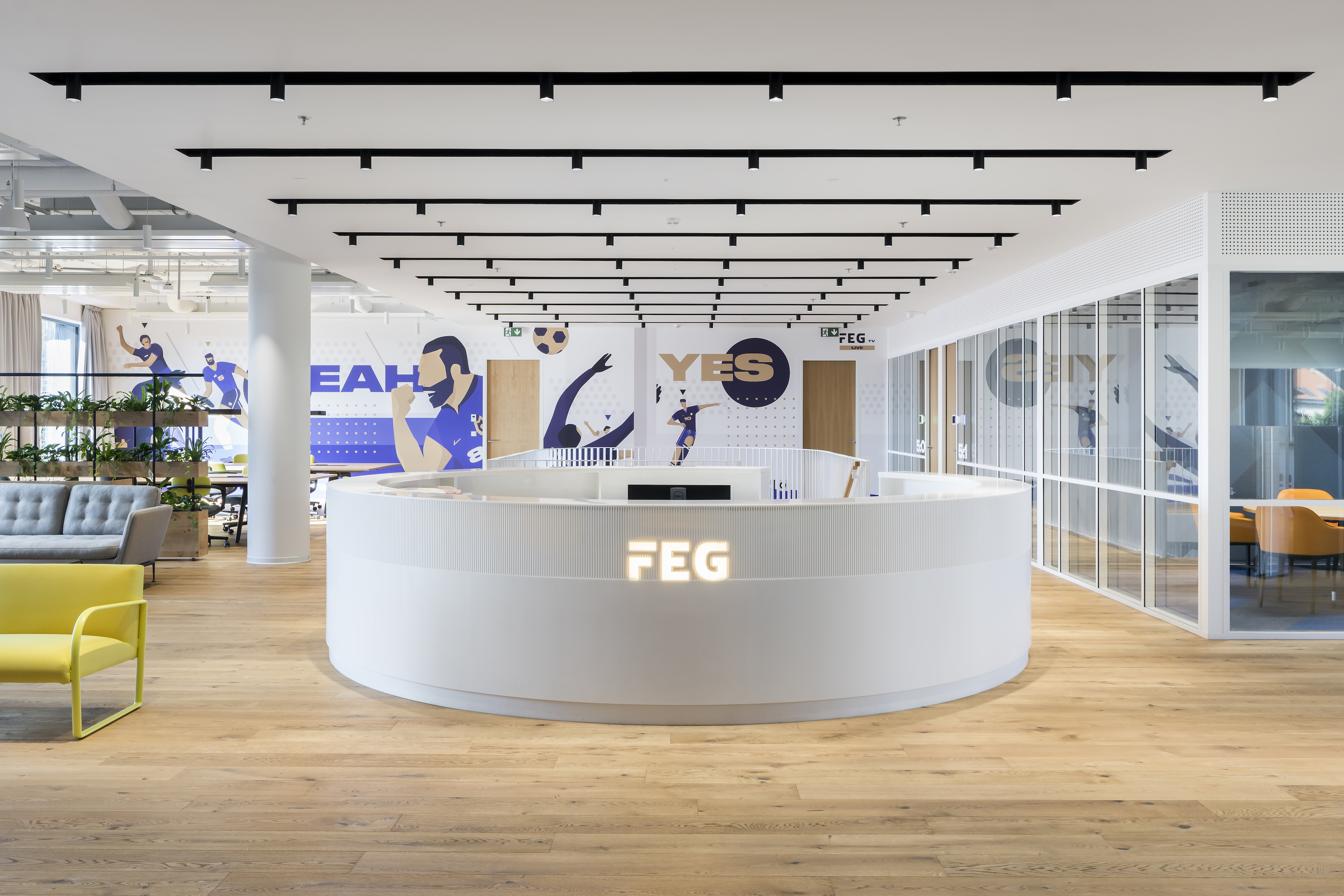
FEG’s spacious and modern HQ in Prague accommodates 700 employees
High five
FEG’s online gambling websites across the five CEE markets comprise of ifortuna.cz, ifortuna.sk, efortuna.pl, psk.hr, fortuna.ro and casapariurilor.ro. Romania is the only market where FEG deploys a dual-brand strategy, namely with Fortuna and Casa Pariurilor. FEG acquired Casa Pariurilor – Romania’s second-largest betting brand – as part of the purchase of Ireland’s Hattrick Sports Group in 2017 for a total consideration of €135m. As part of this deal, FEG also entered Croatia by operating under the brand of the country’s second-largest operator, PSK (Prva Sportska Kladionica). For Widerström, who is chairman and CEO of a company that employs more than 6,000 people, the operator’s network of 3,300 betting shops continues to be “absolutely fundamental”. Therefore, the extended closure of these outlets – the overwhelming majority of which are in Romania – across all five markets last year due to Covid-19 was obviously a hammer blow. Yet conversion of land-based bettors to online accelerated, as did the spend of “hybrid customers”, Widerström tells EGR Intel on the side-lines of the recent EGR Power 50 event at the Puente Romano Beach Resort in Marbella, Spain. Unsurprisingly, online gaming saw “very solid growth” due in part to physical casinos being shuttered and sports being in short supply because of the pandemic. “Local land-based content replicated in the online channel has been particularly very successful.” As things stand, online accounts for around 70% of total group revenue. Upwards of 80% of this is mobile. “It’s still a robust retail channel at 30%,” the Swede is quick to point out. That said, there has been a pronounced shift to online during his time with the business. “A few years ago, it was very much cash- and retail-centric, but it accelerated due to the pandemic as well as our focus on retail to online conversion as part of our omni-channel strategy. I don’t think 70% online is very dissimilar to other markets, but from a CEE perspective that is a dramatic change from what it was. I should also say that in jurisdictions like Poland we see that the younger generation is very much into esports. With esports and MMA, we see a lot of traction.” And like publicly listed operators have noted in the past during results presentations, the omni-channel customer is “substantially more valuable”, Widerström confirms, than the pure retail or online-only cohort. For him, it is about creating a “seamless experience” between online and the betting shops in order to hold onto those highly prized customers. “We try to replicate as much as we possibly can between the two channels. We have continued to invest in the player account management and holding the hand of the retail customers to go online.” FEG’s 5,000 self-service betting terminals throughout the shops help with that transition. “We see self-service, especially proprietary technology, as a great bridge between retail and online.” He continues: “We saw some retail punters that did not go online [during Covid-19], and we are now trying to reactivate them.” Meanwhile, on the subject of any pronounced differences between CEE customers and those in Western European markets, FEG’s clientele tend to be fond of including multiple selections in hard-to-hit accumulators at long odds, the CEO reveals. “Our exposure to multiples is higher [than firms in other markets].” That said, he suggests his betting punters are “sophisticated”. “They are data-driven; they love to scan through the stats.”Taking stock
Up until mid-2018, FEG was a public company. That all changed in May of that year when the business delisted from the Prague Stock Exchange. The following month, the company also delisted from the Warsaw Stock Exchange and became privately and wholly owned by Fortbet Holdings Ltd, a subsidiary of Czech-Slovak investment group Penta Investments Ltd. What it meant from EGR’s perspective was we were no longer afforded a window into the financial performance of the company in the form of quarterly reports. However, FEG did open its books to us for the EGR Power 50 issue in November 2019 and the accounts revealed net online revenue of €191.7m for the 12 months ended 30 June 2019, which was a 27% year-on-year rise, while overall group revenue climbed 21.4%. As a side note, this strong growth was one reason why FEG was ‘highly commended’ for the headline prize at the EGR Operator Awards that year, pipped to the post by GVC Holdings (now Entain). To be highly commended ahead of the likes of bet365, The Stars Group and William Hill was still a feather in FEG management’s cap and illustrated the operator’s impact in the, to a certain degree, neglected and untapped CEE region. Despite the somewhat opaqueness relating to FEG’s earnings and operational ins and outs these days, during our conversation with Widerström he divulged that EBITDA for the most recent financial year was €154m. “I must say the 154 million [euros] was robust and decent in light of the Covid impact. So, while we had a year-on-year increase, we had higher expectations pre-Covid.” What’s more, the firm’s progress in the CEE region under Widerström has been reflected by its steady ascendancy up the annual EGR Power 50 rankings. In 2020’s rundown of the industry’s most influential and powerful operators, FEG achieved its highest-ever position of 12th, up two places on the 2019 edition. In fact, FEG’s form figures for the last five years read: 12, 14, 15, 21, 21. Taking that next step and breaking into the top 10 of the Power 50 does perhaps seem a stretch too far, especially given how the firm is so CEE-centric, although this could change, of course. “Pre-Covid, we were looking beyond CEE. Covid came in and we went into a very different modus operandi,” Widerström reveals. M&A is a possible route into new markets and to expand its footprint, although the CEO is careful not to give too much away, though, merely stating: “We want to make sure our brands and the offering has sustainability, and for that you need to be part of the consolidation. There are certain markets that we are interested in…of course, it’s very important to get a good understanding of what is the normal baseline pre- and post-Covid when it comes to pricing.”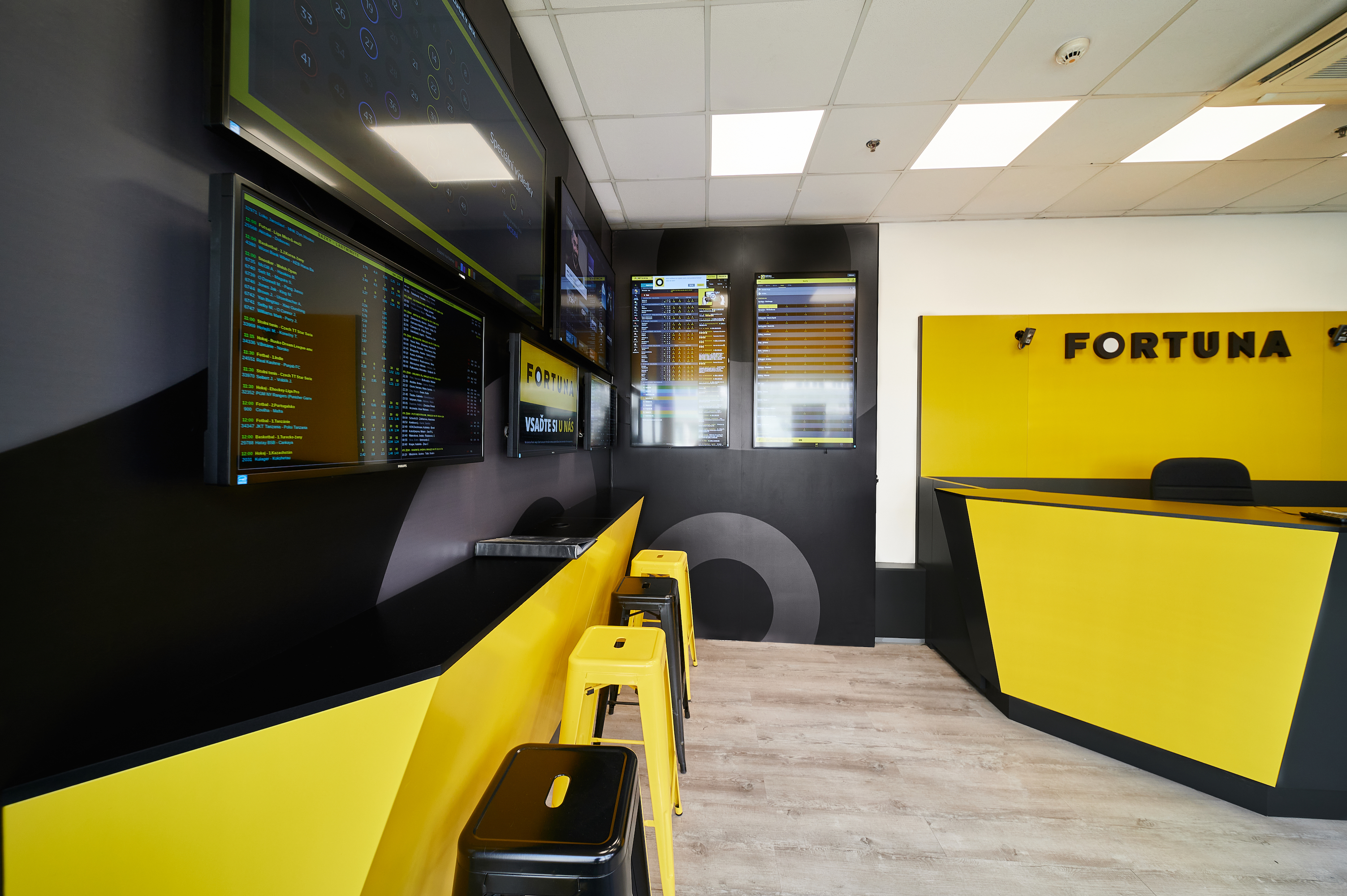
Leveraging the omni-channel opportunities of retail outlets has proved crucial