EGR's year in review 2017
EGR takes a look back at the key events of 2017, including impressive years for bet365 and Sky Betting & Gaming, the end of the Stan James brand and regulatory rollercoasters aplenty


It was an action-packed year for the online gambling sector, both in the UK and further afield. In this article, EGR has condensed some of the major talking points of the year covering product launches, M&A and people news across the four quarters.
Q1
GVC’s busy year of manoeuvring began when the operator’s proposed platform deal and 10-year B2B relationship with UK heavyweight Betfred was mutually scrapped. The London-listed operator said it favoured the split as it allowed the firm to concentrate on the integration of its freshly acquired bwin business, which would allow for expansion in Europe’s regulated markets.
Tabcorp’s Sun Bets started the year bright-eyed and bushy-tailed after its launch in 2016, when News UK re-hired Barry Sage as sportsbook marketing director and Tom Ustunel became betting and gaming director. Sage told EGR Intel in January that Sun Bets hoped to be a “top five UK operator within five years”, but it’s fair to say things didn’t quite turn out as planned. Fast forward to February and Sun Bets posted a half-year EBITDA loss of £13m after acquiring just 85,000 new customers. Managing director Jamie Hart left shortly afterwards to join Romanian operator Superbet, putting Sun Bets’ failure down to the firm’s misuse of The Sun brand after it posted full year losses of £28m.
Kindred Group kicked off 2017 in ambitious style. The Nordic operator acquired sought-after casino business 32Red for £176m to “considerably strengthen” its position in the UK, marking its territory over here with three brands, 32Red, Unibet and Stan James. Not content with just one acquisition, Kindred chief executive Henrik Tjärnström then expressed an interest in the £460m purchase of Danske Spil’s betting and gaming arm – but that one never quite got off the ground. To aid its aggressive expansion plans, the Stockholm-listed operator opened new offices throughout 2017 in Gibraltar, Malta and London, while the firm’s transfer to a new 8,000 sqm tech hub in the Swedish capital may well feature in 2018’s year in review.
Elsewhere, the New Year was just three days old when EGR covered the launch of bet365’s new Edit Bet tool, which allows punters to add, swap or remove selections on unsettled bet slips, much like the Ladbrokes’ Edit My Acca function. A week later and bet365 pulled its Best Odds Guaranteed Plus (BOG+) offer from all horseracing and greyhound markets just three months after launch. While the firm declined to comment on the reasons behind the withdrawal, it is thought the offer failed to have the desired impact. The operator had sent shockwaves through the industry in October 2016 when it followed UK rival Ladbrokes’ BOG+ launch, with industry experts concerned that a wider take-up of the offer would drive down already razor-thin margins.
Q2
The recurring theme of 2017, regulatory issues surrounding the UK’s gambling sector began to really develop in Q2 as BGO was slapped with a £300,000 fine by the Gambling Commission for misleading customers, in what was to be the first of many marketing-related sanctions for operators this year. The Commission fined bgo.com’s owner following a major review into the publication of “misleading” promotions by the operator and its affiliate partners since July 2015, and the regulator warned the industry in somewhat foreboding fashion to “take note” of the penalty.
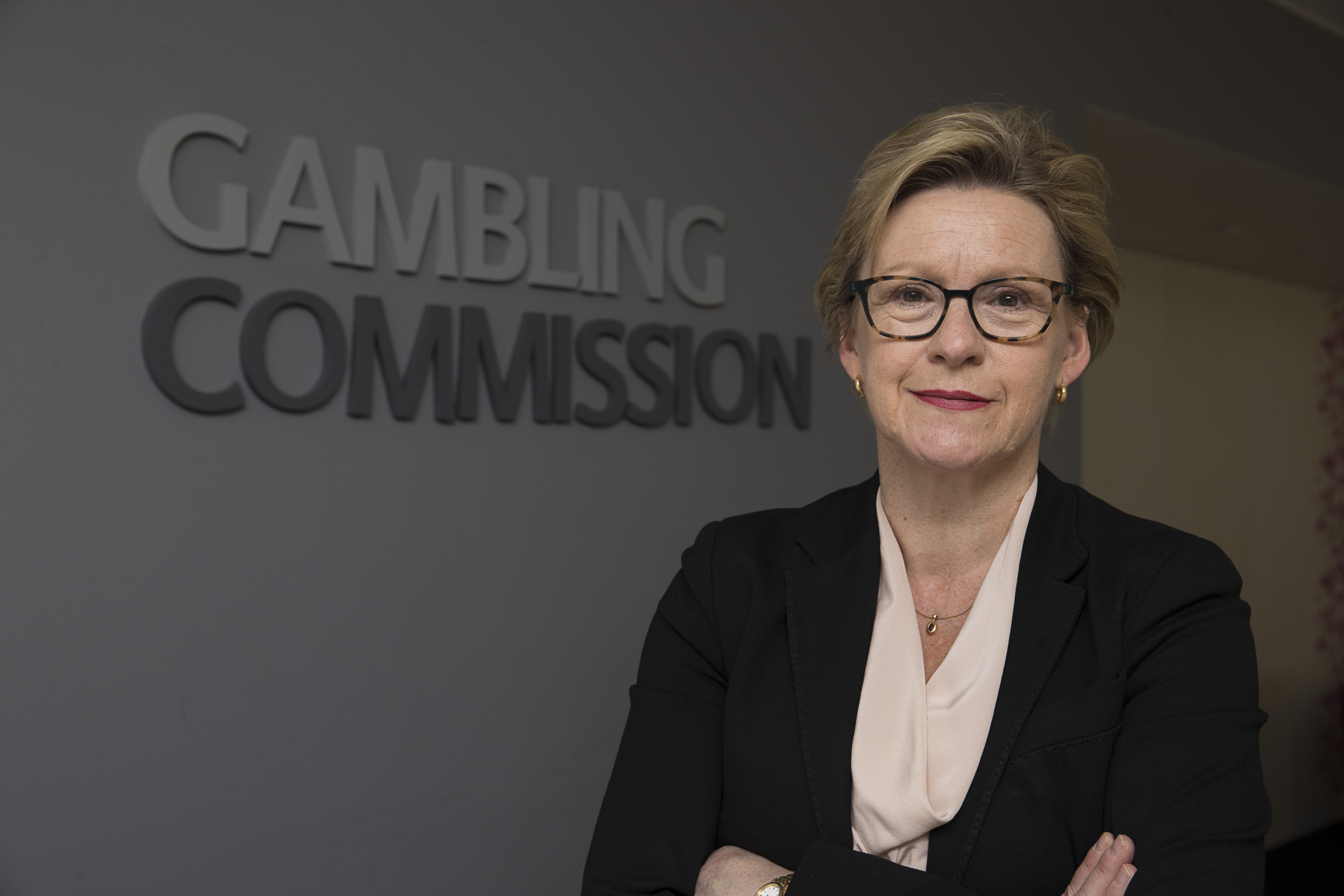
The Gambling Commission handed out a number of hefty fines to operators during 2017
888’s entire UK-facing operation was the next business placed under the microscope, due to a breach of social responsibility and licensing requirements, and we all know how that one turned out. The operator was stung with an industry-record £7.8m fine in August, due to what the Gambling Commission described as “serious failings” in 888’s handling of vulnerable customers. The Competition and Markets Authority (CMA) also joined the party in Q2, taking action against leading online gambling operators including UK giants Ladbrokes and William Hill for confusing sign-up offers that left customers unaware of various Ts&Cs, such as account withdrawal restrictions.
Superbet’s year-round recruitment drive gathered pace in Q2 as the Romanian operator cherry-picked people from all over the industry. Online chief Jamie Hart appeared to be assembling his dream team of talent, which is ironic, as his former employee Sun Bets announced plans to integrate itself across The Sun’s fantasy football game of the same name in a bid to step up customer sign-ups. Rupert Watson was poached from the News UK sportsbook to become Superbet’s digital finance director, while William Hill’s former sportsbook director Stuart Weston became the fourth Hills staffer in a matter of months to make the switch to the Romanian powerhouse, along with erstwhile CTO Finbarr Joy. Not content with having poached some of the UK’s best talent, the firm also initiated an 18-month recruitment drive in Gibraltar in a bid to expand its international business under a new licence.
Following Superbet’s offensive, William Hill also began a staffing merry-go-round. Media chief Graham Sharpe was made redundant after 45-years of service at the legacy operator, having originally joined in March 1972. A triumvirate of high-profile resignations then followed, including exits from gaming chief product officer James Curwen and chief experience officer Juergen Reutter, which led to a staff overhaul both in the UK and abroad. Meanwhile, Online managing director Crispin Nieboer pledged to hire more than 200 technology-focused staffers across its offices in Leeds, Gibraltar and Krakow to kick-start the operator’s online development and product personalisation strategy.
Q3
As Q3 arrived, the regulatory scrutiny rumbled on, this time targeting the previously ungoverned affiliate sector. Several national media outlets turned their spotlight onto the murky sector, which in turn led to one of the biggest news stories in the gambling industry this year, as UK market leader Sky Betting & Gaming (SB&G) promised to completely sever ties with its affiliate partners. Needless to say, this decision was met with disgust by most affiliate businesses as many felt harshly treated, having directed so many customers towards the firm for up to a decade. SB&G had decided, very early on in the debacle, that as a primarily UK-based operator, affiliates simply were not worth the hassle.
This kick-started a chain reaction in the industry, where every week an operator would reveal its own policy for handling affiliate partners. Paddy Power Betfair adopted the well-received “one strike and out” policy, while bet365 chose a similar strategy. It didn’t help that in the background, the Advertising Standards Authority (ASA) was getting tired of prosecuting operators every week for the actions of rogue affiliates. Ladbrokes, 888, Sky Vegas and Casumo were all sanctioned by the body for a truly bleak online advertorial describing how a depressed man had paid for his wife’s cancer treatment after winning on casino games.
There was however some excellent news for operators in Q3 as the Google Play Store finally opened its gates to gambling apps for the first time in seven long years, opening up Android devices as the next battleground for the gambling sector, which equates to roughly 50% of UK mobile users. Google wrote: “From the beginning of August 2017, Google will accept applications for the distribution of gambling apps within the Play Store in the United Kingdom, France and the Republic of Ireland. At a later date, this policy change may be expanded to new regions and countries.”

Google Play Store opened its doors to gambling apps in Q3
SB&G was among the first to roll out its full suite of apps including sports, casino and poker, while 888 did similar with its 888sport, 888casino and Wink Bingo brands. Kindred joined the party by initially launching Unibet Sports and Unibet Casino, with plans to roll out other brands including Stan James in the near future. More on Stan James in Q4.
Q3 also featured the birth of the year’s biggest M&A story, with the ever-ambitious GVC eager to reach a deal for 2016’s super merger business Ladbrokes Coral. The interest was real as we have seen, but plans were put on hold until after the triennial review, with GVC seemingly concerned about how FOBT stake reductions would affect Ladbrokes Coral. Another stumbling block was thought to have been GVC’s activity in Turkey’s grey market.
But as takeover talks stalled, both firms were kept extremely busy with staff turnover in overdrive and the publishing of H1 results. Lads Coral reported a 14% jump in H1 digital revenues, with online sportsbook doing much of the heavy lifting, while sports revenues were 18% up on last year and 25% up when stripping out the Euro 2016 comparison. The operator’s CCO Kristof Fahy then left in July to pursue new opportunities, while veteran trader Roger Tull departed the Magic Sign after 46 years of service. Over at GVC, the ever-bullish CEO Kenny Alexander told EGR that the firm would double its profits within five years, even without M&A, off the back of some very strong H1 results. “Firstly, we don’t really need to do any M&A quite frankly,” said Alexander. “The rate at which we are growing with our scalable cost base, I think we will double our EBITDA in four years. There is no doubt about that in my mind.”
In Q3 we also witnessed the gambling industry’s most high-profile departure of the year after Breon Corcoran announced plans to step down as Paddy Power Betfair CEO. Corcoran had worked at the group and its predecessor companies for 16 years, before overseeing the £7bn merger between the two, 18 months prior. “This was a very difficult decision to make, and there is never a good time to leave, but this is the right decision for me and my family, and following the successful completion of the merger integration it is an opportune time for the business too,” said Corcoran, who was subsequently replaced by Peter Jackson. Corcoran’s stature in the industry became crystal clear, as PPB’s share price dropped 4.5% following news of his imminent departure.
““[Breon] has transformed the sector, bringing an intellect and discipline rarely matched” – Paul Leyland, Regulus Partners
Regulus Partners analyst Paul Leyland provided perhaps the most glowing tribute to Corcoran: “Breon has gained a well-deserved reputation as a highly cerebral and capable executive, who turbocharged the brains behind Paddy Power’s brand, turned around Betfair, and then created a FTSE 100 regulated gambling growth company,” he said. “It isn’t too much to say that [Breon] has transformed the sector, bringing an intellect and discipline rarely matched.” And that intellect was put to good use one last time for PPB, as Corcoran advised the government to implement a £10 FOBT stake, which of course had nothing to do with the fact PPB’s biggest competitors would be in fairly significant trouble should they accept his stake limit recommendation.
Q4
The final quarter of the year saw celebrations for two of the UK’s biggest and most successful operators, bet365 and Sky Betting & Gaming, which enjoyed revenue increases of 39% and 38% respectively. Bet365 smashed the £2bn revenue barrier for the first time this November following a 27% total rise in sports wagers, topped off nicely with a 15% rise in operating profits to £514m. The Stoke-headquartered firm’s active user count also rose by 35%, while revenue from bet365 mobile increased 61% thanks in part to the product additions as mentioned in Q1.
As ever, SB&G was hot on its heels, revealing eerily similar figures for the same period. FY17 revenues reached £516m and EBITDA also increased 38% year-on-year to £146m. Sports betting was once again the operator’s fastest growing segment, increasing 46% year-on-year. With more than 80% of revenue coming from mobile devices, the future of the industry is clear. Almost 60% of EGR readers voted in a poll arguing that SB&G had the better year of the two operators, but bet365 had the last laugh after being crowned operator of the year at the 2017 EGR Operator Awards, as well as topping the Power 50 list.
As two of the UK’s biggest operators continued a clash of the titans, 2017 was a more melancholy period for legacy horseracing operator Stan James. Kindred Group confirmed in October that it was going to shelve the historic brand, instead choosing to make Unibet its leading sportsbook brand in the UK. Jamie Hart took to Twitter to express his disappointment at the demise of Stan James, writing: “It is the end of an era for [Stan James which] invented 24/7 service and in-play betting. With more belief they should have been where bet365 is now.” However, Tjärnström will take solace in the fact that a resounding 70% of EGR readers believe Kindred did the right thing in binning the brand in favour of Unibet, with the chance to focus branding and marketing spend.
“It is the end of an era for [Stan James which] invented 24/7 service and in-play betting” – Jamie Hart, Superbet
The long-awaited findings of the triennial review were a major industry talking point in Q4, although news of a further 12-week consultation period made it something of a damp squib. While a FOBT stake is yet to be recommended, the issue of responsible gambling again took centre stage, with all UK operators warned by the Department of Media, Culture & Sport to sort themselves out before serious action has to be taken.
Minister for gambling Tracy Crouch announced the Gambling Commission will consult on changes to the Licence Conditions and Codes of Practice (LCCP) next year, with the aim of raising standards on player protection online. She also announced that operators will be obliged to provide £10m-14m for a responsible gambling campaign over two years. The campaign will be overseen by GambleAware, and several operators have already begun to improve their online footprint, including Sky Bet which launched a responsible gambling campaign of its own to coincide with the announcement of a prolonged sponsorship of the English Football League.
Aside from William Hill becoming embroiled in a very public legal butting of heads with NYX Gaming Group and Scientific Games, the last big story of the year features the rekindling of GVC’s run at Ladbrokes Coral. December arrived and just before Christmas, the firms agreed terms, with the price rising to £4bn dependent on the outcome of the FOBT stakes review. But that’s for 2018. Watch this space.