
Dark horse: the resilience of Australian horseracing during Covid-19
An in-depth look at how racing defied the coronavirus sports blackout and why the country's ban on online in-play betting is a major opportunity missed

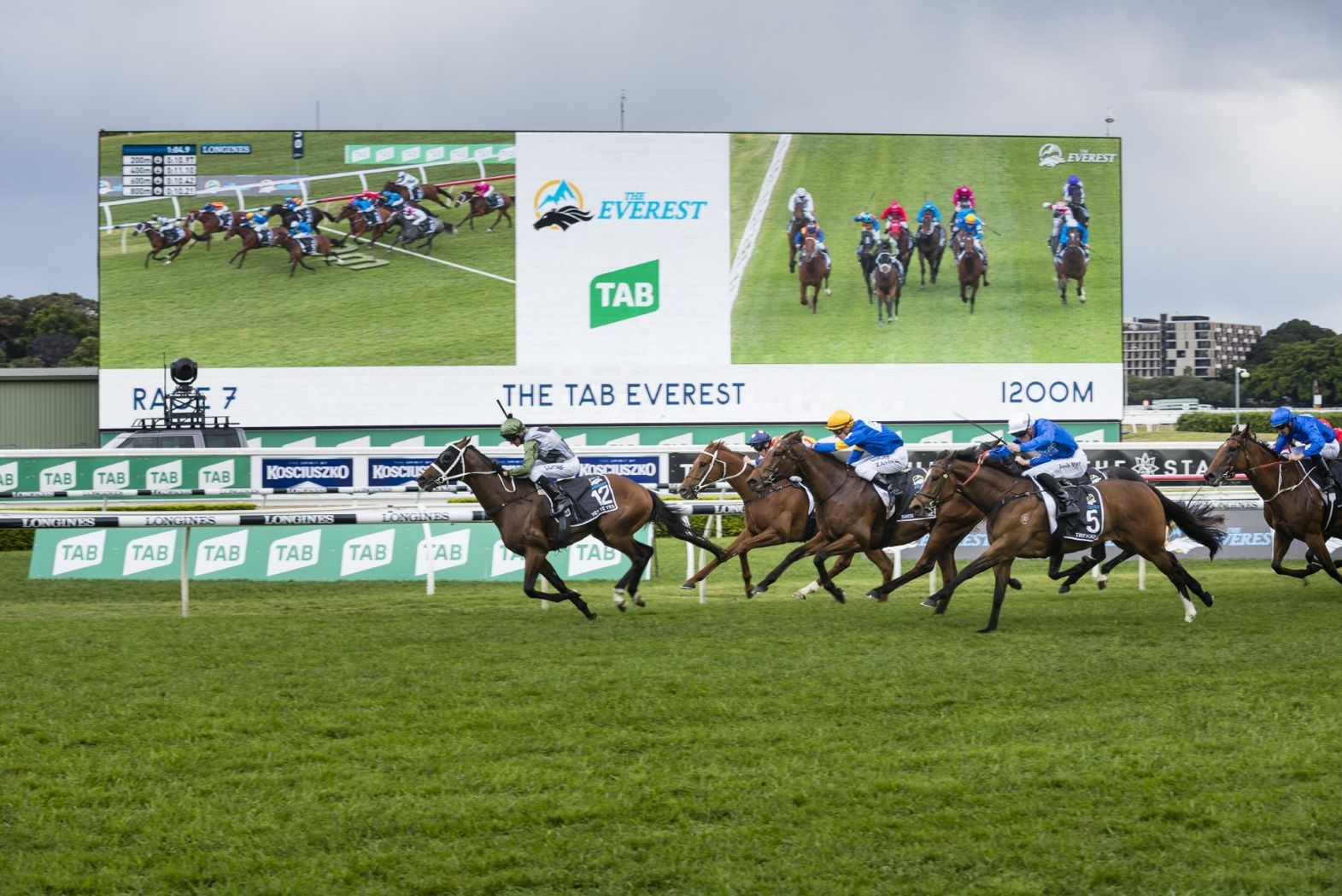
On 5 May 2020, Australian Prime Minister Scott Morrison received a call on his mobile from Windsor Castle. On the other end of the line was Queen Elizabeth II, who was phoning to discuss Australia’s health and economic battle with Covid-19. One of the topics that came up was the Queen’s love of horseracing: “Her Majesty was also pleased to hear our horse races were still running in Australia and sent her very best wishes to all Australians,” Morrison shared on social media that same night. Horseracing has always been the bread and butter sport for Australian bettors. While the country itself has fared quite well in containing the spread of coronavirus, the betting community was hit hard when international sports came to an abrupt halt. However, luckily for Australia, horseracing in most jurisdictions was able to continue behind closed doors during the lockdown period. Earlier this month the Melbourne Cup spring carnival, which normally hosts more than 300,000 people over four days, went ahead without spectators. According to an October report by the Australian Gambling Research Centre (AGRC), horseracing was the main product that participants gambled on before and during Covid-19, at 57% for both. This was followed by sports (46% before and 45% during), lotto (41% before and 38% during) and greyhound racing (35% before and 37% during). The AGRC also assessed participants against the Problem Gambling Severity Index and found that 79% of people were at risk of experiencing gambling-related harm, with 30% of those already experiencing problem gambling. However, the report was met with divided opinion. Trade body Responsible Wagering Australia (RWA) hit back at the findings for creating a “sensationalist view of gambling”. RWA CEO Brent Jackson questioned the methodology of the survey: “This latest piece by AGRC uses responses from a small online survey to suggest that problem gambling boomed during Covid,” Jackson said. “Using a pool of research subjects where almost 80% are at-risk gamblers will never provide an accurate picture of gambling behaviour and automatically sets the survey up for skewed results.” One question mark over the report’s findings is whether or not people changed their online gambling activities during Covid-19 by visiting offshore illegal sites rather than Australian-licensed operators, says Jamie Nettleton, partner at law firm Addisons.
Law and order
The subject of unlicensed operators is a thorny issue and one that the regulatory body, the Australian Communications and Media Authority (ACMA), has been tackling through ISP blocking. Since ACMA made its first blocking request in November 2019, it has asked to bar more than 150 illegal gambling sites. But could it be doing more? Nettleton suggests that would be difficult. “What they do is engage in correspondence and they’re like a dog with a bone where they just continue to pursue sites that they come across for providing services to people in Australia. They write to them but have not taken any recent enforcement action in a court that I’m aware of. This may recognise the difficulty involved in direct enforcement,” he adds. Commenting on ACMA’s work, Tabcorp media relations manager Rick Wallace says: “It is in the public interest to have a well-regulated gambling industry, run by responsible operators with the proceeds shared with the community. We’ve welcomed reforms that have delivered ACMA additional powers to tackle unlicensed offshore operators – a substantial number of illegal gambling websites have effectively been shut down by ACMA since the introduction of these additional powers.”The Covid effect
As a result of the impact on businesses due to Covid-19, there was some relaxation of rules in the Northern Territory allowing online operator call centres to operate from home. However, there was no relaxation of tax rates (at least for online operators) as we’ve seen happen in countries like the UK, where land-based bingo halls, betting shops and casinos benefited from business tax rates relief. Nettleton believes the point of consumption tax and other taxes will continue to be quite significant barriers to entry for new companies looking to enter the Australian market. When coronavirus hit Australia, retail betting venues were swiftly shut down. PointsBet co-founder Andrew Fahey tells EGR Intel that online gambling for sports and racing only makes up roughly 20% of the entire gambling market, while 80% takes place in offline venues such as pubs, clubs, racecourses, TABs and casinos. When offline venues were closed, there was a shift to online for racing. Some of the 80% that was betting on pokies or at casinos, TABs and wagering shops moved online. “Based on numerous reports from various states’ racing bodies and consistent with industry data from competitors, we were looking at roughly 50%-70% year-on-year growth for racing turnover during the peak Covid period from March through June, more than offsetting the decline in sports,” Fahey explains. While that growth has dropped off over the last few months, Fahey says the industry is probably 20%-50% up YoY with most of that driven by the switch from offline to online.Home stretch
During the lockdown period, PointsBet focused all its gratuities on racing with racing specials running every day. Fahey is very confident PointsBet’s racing product is as good as anyone else’s in the market. “Owning our own technology is a huge benefit for us because it means we are in charge of our own destiny when it comes to app speed, product development and user experience. We completely rebuilt our app using the most modern codebase and are confident that on a page loading basis, on a navigational basis, on a bet placement basis, you can’t place a bet faster anywhere in the world than you can with PointsBet,” he claims. As an exclusive partner of leading free-to-air network Channel 7, the ASX-listed operator was one of two wagering providers, along with the TAB, that was integrated into national horseracing broadcasts. “In the March to May period, we had a major presence on Channel 7’s horseracing coverage when people were indoors and watching more TV due to lockdown. If you were a sports fan, you shifted your attention to racing because it was really the only sport available, and we happened to have the best media asset for racing in the market to promote our product,” says Fahey.
For PointsBet, Fahey believes its year-on-year growth is the highest in the market. “We’re looking at 200% year-on-year growth in turnover and revenue. External factors have influenced this somewhat but the major reason for our exponential growth is because our brand is gaining momentum and our product and user experience is now right alongside the market leaders.
“In the last 12 months, our global product and tech team has grown from around 20 to almost 100. As our product and user experience gets better and better, we continue to increase our marketing investment. With an elite product and a brand that is continuing to gain awareness, trust and credibility in the market, we truly are on our way to become one of the tier-one players in the country,” he explains.
As an exclusive partner of leading free-to-air network Channel 7, the ASX-listed operator was one of two wagering providers, along with the TAB, that was integrated into national horseracing broadcasts. “In the March to May period, we had a major presence on Channel 7’s horseracing coverage when people were indoors and watching more TV due to lockdown. If you were a sports fan, you shifted your attention to racing because it was really the only sport available, and we happened to have the best media asset for racing in the market to promote our product,” says Fahey.
For PointsBet, Fahey believes its year-on-year growth is the highest in the market. “We’re looking at 200% year-on-year growth in turnover and revenue. External factors have influenced this somewhat but the major reason for our exponential growth is because our brand is gaining momentum and our product and user experience is now right alongside the market leaders.
“In the last 12 months, our global product and tech team has grown from around 20 to almost 100. As our product and user experience gets better and better, we continue to increase our marketing investment. With an elite product and a brand that is continuing to gain awareness, trust and credibility in the market, we truly are on our way to become one of the tier-one players in the country,” he explains.
Closed for business
For fellow retail and online operator Tabcorp, the firm really felt the impact of retail venues closing across wagering and media, keno and gaming services. “Tabcorp’s diversification, along with our investments in digital transformation, have helped us manage these challenges, with a strong performance from our lotteries business, as well as good digital growth in wagering and keno,” Wallace explains. “However, the pandemic materially impacted our results. Group revenue for the year to 30 June was down 4.8% to A$5.2bn, and EBITDA before significant items was down 11.5%,” he adds. While Covid-19 had a significant impact on Tabcorp’s retail business, the pandemic has created a “renewed impetus” within the racing industry about national pooling. Tabcorp has stated its desire to have agreements in place to merge pools by June 2021, either as a full merge of tote pools or starting with the combination of a couple of pools. “We have had well advanced discussions with the racing industry on the issue and there is alignment on the principle of combining pools to strengthen the tote,” Wallace says.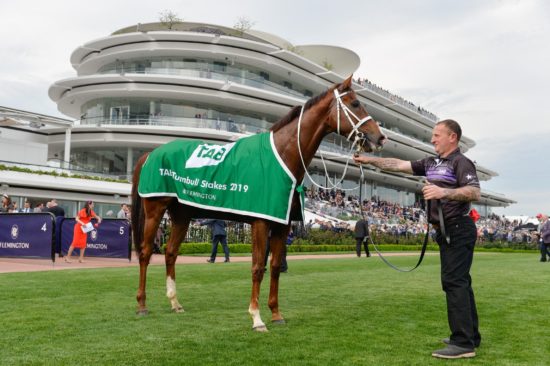
Aussie rules
In Australia, there is a total ban of online casino, online poker and online in-play betting. PointsBet’s co-founder believes the ban on online in-play betting is too strict and is a missed opportunity for all involved. “It doesn’t make any sense for TAB outlets to be the only venue where you can place an in-play bet without it being done over the phone. They say that it is to protect the integrity of sport but it defies logic that you can go and place a somewhat anonymous bet via cash at a TAB outlet once a game has started but you can’t place it online through a wagering operator like us who can make sure your identity is fully verified before you can collect any winnings.” The government seems to be concerned over spot type bets, e.g. who’s going to win the next point or make the first basket of the third quarter and how this might impact the integrity of sport. While the original restriction under the Interactive Gambling Act was imposed in light of concerns with “micro-event wagering”, “betting in the run” was also caught up in the process. However, Fahey points out that with all the KYC processes that online operators have set up, they are well placed to ensure the integrity of sport is protected. “All the sporting bodies can see all the bets that we take and they can ask us any information about a particular client.” And the ban on in-play is simply driving more punters to bet with illegal offshore providers of in-play betting which are not required to disclose the same information to sporting bodies or pay any fees. There is no consumer protection offered by these providers and they do not offer anything in return to the local industry through product fees and taxes. “The product and services are far inferior typically with these in-play bookmakers. The reason why people are betting there is because they’re the only ones who allow you to place your online bets in-play. They don’t need to share this information, so surely the integrity of sport would be better off if we had a high percentage of people betting just purely with the Australian-run and legalised bookmakers,” Fahey remarks.Dry spell
Advertising restrictions in Australia is another contentious issue. The rules include no advertising of odds less than five minutes before the start of play in live sport and no advertising before 8.30pm. Fahey tells EGR Intel this makes it more difficult to promote products and betting propositions while limiting the number of impressions offered by the sports and networks in the country. Combined with the fact there is less sport shown on TV than in other countries, the scope is fairly limited. The only real opportunity for advertising on live sport is through AFL, NRL and racing on free-to-air as Sky networks are owned by TAB, the only company permitted to advertise in Australia on Sky networks. The state-by-state restrictions also put pressure on the format and content of the advertising, meaning a variety of creatives need to be produced to execute one campaign. “It’s just a limited amount of inventory that you can actually use to advertise above the line, though there’s a significant spend that goes into digital channels. There’s also a lot of restrictions around what you can and can’t say in your advertising around money-back specials or price-based markets with minimum stakes. There’s a multitude of rules and regulations that are different by state too, which means you need to tailor your advertising to suit a particular state,” Fahey explains.Leagues ahead
With US sports extremely popular among Aussie bettors, it comes as no surprise that the country’s licensed operators have struck up partnerships with the leagues. In July, Tabcorp signed an exclusive wagering partnership with MLB, which includes access to MLB Network’s 24/7 programming and up to 10 live games per week in its 4,400 TAB retail venues. “We’ve been proud to partner with the MLB to become the MLB’s sole official wagering partner in Australia and to bring MLB vision to customers via the TAB app and in retail. It is a similar arrangement to what we have with the NBA and NFL, in line with our strategy of being the home of US sports in Australia,” says Wallace. One of the most recent sponsorship deals for PointsBet has been with the Fox Sports AFL channel during the 2020 season for which the operator was the exclusive wagering partner. Fahey hails the deal as a huge success since AFL is the biggest acquisition sport for the operator in Australia. “It’s still number two from a betting volume standpoint behind NBA, but it does deliver a lot of the clients that come in the door to PointsBet. They often come in via AFL and then bet across the board. The audience numbers have been outstanding this year for the AFL also, which has helped springboard our growth,” he says. During the Covid lockdowns, the appetite for watching sport on TV at home skyrocketed and PointsBet saw 30% year-on-year audience growth across the Fox AFL broadcast partnership. There was even an unusual period where there were 20 straight days of football as typically you only get three or four days of football each week. “The acquisition we saw through that period was enormous. We were up 400% year-on-year, despite our marketing budget being only 50% higher, so we’ve become far more efficient at bringing in clients,” Fahey says.