
The right cost to bet on sports
Ladbrokes Coral's innovative deal with UK racing group ARC has some fascinating implications for the future of the sector


Ladbrokes Coral’s (LCL) deal to secure the rights to show coverage from ARC racing tracks was a welcome resolution of a very public row that had far larger implications than the commercial arrangements of the two parties in question. It was a less-than-smooth journey that could have caught other firms in its wake, but in the end has left more question than answers about the future of racing and sports rights in general.
The final deal will see LCL and ARC engage in a profit-sharing deal that sees live coverage of ARC’s 22 tracks return to both LCL’s shops and online sites. “Horseracing is part of our heritage and, despite the vast choice of sport to bet on in the modern era, it remains a core product for our business, so it is a positive development that once again all customers in shops and online can enjoy a full range of horseracing action,” Ladbrokes Coral CEO Jim Mullen said.
Mullen’s choice of words was notable in that he’s been one of the major voices questioning the balance of power between horse racing and the gambling industry in recent years. After pulling sponsorships and suggesting a pre-merger Ladbrokes could back away from racing and look to promote other sports instead, he adopted a more conciliatory tone saying he wanted to invest and be a part of racing.
But the firm continued to give the impression its approach to racing was driven as much by a sense of cooperation and the greater good as the commercials. At LCL’s most recent results presentation, management claimed losing ARC rights was a commercial benefit to the business with lost revenue more than compensated by reduced fees. And even at the deal announcement there was that reference to the “vast range of sport” available to customers.”
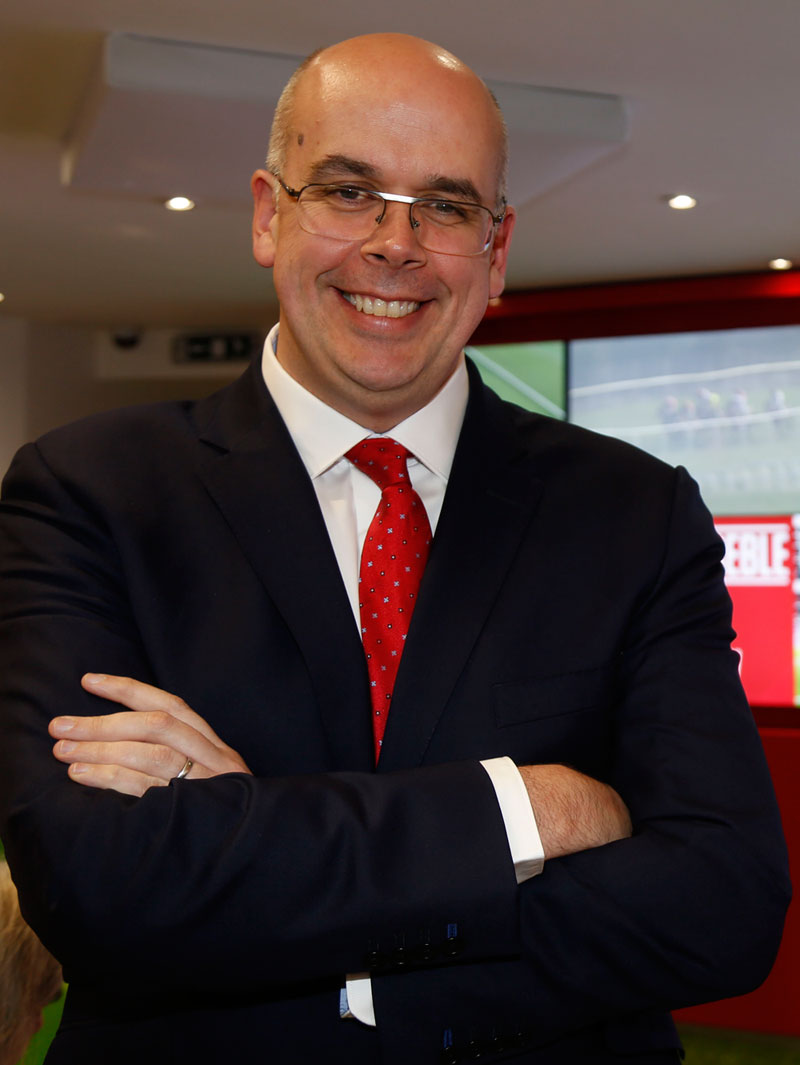
Ladbrokes Coral CEO Jim Mullen
A symbiotic relationship
It would take a fairly ingenuous observer to suggest this deal signifies a new era of cooperation between betting and racing and not a resetting of the nature of the relationship. There is a clear power struggle here that remains unresolved with the levy a huge blow on behalf of racing leaving an industry keen to make sure it doesn’t get stuck on the defensive. In many respects then the LCL deal is a progressive one for the sector.
In the short term there is no obvious replacement for horse racing as a daily betting option, an acquisition tool for new customers and a valuable component of the product mix in summers lacking major football tournaments. The industry can’t afford to lose racing, which remains around a third of sports betting revenues even online, but neither can it afford to make it an unprofitable business line.
The first of its kind is rarely the last of its kind in this industry, and if this deal proves to be a cost benefit for LCL you can be certain other firms will look to follow suit. Revenue sharing agreements are the bedrock of the sector with both suppliers and affiliate acquisition partners predominately reliant on profit-sharing as opposed to fees for revenue. So it would be no huge surprise to see this become a more common model in future.
But can it, and should it, extend to other sports? Received wisdom in the industry suggests not. Horse racing is unique as a sport. As ARC chief executive Martin Cruddace said: horseracing and betting in the UK are symbiotic in nature. While both could survive in some form without the other the separation of the two parts would be brutal and leave both in significantly damaged as a result. The same could not be said of many other sports the gambling industry is utterly dependent on, not least football.
A right to show
The gambling industry could not wage war with the Premier League, at least not a war it could possibly expect to win, but football has much bigger fish to fry than the gambling sector. Other sports are not sitting on the same sort of cash pile, however, and arguably underestimate their importance to the betting sector. This is particularly true with regard to the varied regional differences in the top sports bet on in many European markets such as the Nordics. Should they choose to take a stand there are fewer levers the industry can pull.
The issue of a sports betting rights is one that appears to be lying dormant at the present time, with the implications of state-aid and an EU report challenging the basis of the principle seeming to take the wind from its proponents’ sails. However, it’s not a huge leap from the type of deal seen between LCL and ARC to one whereby rights owners share in the profits of bets placed on their sports or events in exchange for use of data and feeds.
There would likely be huge resistance to more formal relationships for a variety of integrity and reputational reasons, as one industry analyst noted off the record. Although there are some sports, such as snooker, that depend to a large extent on betting sponsorships to survive, plenty more seem deeply opposed to the very existence of the industry that operates around it.
But there is no denying the increasingly symbiotic nature of sports and betting and a closer more formal working relationship with a sporting body could be a marketing benefit for one of the major betting groups and be a significant revenue driver for more minority sports. Although it’s worth noting that in practice the relationships between sports leagues and betting would be very different than those in horseracing.
It would be wrong to suggest we’re about to hurtle into a new era of revenue sharing with sports rights holders. That seems a long way off, and even within horse racing it’s still probably a decent odds against proposition. But the long-term implications of the LCL-ARC deal are very interesting indeed.