
Should operators make a big shift from marketing to product?
888’s Orbit platform shows the value of good product in online casino as the operator hints at more to come


888’s H1 results were a mixed bag, but in casino at least it showed a business rebounding after a tough 2018 with growth of 14% year-on-year in constant currency, with UK casino up 50%. This, we were told in some epic management speak, was due to a “360-degree approach” combining marketing, responsible gambling and product. But it was the latter that was most interesting with one word dominating all of the discussion on the turnaround: Orbit.
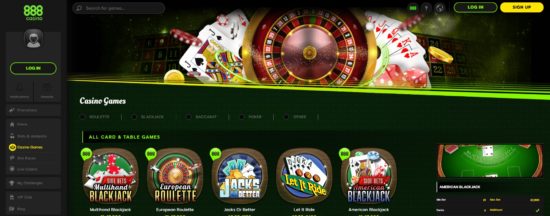
Orbit is 888’s name for its new casino platform, which aims for a Netflix-style presentation of content, more personalisation and a modern, clean UI that feels a world away from the 888 of old. And they are clearly very taken with its impacts. The analyst presentation was full of mentions of the “Orbit effect” and the results release noted “Orbit, 888’s cutting edge web-based casino front-end (May 2018), has accelerated casino progress”.
Orbit isn’t anything radically different in the online casino market, where surfacing and personalisation of content has been a big focus for some years now, but it combines some of the best practices in UX and UI. Its benefit is more than just maximising spend by presenting the right content to the right customers, it also allows 888 to increase both its acquisition and retention marketing efficiency.
The value of product
In a still bonus-obsessed world, it shows the value of investing in product. As 888 noted in its results: “First time depositors in the Group’s B2C business have shown very healthy growth of 20% driven in particular by casino. This very encouraging trend reflects highly effective marketing investment as well as the benefits of Orbit, which has delivered strong results in each market where it has been launched.” The problem, of course, is that product is not a quick fix.
Building out a new front-end platform is not a simple task, not least if you want to add deeper integration to mid-layer analytics tools, and it is one where investment is not matched by immediate returns. In the current online gambling market with share prices falling faster than parliamentary majorities, this is not the most attractive of opportunities to executives. But there is no doubt the current leaders are those with the best UX and this is a trend that is only likely to become more of a differentiator.
Another indicator we have of this is the increasingly important no-registration trend that emerged first from the Nordic markets and is likely to be pushed out wherever the financial infrastructure can support it. The concept is simple, players use existing bank account IDs as verification and can almost instantly register, deposit and play. It feels at odds with this more immersive, curated, personalised experience but, in reality, it’s part of the same thing.
The results in Sweden are staggering to those of us raised on a diet of huge splash screens, bonus prompts and a visual assault from our gaming websites. Simple stripped back sites such as ComeOn’s Hajper, or Global Gaming’s Ninja (prior to its licence revocation), are generating substantial revenues and ever more market share. Users love the simplicity and immediacy, which comes as close as online gambling has yet managed to the land-based machine experience of finding a game in a bar and putting in a note from your pocket.
A simple truth
What players, and all online consumers, crave is simplicity and ease of use. People barely have time, or more accurately, the patience, to scroll to read the end of a news story or click to page two of search results and they certainly don’t have time to spend a minute trying to find the game they want, the cashier or filling out a huge registration form. Immediacy is a gift and a curse of the modern age, but it’s something you ignore at your own cost.
We’ve already seen Kindred lose some ground in the Nordics to the no-registration trend, and it’s likely we will see more clear water between operators who start to focus on the simplified, personalised UX and those who stick to the older model of stuffing ever more content into bulging apps and websites and trying to force navigation to those performing the best. It’s not a simple task to pull this off though and it will require more resource and a shift in focus from some firms.
The true impact of weak product or weak UX is more than limiting, it’s arguably prohibitive to growth in the modern egaming world where the target market is the mass market recreational. Players raised on Uber, Netflix and Amazon aren’t going to put up with a clunky sub-standard experience and that expensive CPA is going to turn into rapid-fire churn. In a sector where so much resource and weight is given to marketing, perhaps it’s time for a big shift towards product.