
All work and no play: The impact of the cost-of-living crisis on discretionary spend
With UK inflation set to reach 40-year highs, a National Insurance hike and energy bills soaring, Scott Longley assesses how a sharp fall in spending power affects the gambling sector


No sooner had the cost-of-living crisis become real for UK consumers at the start of April with the rise in National Insurance coinciding with the increase in the energy price cap, that the CEO of Entain, Jette Nygaard-Andersen, was dismissing the potential impact. Speaking on a call with analysts to discuss the betting and gaming giant’s first-quarter trading statement on 7 April, the Dane noted that Entain’s average stake level across its main UK brands of Ladbrokes and Coral was £10. Gambling spend, she said, was “not the first thing that impacts households”, before adding, “but of course, we follow these things closely”. It was an attempt to reassure investors that the gambling sector was better insulated than some from the macroeconomic factors affecting the UK consumer. But it might have been more believable if, on the same day, 888 hadn’t highlighted exactly the same backdrop as part of the reason for the £250m price cut it had negotiated with Caesars Entertainment for the sale of William Hill’s largely UK-driven international business. And then there is the evidence from a recent poll undertaken by YouGov on behalf of newly launched affordability solutions provider Department of Trust (DoTrust). The survey of 700 gamblers conducted in mid-March found 32% of respondents plan to cut down on their gambling spend in the coming months, while 18% will stop entirely. According to 59% of these consumers, this was directly related to pressure on their finances, with 43% saying they were consciously cutting back on essentials.
The confidence issue
These figures are no surprise when compared with data from YouGov’s consumer confidence survey that it conducts in conjunction with the Centre for Economics and Business Research (Cebr). The survey’s most recent data shows that confidence among UK consumers is “cratering”. When asked how their household financing situation was compared to a month ago, the score fell to 62.8 (where 100 equals a neutral score) and, when it came to the outlook for the next 12 months, the score fell to 49.1. Oliver Rowe, global head of leisure and entertainment at YouGov, says that historically such data points to a leisure and entertainment spending decrease as consumers tighten their belts. “People will withdraw discretionary expenditure,” he notes. A well-established assumption about the gambling sector is that it is recession-resilient; that it can weather the worst of any economic downturn. It is likely that Nygaard-Andersen was referring to this theory on the Entain analyst call, and it helps explain the subsequent comments from John DeCree, analyst at CBRE, that Nygaard-Andersen had highlighted “the potential resilience” of Entain’s customer base. “The lower range of that average is relatively inelastic, and the upper range is likely skewed from higher-end VIP players, who we believe are more insulated from economic impacts,” DeCree wrote. Yet there are a number of other factors that might mean that this time is different. As Charles Cohen, founder and chief executive of DoTrust, points out, the cost-of-living crisis isn’t actually a recession, not as yet. “This is an inflationary crisis,” Cohen says. “It undermines everyone’s ability to pay their bills. That can be very dangerous for player protection. We are not human Excel spreadsheets; most of us can’t calculate precisely what amount of our income we spend on every aspect of our lives like that.” It means that many people, even those who don’t ordinarily see themselves as being financially insecure, can easily find themselves suddenly having to make pretty drastic changes. “As our YouGov survey shows, gambling spend would appear to be every bit as sensitive to issues within the wider economy as other leisure sectors. The online industry in particular has succeeded in making gambling a more recreational pastime – but that means it is arguably less recession-resilient than before,” Rowe explains. Gavin Kelleher, analyst at Goodbody Stockbrokers, believes the question going forward will be how the current economic uncertainty affects the gambling habits of consumers, rather than if. “It will have a bigger impact on frequency and spend levels as opposed to people reducing or stopping gambling altogether. Instead of it impacting active numbers, it will likely have a bigger impact on yield,” he says.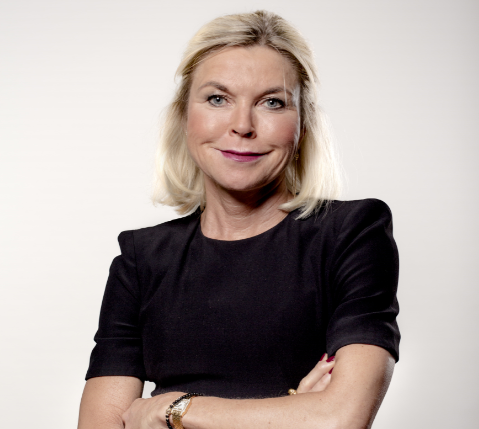
Entain’s Nygaard-Andersen said gambling spend was “not the first thing that impacts households”