
Aggregation comes to the fore
If the answer for online operators is always more content, then the case in favour of aggregation platforms should be solid. However, with regulatory risk looming, the future for platform providers remains in the balance

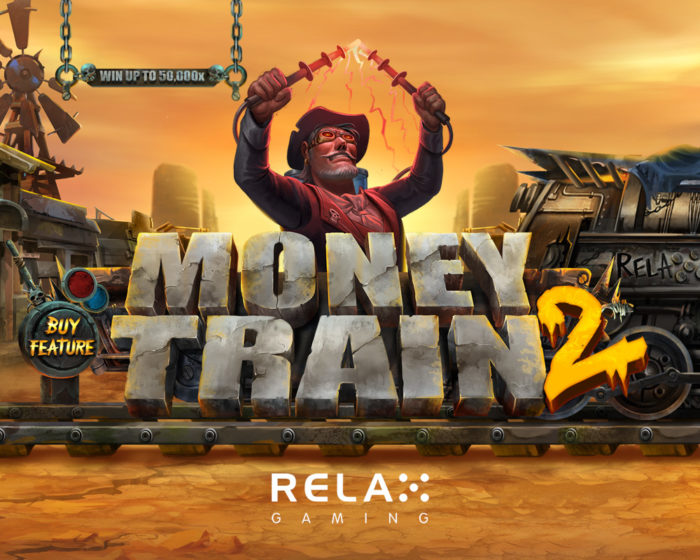
The case for adding ever more content to an online gaming offering appears unanswerable in the current multi-product, multi-jurisdictional environment. Hence the argument in favour of aggregation. “It’s important for operators to have all the possible content and promotional tools to differentiate themselves from the competition,” says Paul Myatt, chief business development officer at Aspire Global. “Regulated markets impose a great number of rules on how games should be delivered, which makes it necessary for aggregators to offer the widest range of content available.” Or as Rob Procter, content specialist director for digital at Scientific Games, puts it: “The availability of a diverse range of content at scale is fundamentally what makes a platform so attractive to operators in the first place.” The greater the choice, the more likely it is the end consumer will discover the content that best resonates with them, whether that is slots, bingo, instant-win games or live casino. If that can be achieved via a single source, then goes the argument for aggregation, all the better. This extends to questions around proprietary and exclusive content, according to Procter. “Content aggregation often provides the best route to securing the very latest content that is being released,” he says. “Last year, we secured the rights to exclusively distribute Big Time Gaming’s content across regulated markets worldwide. That really propelled our OpenGaming proposition to new heights and generated a lot of interest, both in Europe and the US.”

Rob Proctor, SG Digital
There’s always a but
And yet, the net beneficiary of the slew of content is the consumer, according to Chris Looney, chief commercial officer at Bragg Gaming. “If a supplier finds a strength or a niche or if an aggregator can provide exclusive or localised content which adds real quality, operators are still very receptive,” he says. “Good quality content always has an audience in this industry.”
Chris Looney, Bragg Gaming

Ciara Nic Liam, Betsson

Paul Myatt, Aspire
More than just content
This touches on another big talking point around aggregation: to what extent are aggregators also the gatekeepers to any given regulated market and what are the weaknesses arising when it comes to key pressure points. “As regulation tightens across the globe, the need for an aggregation platform that is compliant has grown considerably,” suggests Procter. “Particularly when you consider how frameworks can differ across jurisdictions, operators need the assurance that the content they are accessing is fully robust.” Looney agrees: “As more markets regulate, or re-regulate, there is a huge burden on games providers to make sure they supply compliant-ready products to operators in a timely manner.” He says that games suppliers “tend” to fall into one of three categories:- Well-established suppliers with proven games, but historical technical issues which can make new regulations very difficult to handle;
- New and agile suppliers who can cater for the demands of the regulations but might not have the capacity to support multiple markets or might not have a large enough portfolio of games;
- Hybrids: new enough to be responsive to the regulations but well-established enough to have a strong portfolio of games.
I made this earlier
Of course, the skills an aggregator can bring to the distribution of content and what they know about what games are popular in which markets often leads down the road of proprietary content. It is, in some respects, an obvious leap but it comes with its own pitfalls. “We believe it is crucial for aggregators to give their operators the complete freedom to choose which games they want to include and highlight on their platforms,” suggests Myatt. He adds that Aspire’s goal as an aggregator is to be a “technical enabler of content”, and this also appears to chime with the views of Nic Liam. She points out that the “cost of doing business” is that Betsson is funding developments on the platform that are crucial for the value-add Betsson can offer players. But content alone is not enough. “At the end of the day, it often comes down to the relationship, how quickly they are willing to work with us, the level of service and dependability we have with the partner in making that final decision,” she suggests. “Having a fast turnaround in gameplay checks, a reliable platform and strong promotional mechanics is what sets these aggregators apart.” Aggregation remains a crucial element within the gaming ecosystem and, given developments in the US, that position could be even more central as the market matures. Content needs will always be central, and certainly aggregators can take their fair share of the blame if there is what some consider to be a glut of slots at any given time, but it is what else they can bring that distinguishes them and ensures their future place in the ecosystem. The impetus behind the move is definitely about control. As referenced by Kindred chief executive Henrik Tjärnström (pictured) when announcing the deal, it means that Kindred will be “in a significantly better position to achieve our long-term strategy to increase our focus on product differentiation and customer experience”.
While Relax spoke about the deal as being a “natural step” for the company given its existing ties to Kindred, the stated aim of expanding the B2B offering across the globe has to be taken with a pinch of salt given previous examples of B2B businesses being snapped up by B2C operators.
The clearest example comes in sports betting with DraftKings’ merger with SBTech. While clearly a strategic success in terms of DraftKings owning and controlling its tech stack, no one would claim that SBTech’s B2B offering has been enhanced by the deal. Indeed, by most reckonings, the importance of B2B has faded significantly.
To address the issues, Kindred said at the time of the deal that to “secure continued integrity” for Relax Gaming’s B2B customers, Kindred would keep Relax Gaming as an independent entity with a separate board and management team.
But as one source put it, now more than ever does the question of who Relax’s most important customer is will come more clearly into focus. “That can’t be helped,” the source added.
“Relax know this, as do its other clients. It is only natural that internally resources get switched towards what Kindred needs, even if this is only subtle. Having a separate board and management team won’t make any difference to that, no matter what is in the press release.”
Against this backdrop, the importance of the needs of the aggregation platform might fade. During the presentation announcing the deal, Tjärnström said Relax has 140 clients and while it is highly unlikely there will be any exodus, there were some notable rivals to Kindred on the list including Flutter, Entain and Gamesys. He noted, though, that Tjärnström took content from casino suppliers owned by rivals so he didn’t foresee any issues.
Aggregation got a mention when Tjärnström came to the subject of synergies when he noted the gains that could be made by leveraging the “considerable attractiveness and power” of its existing casino content partners and being able to route them through Relax.
The impetus behind the move is definitely about control. As referenced by Kindred chief executive Henrik Tjärnström (pictured) when announcing the deal, it means that Kindred will be “in a significantly better position to achieve our long-term strategy to increase our focus on product differentiation and customer experience”.
While Relax spoke about the deal as being a “natural step” for the company given its existing ties to Kindred, the stated aim of expanding the B2B offering across the globe has to be taken with a pinch of salt given previous examples of B2B businesses being snapped up by B2C operators.
The clearest example comes in sports betting with DraftKings’ merger with SBTech. While clearly a strategic success in terms of DraftKings owning and controlling its tech stack, no one would claim that SBTech’s B2B offering has been enhanced by the deal. Indeed, by most reckonings, the importance of B2B has faded significantly.
To address the issues, Kindred said at the time of the deal that to “secure continued integrity” for Relax Gaming’s B2B customers, Kindred would keep Relax Gaming as an independent entity with a separate board and management team.
But as one source put it, now more than ever does the question of who Relax’s most important customer is will come more clearly into focus. “That can’t be helped,” the source added.
“Relax know this, as do its other clients. It is only natural that internally resources get switched towards what Kindred needs, even if this is only subtle. Having a separate board and management team won’t make any difference to that, no matter what is in the press release.”
Against this backdrop, the importance of the needs of the aggregation platform might fade. During the presentation announcing the deal, Tjärnström said Relax has 140 clients and while it is highly unlikely there will be any exodus, there were some notable rivals to Kindred on the list including Flutter, Entain and Gamesys. He noted, though, that Tjärnström took content from casino suppliers owned by rivals so he didn’t foresee any issues.
Aggregation got a mention when Tjärnström came to the subject of synergies when he noted the gains that could be made by leveraging the “considerable attractiveness and power” of its existing casino content partners and being able to route them through Relax.