
Afterglow: The industry's ongoing travails in Germany
Germany turned from grey to white more than six weeks ago, albeit with some of the most prohibitive laws around. So, can the market ever fulfil its potential or is it, in many ways, kaput?

As grey markets go, Germany was up there as one of the world’s most important and lucrative for online gambling operators for the best part of two decades. The lack of progress on regulating the activity nationwide meant Europe’s largest economy found itself locked in a holding pattern as surrounding countries forged ahead – up to 10-15 years ago in some cases – with regulating and taxing igaming. However, its status as a grey jurisdiction altered dramatically when all 16 federal states, or the Länder, ratified the updated Interstate Treaty on Gambling, Glücksspielneuregulierungstaatsverag (GlüNeuRStv for short), ushering in a new era on 1 July after a nine-month toleration period for the industry to become accustomed to the requirements. Germany, at long last, turned ‘white’. The awarding of nationwide sports betting licences kicked off in the fourth quarter of 2020, yet igaming operators find themselves in the peculiar predicament of not yet being licensed. Applications are currently being processed and the igaming regulator, based out of the city of Halle in the state of Sachsen-Anhalt, is not expected to be properly in place until some point in 2022. Sports betting operators, which have paid a 5% turnover tax since 2012 as part of the Federal Racing Betting and Lottery Act, are now taxed at 5.3% and regulated by the state of Hesse. The Treaty itself hasn’t been without controversy, though; the 5.3% turnover tax on online slots and poker approved by the legislature, the Bundestag, in June being a standout complaint. This is the highest igaming tax in Europe. The European Gaming & Betting Association (EGBA) argues it equates to a tax rate of ~125% on online casino GGR and is 600% higher than the average tax rate on online operators in the EU. In addition, the EGBA insists the “punitive” taxation is four to five times higher than Bavaria’s land-based casinos pay and 15 times more than its amusement arcades are taxed. The trade body also says, based on a study by research firm Goldmedia, the tax advantage for bricks-and-mortar operators in Bavaria is as high as €290m a year. Nationally, it is suggested to equate to €741m in what the EGBA insists “constitutes state aid”, which is why a formal state aid complaint was made to the European Commission in June.
House rules
As well as the exorbitant tax, and as was the case during the toleration period, there is a €1,000-a-month deposit limit across all sites (a central database to be rolled out in the future) to mitigate gambling harm, as well as the requirement for a ‘panic button’ to allow players to self-exclude for 24 hours. Meanwhile, online operators, at least for now, can’t provide RNG or live table games. Individual states will be able to approve the likes of online roulette and blackjack, yet this could just be reserved for their existing land-based businesses and state-run entities. (The state of North Rhine-Westphalia has announced plans to to issue licences for online table games.) On top of this, the Treaty stipulates that online slots come with a €1 per spin limit, a five-second gap between rounds, while auto-play and progressive jackpots are outlawed. Combine all these requirements and the challenges begin to look almost unsurmountable. Robert Lenzhofer, a 20-year igaming industry professional and now CEO and co-founder of slots studio Hölle Games, says: “Each item is kind of okay. Stake limit of €1, that’s maybe okay. Five-second spin limit, that’s okay. A €1,000 spend limit, maybe okay. The 5.3% tax is maybe okay, but the sum of it all is too much, basically.” If he was able to amend one requirement, the €1,000-a-month deposit cap would be top of his hit-list. It boils down to the Pareto Principle: “It is the 20-80 business model where 20% of your customers make 80% of your revenue, and it’s a little bit more skewed in gambling. It [the cap] kills off all your engaged players – the people who gamble more. You might keep 80% or 90% of your players, but you just lost 70% or 80% of your revenue to other operators.” Moreover, he believes the €1,000 limit will be the biggest driver of consumers to the black market. “On the one hand, we got what we worked towards for the past couple of years, which is the opening up of the online market, but it comes at the price of very severe restrictions,” says Luka Andric, MD of the German Sports Betting Association, Deutsche Sportwettenverband (DSWV). Representing 16 members – from Germany-centric brands like Tipico, Interwetten and Entain-owned bwin, to international heavyweights such as bet365, Kindred and Sky Bet – they account for 80%-90% of regulated German sports betting in terms of market share. “There is lots of room for improvement but, overall, we welcome the fact it is possible to legally offer online casino products,” Andric adds. ‘Improvement’ includes tax. “That is definitely something that will have to be looked at again and revised,” he insists. Andric reveals that immediately after the first set of temporary restrictions came into effect in October 2020, DSWV members reported revenue plunging 50%. “Obviously, that is quite damaging,” he says. “Operators are trying to adapt to the new rules and changing algorithms behind the games to accommodate the new taxes. I expect it to be an ongoing process.” Those at the coalface continue to see their German operations suffering. “It is not a good situation,” bemoans Pontus Lindwall, CEO of Betsson AB. “Our revenue has decreased, and it’s the same situation for all regulated companies in the market.” Likewise, Frankfurt-listed Bet-at-Home, a brand that has targeted Germany as a core market since 1999, reported a downturn in fortunes. The operator disclosed on 19 July that betting limits were likely to lead to further revenue losses and that the online gaming segment had “developed below expectations”.Opportunity knocks
Most of the leading European operators, particularly the public ones, have begrudgingly acquiesced to the regulations. It seems Germany’s population of 83 million, a GDP per capita of $46,500 (2019) and an online gambling market estimated to be worth €3.3bn by 2024, according to Goldmedia, is too big to not be involved in some capacity. StarGames, which has been owned by Greentube, the Novomatic Interactive division, since 2018, launched on 1 July in Germany following a full revamp of the product and is now waiting for its licence application to be approved. StarGames brand manager Laszlo Pados tells EGR Intel via a Teams call from Vienna: “This new Interstate Treaty is a great opportunity for the market to grow further in a sense that it gives a legality to the whole industry. Online gaming in Germany isn’t grey anymore, so people will have the opportunity to see advertising for legal offers on legal channels – on TV, on radio – obviously within the boundaries of the Interstate Treaty, but the whole industry becomes legal. I think this adds a lot of potential to the market and its operators.” It may well be a huge opportunity, but that’s not to say conditions aren’t “challenging”, as Pados acknowledges. German consumers who played online slots in Germany’s grey days became accustomed to seeing RTP percentages in the mid-to-high nineties. In an extreme example, Mega Joker from NetEnt boasts an RTP of 99%. A 5.3% turnover tax means, in theory, any slot with an RTP above 94.7% would be a loss-making game. And that’s before you take into account user-acquisition costs, rev-share payments to games developers and operational expenditure. It is why the industry has had no other option but to cut RTP rates in Germany to around 90%, the first time the industry has been forced to change the core mechanics of games for a specific market. “There is a psychological hurdle to go below 90% because it has a nine in it,” says Lenzhofer. Black-market sites could now, of course, trumpet their 96%+ pay-out rates, not to mention unfettered online casino options. Meanwhile, Flutter Entertainment’s CFO, Jonathan Hill, said the company had been forced to “significantly” reduce library games in the country. The draconian regulations will probably mean licensed operators and suppliers playing by the rules seek out workarounds. For example, to overcome the stipulation of five seconds between rounds, Greentube has released its Twin Spinner series in Germany, which includes a ‘bet balancer’ feature that divides a bet between two, side-by-side slots reels. “It’s basically one bet, two spins,” explains Pados.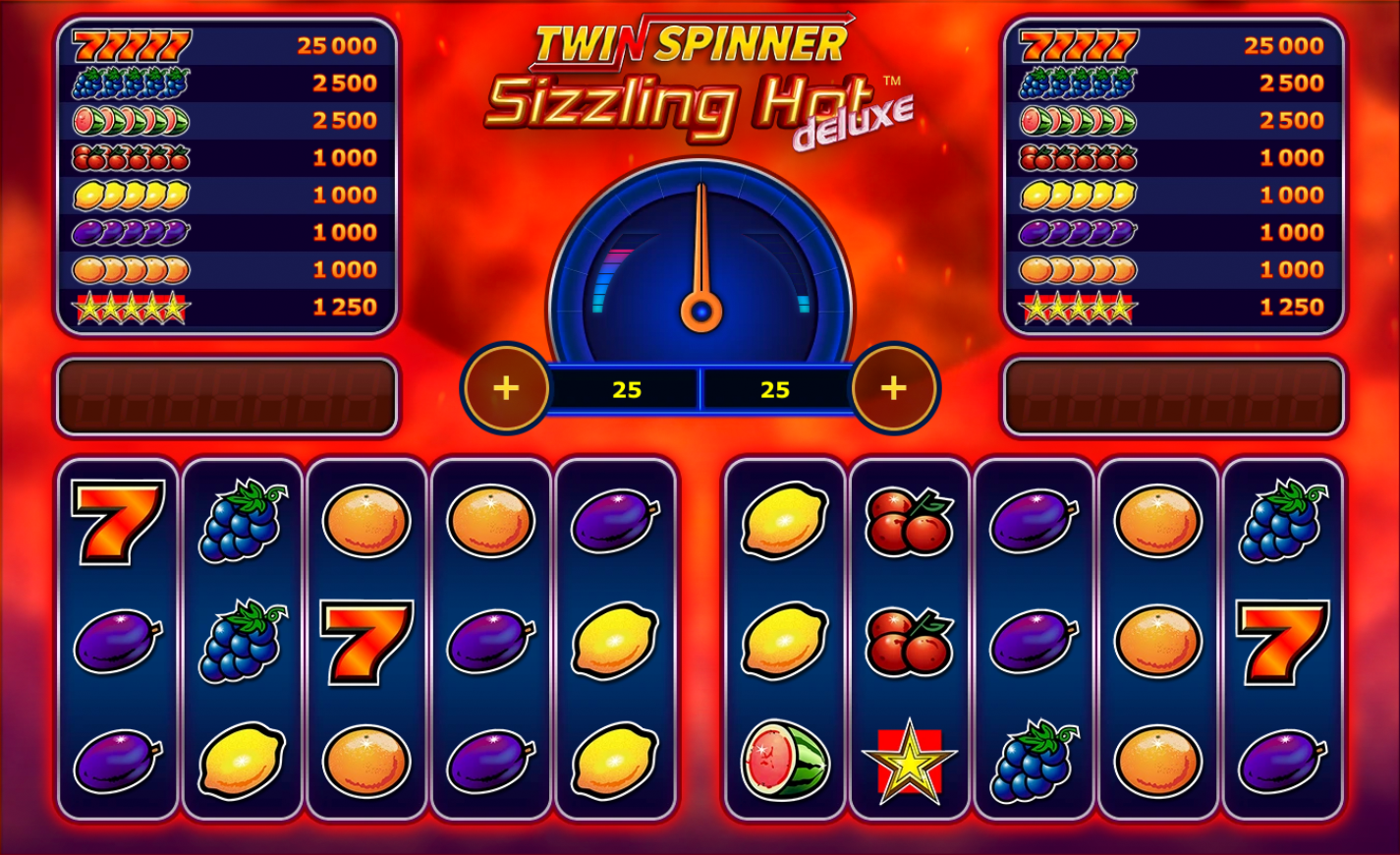
Greentube’s Twin Spinner series aims to overcome the five-second rule
Busted flush
Besides slots, online poker has been dealt a particularly bad hand. The 5.3% turnover tax means when a player sits down with $100 at a virtual cash table, $5.30 has to be handed over to the tax authorities, even if he or she plays just one hand or pays no rake at all. The prohibitive tax regime prompted PokerStars to do away with no-limit Texas Hold’em and pot-limit Omaha cash games above $1/$2 (maximum buy-in $200) in Germany. With single-table tournaments (STTs) and Spin & Go’s, there are none above $50 now. The Isle of Man-based operator also forces players to play a certain number of hands after they join a cash table, while the rake has been raised by as much as 35% for certain cash formats. The hike means German players pay more rake than an opponent in another country seated at the same table. This is most noticeable in a split pot scenario. As for fellow poker operators, Betsson took the far more drastic measure of folding its Playtech-powered poker offering in the country altogether. Leading French brand Winamax pulled its poker product when the toleration period began but has been granted a sports betting licence. Kindred’s Unibet Poker has stayed put, yet removed all cash games, STTs and the loyalty programme from 1 July. Only Spin & Go’s, known as HexaPros at Unibet, and multi-table tournaments (MTTs) remain, with the operator covering the cost of the turnover tax – for now. Entain’s partypoker also altered its offering, including axing all cash games and its fast-fold variant above $2/$5 (maximum buy-in $500), while GGPoker took the unusual step of applying the 5.3% tax at the point of cash-out from a cash table or tournament. So, those who fail to make the money (typically the majority of entrants) in tournaments or lose their stack in a cash game don’t pay the charge. This approach shifts most of the tax burden onto winning players. “As the tax is applied at cash-out, winning players as a whole will contribute more to the overall tax pot,” explains Marco Trucco, head of Europe at GGPoker. “We understand this is frustrating, but it’s consistent with the principles of maintaining a healthy poker ecology. It’s worth noting that, at present, our method raises around 70% of what GGPoker pays the German Tax Authority, and we cover the rest. If this number changes, we’ll adjust.” While poker sites in Germany can access global player pools, as opposed to being a ringfenced market like Italy, their German customers can only play a maximum of four tables simultaneously and can’t choose their seat at a cash table. We’ve seen numerous dotcom operators introduce these kinds of restrictions to protect the ecology of their sites, so this isn’t too big a deal. And most sites will still offer their full range of MTTs in Germany, including headline events like the weekly Sunday Million on PokerStars. What is a big deal is the €1,000 monthly deposit cap. This is considered a derisory amount for your average serious or professional player who regularly enters MTTs with buy-ins costing three, four or five figures. Along with the tax, the cap has been met by outcry and derision on popular poker forum TwoPlusTwo. Trucco insists it means Germany-based poker enthusiasts can no longer play at “a competitive level or play for a living”. “Germany is pushing out of the country all frequent poker players and anyone dreaming to qualify for the world’s most prestigious events,” he continues. Indeed, a number of high-stakes professional players hail from Germany. The top-10 Germans on the all-time money list for live tournaments (excluding online action) have amassed combined winnings of $175m. That said, most pros had already departed their homeland to ply their trade in the digital realm due to the country’s unfavourable tax laws on gambling winnings. The consensus is that these egregious regulations will do little to reverse the diaspora. “We expect many German players to move to another jurisdiction,” Trucco affirms. “The German regulation fails to recognise that these people exist and should be able to live and work in their home country. We expect many players will simply play on unregulated sites where there are no such strict limits.”
GGPoker applies the 5.3% tax at the point of cash-out from a cash game or tournament