
The rise of the Internet of Things
Web-connected devices are springing up everywhere these days, but could the so-called Internet of Things actually benefit the online gambling industry? EGR takes a closer look

As technology terms go, the ‘Internet of Things (IoT)’ doesn’t exactly roll off the tongue. But with a myriad of ‘dumb’ objects being hooked up to the internet – everything from cars and thermostats, to vacuum cleaners and dog collars – this somewhat clumsy and ambiguous expression is sure to eventually spread beyond the tech vernacular.
Mainstream awareness is coming as homes and workplaces are increasingly flooded with connected devices. Earlier this year, Boston Consulting Group estimated that B2B spending on IoT technologies, apps and solutions will reach $267bn by 2020, while IHS predicts the total number of IoT installed devices will hit 30.7 billion by 2020, and 75 billion by 2025.
“I don’t believe in the numbers but the Internet of Things is definitely going to be big – very big,” asserts Giulio Coraggio, a partner at law firm DLA Piper. “Internet of Things technologies are already available and their cost is quickly dropping.” The gambling industry isn’t always at the bleeding edge where innovation and new technologies are concerned, but that doesn’t mean the IoT isn’t on operators’ radars.
For instance, GVC is starting work on its next generation web platform, dubbed ‘Vanilla Six’, that will support all manner of internet-enabled devices. “Today we are multi-channel supporters but we want to become innovators,” GVC’s CTO told EGR Technology in a recent interview.
Sky Bet’s head of native development, Andy Evans, says the Leeds-based operator is exploring IoT opportunities “across a number of products” that are in the R&D phase. One of these key projects involves testing digital assistants and voice-activated interaction.
“We’re gaining a better understanding of what we can do,” he says, “but also understanding how our existing and prospective customers are using this technology, what their now and future needs are and how we can satisfy those. Initially, some of these could be informational rather than transactional, so to support a user’s journey to placing a bet, but as the platforms grow and we find ways to do more, tailoring those experiences could be a very valuable stream.”
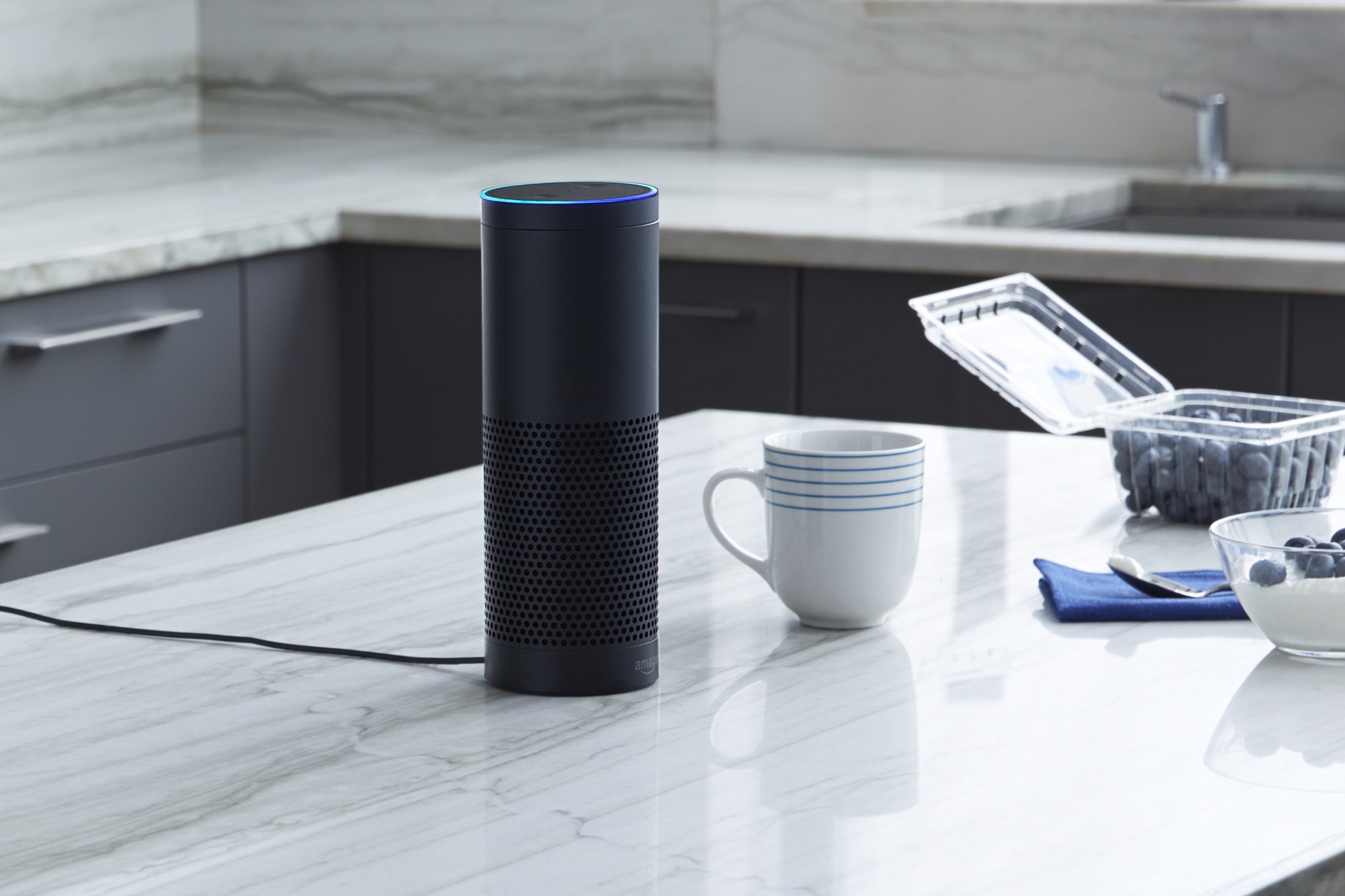
Amazon’s voice-controlled Echo and its baby brother, Echo Dot, have been a hit thus far with consumers. Estimate say over eight million have been sold in the US along
Kindred Group’s Unibet was one of the first operators to introduce Siri-like voice recognition technology for its mobile app 18 months ago. However, an inescapable issue is that betting is a private pastime. Punters don’t tend to want to broadcast that they are having a flutter and how much is at stake. And even if they are alone, barking commands like ‘bet £20 on Real Madrid’ will feel alien for many. Over time, though, communicating with digital assistants using voice commands has become more acceptable and commonplace, assisted by strong sales of the Amazon Echo and Echo Dot, which retail for £150 and £50 respectively.
Despite Amazon not releasing precise numbers, it is thought that in the US alone more than eight million consumers own one of these gadgets, which can also control lights and other smart home devices. “The price points of some products like the Amazon Echo make them very accessible and I think they’re doing a good job of showcasing the products’ capabilities and user benefits,” says Evans. “That will help drive take up, awareness and potentially drive the Internet of Things market forward as a whole.”
Screening process
Connected devices are increasingly making an appearance in the kitchen, with smart fridges set to become a ubiquitous smart appliance in the very near future. One of LG’s latest models, the Smart Instaview, features a 30-inch integrated display on the outside. As well as food freshness reminders, there is the option to see inside the fridge via an app, which is handy if you’re out shopping and can’t remember if you are running low on milk.
But while it is likely that people will use the touchscreen to browse recipes or the evening’s TV schedules, it seems inconceivable that they would fire up a betting app while preparing dinner and stick a tenner on Crystal Palace to beat West Bromwich Albion.
Even less plausible is the prospect of playing slots or roulette on the fridge door. “While I don’t think people will place bets on their fridge, I do believe that there may be some applicable use cases,” says Ben Pesso, development manager for Mansion. “For example, when you approach the fridge you might get notified that a friend just started playing online, or that your team’s game is on. In other words, you may not use the device for gaming, but the device can still be used as a communication medium to bring players back into the game.” In a similar vein, a smart bathroom mirror could remind you about your winnings from the previous night, display your account balance and suggest upcoming betting markets.
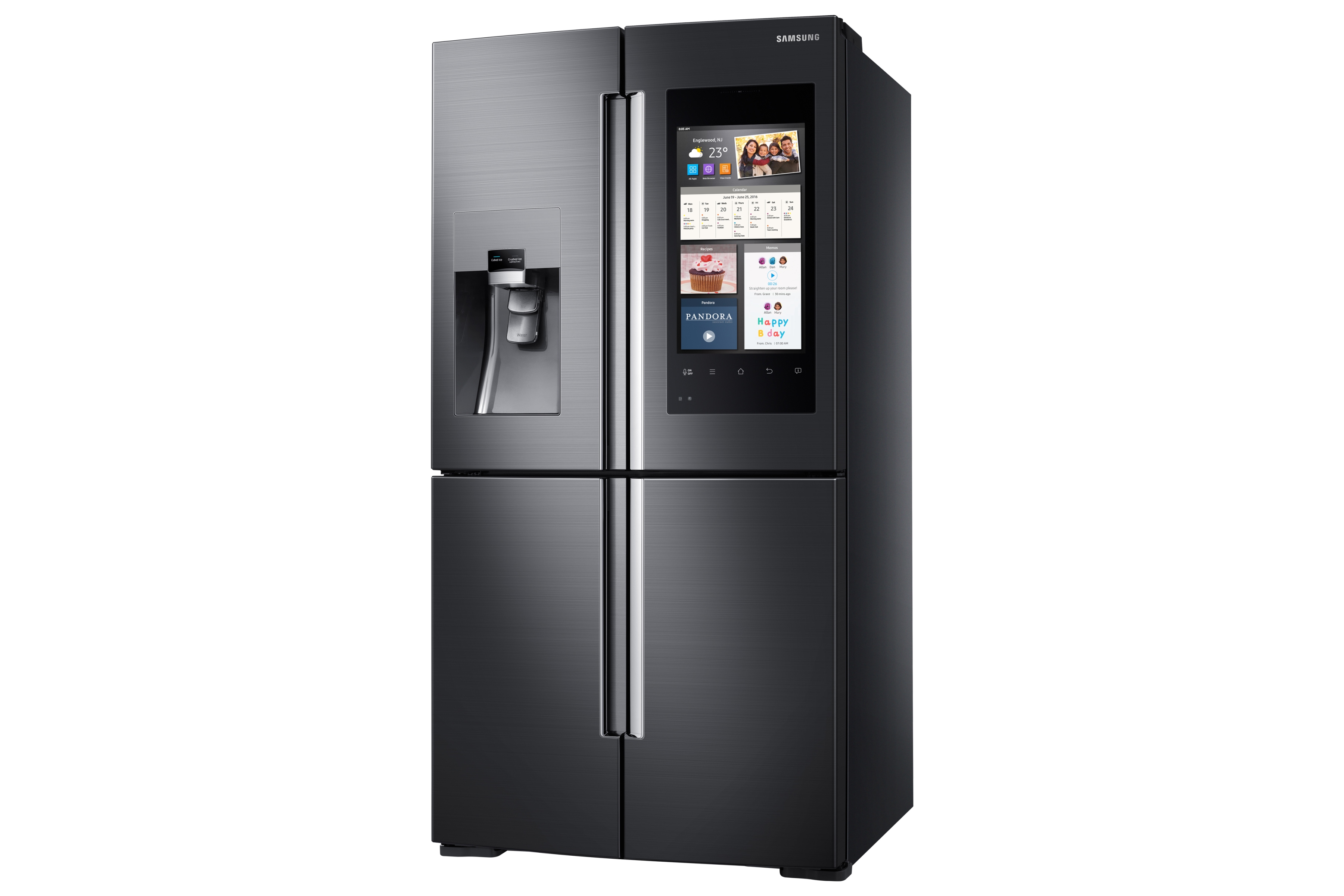
GVC, parent company of the likes of bwin and partypoker, is working on its next generation web platform that will support an array of devices such as smart fridges and smartwatches.
So while notifications and prompts could work, it’s questionable whether betting on anything other than a PC, smartphone or tablet will ever take off. Even gambling on the main screen in the house – the lounge TV – has been a non-starter as the UI and UX are largely inferior. Second screening with a handheld device is more convenient and, of course, this arrangement frees up the TV for watching the sport, for instance. “TVs will always struggle as the user experience is just more difficult to use and navigate,” says Evans. “Using a remote control to navigate around a service versus the ease of a touchscreen just drives you back to the phone.”
Likewise, a handful of firms, including William Hill, Ladbrokes Australia and Matchbook, have rolled out Apple Watch betting functionality in recent years, but these also didn’t gain much traction mainly due to the diminutive screen and the fact this wearable has struggled to achieve mainstream appeal.
Moreover, new platforms have to add value rather than simply replicating the core app, Evans suggests. “That could be by providing an enhanced data service based on what you’ve bet on, where you are or what you’re watching, which in turn, could be about providing a personalised or customisable experience.”
Meanwhile, Pesso says fragmentation is stifling the IoT market. “Down the line, all devices will communicate in the same language. Internet of Things is a small step towards that; it turns all devices into ‘internet-connected devices’, but it still lacks the foundation of unified communications.”
The market is so fragmented at the moment that users are caught between competing platforms, which hurts both consumers and manufacturers. But once the industry moves past this and agrees on an Internet of Things standard, we will start to see truly connected devices. And connected homes will become mainstream.”

IoT research firm Parks Associates estimates that smart TV penetration will reach 57% in Western Europe this year. 82% of smart TV owners in the US connect their device to the web.
The weak link
Consumers and businesses will also be concerned about the swathes of information these devices gather and their vulnerabilities where hacking is concerned. Recent media reports have warned that smart devices like TVs, fridges and even kettles can provide a back door for cyber criminals to gain access to bank accounts and personal data.
Furthermore, leaked documents revealed that British spies and the CIA were able to turn Samsung TVs into listening devices, while over one million internet-connected gadgets, including webcams, DVRs and routers, were hijacked last year to launch a massive DDoS attack, paralysing large portions of the internet. In fact, Gartner forecasts that businesses will need to securely manage over 7.3 billion IoT end points by 2020.

Fears over security remain after a massive botnet involving over a million hijacked devices launched a DDoS attack on DYn’s servers last year, knocking parts of the internet offline.
Evans agrees that security fears are an issue, yet he feels the most significant hurdle to widespread adoption of IoT is user behaviour. “The biggest challenge for me is how integral mobile devices are to our lives, which in itself could create a barrier to getting a mass of users to migrate their behaviour to another platform or, more importantly, create incremental value in them doing so. That said, as the technology continues to improve and as people start to trust the medium, then the Internet of Things, if executed well, has tremendous potential to remove friction from a transactional experience. That could be game changing.”
From a business perspective, Coraggio suggests a “cultural shift” and education is needed to appreciate how the IoT can transform companies. He illustrates his point by highlighting how Nokia occupied almost half the mobile phone market in 2007, and yet the Finnish manufacturer’s share dwindled to just 3% by 2012.
“The decline was not due to mistakes by its management,” he explains. “But the world had changed too quickly, while Nokia had not been able to keep up with it. Not only has it lost revenues, but also the opportunity to survive. The same might happen to companies that do not see the ‘wave of the Internet of Things’, and the wave in this case will be even faster.”
This article originally appeared in the August issue of EGR Technology