
Q&A: Parimatch CTO on developing an in-house sportsbook platform
Melanie Dayasena-Lowe speaks to Parimatch CTO Konstantin Obraztsov about the operator’s platform migration project, its use of cloud technology and adopting a mobile-first approach


International betting platform Parimatch is in the midst of a huge technical project to migrate its customers from its old internally-developed platform to the operator’s new in-house platform.
Parimatch’s CTO Konstantin Obraztsov is a strong advocate of internally developed infrastructure, which comes with the flexibility to implement your own ideas and innovations within your own timeframe. Product development is also much faster and easier when you are in control of your own platform. The new platform also uses cloud technology, which is proving advantageous in terms of scaling and cost savings, says Obraztsov.
In addition to the migration project, Parimatch is pushing forward with its product development strategy with a focus on flexibility in product offerings depending on the market in question.
Another important area for the operator is mobile apps, in particular establishing a mobile-first and native-first approach to app development. As a company with a young management team and an innovative nature, using the latest technology makes it easier to support and maintain technical systems as well as helping to attract new staff who want to work with the latest tools.
Parimatch’s CTO Konstantin Obraztsov discusses the in-house versus outsourced platform debate with EGR Technology and details the operator’s mammoth undertaking to migrate its platforms to a new in-house model.
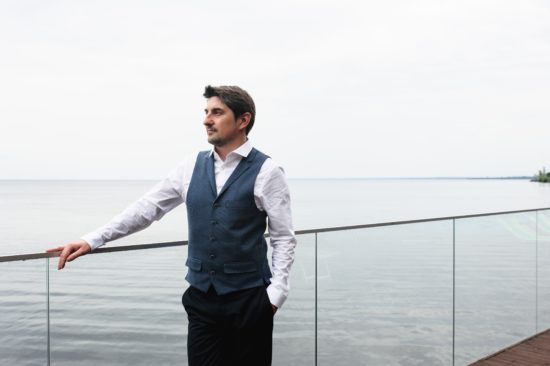
EGR Technology: What are your main priorities as CTO of Parimatch?
Konstantin Obraztsov (KO): I’ve been working here for almost two years so not from day one. The main objective and the main challenge for me initially was to develop and release the new Parimatch sportsbook platform.
The whole journey started about five years ago when Parimatch started to develop a new platform. I joined three years into the process. We did some refactoring, restructuring, reprioritising and the main objective was achieved December last year when we released the new platform. Right now, we have to migrate customers for the different brands to the new platform.
EGR Technology: Can you explain the differences between the old platform and the new platform and did you develop the new platform in-house?
KO: Yes, first of all, the new platform was developed in-house. The difference, I could say, is about 20 years from a technology aspect. The previous platform went into full production about 15 years ago.
From time to time, the platform itself improved. There were changes to some components in the system but the language on which it was written and architecture approaches was really old.
The main issue that the new platform should solve is scaling. It’s dynamic scaling. Previously it was a monolith platform. In general, the biggest difference is that it is monolith versus microservice architecture. So right now, we have microservice architecture, which is deployable separately and can be developed separately.
EGR Technology: What are the advantages and disadvantages of having an in-house platform?
KO: The advantage is flexibility and priority for sure. With flexibility what I mean is, if a business has some ideas and innovations, you can easily implement it using your own resources. If you’re using a third-party platform or a combination of components – like a player management system, sportsbook and trading – through some third-party solutions, then the main issue here is that service is aligned with the third-party. So, you cannot be flexible and also it is not controllable by you. You will always be in a queue unless you’re the first and the biggest client for them.
With an in-house platform, you can do innovation so fast and you can do A-B testing. If you want to quickly start then for sure third-party is a good solution for you. You can start really quickly – six to nine months – but you will lose flexibility and you will lose your leadership position in the market. You will be always catching up from a feature perspective, not from marketing, but in terms of features and technology. If you do your own, you can do whatever you want.
EGR Technology: Can you tell me a bit about your background. How long have you’ve worked in the online gambling sector and what kind of experience have you bought from outside the business to Parimatch?
KO: I have been in the gambling sector for about 10 years. Previously, I worked for Playtech for over five years. Before that, I worked mostly in games development in casino. It was a long journey from the team leader to delivery manager of games units.
EGR Technology: Can you tell me a bit more about your product development strategy for Parimatch?
KO: Each of these markets we operate in has a different direction. That’s why currently our product development strategy is following first of all our headquarters where we are defining the basic functionality and where we can do innovations.
With each of our brands, we are trying to be more flexible for the market because in one market we might need to promote egaming or esports. In another market, it’s good to go with UFC and we have an ambassador for this.

Conor McGregor has signed a two-year personal endorsement deal with Parimatch across the CIS region and Cyprus
We have our product roadmap, at least for six months, where we see what we need to do in each and every market. And also, we are getting some freedom with the new platform with each of our brands to do some small innovations on top of it. Also, some marketing and customisation is required for certain regions.
The main target for me, and for us currently, is to migrate from the current platform which we are operating on to the new one to provide this flexibility.
EGR Technology: Is the migration just for the sportsbook platform or for other platforms too?
KO: It’s basically the whole thing. We have a current player management system and CRM. We have a lot of innovation during this year that we would like to push to the market in order for the business to grow faster.
EGR Technology: Can you tell me a bit more about your mobile apps? How do you make those stand out from the competition?
KO: The mobile apps is one of the most important and this year we have taken a mobile-first approach, which means that if we invent or implement new features or cool stuff it will be mobile-first and native-first.
I think one of the benefits we have currently from mobile and native is because we are doing it separately. We are not doing mobile wrappers. So, we’re doing purely native applications that brings the best performance and capabilities such as video broadcasting.
EGR Technology: Some operators have had problems with their gambling apps on Apple’s App Store. Have you experienced any issues?
KO: At one of my previous companies, there was an issue when they were starting to push their wrapper for casino to the UK market. In our case, for sportsbook we have a purely native experience. So, once we get ready for the UK market, we can publish it.
EGR Technology: What would you say is the biggest technical challenge facing Parimatch at the moment?
KO: The biggest technical challenge, for sure, is migration, because it’s tough. It’s tough to develop a platform. It’s a complex task and it takes years. You need to migrate the current customers and you need to migrate the region. Previously, it was monolith and it was all in one. It’s hard to distinguish what’s needed for which market.
Currently, it’s not technical, as in something that we don’t know how to do. It will just take time until the platform is ready. If we’re going to new markets, it’s much easier because it will be on our new platform from day one. And if you’re going to migrate users, you need to provide them with totally the same look and feel and the same functionality features-wise so you don’t lose them.
The biggest challenge is not technical. Currently, it’s more like product plus technical to get to know what you need to do. Because previously it was monolith and for many years there wasn’t any documentation. So, you need to do it step-by-step to understand what each and every brand needs for migration.
EGR Technology: How long do you think the migration is going to take?
KO: I think the first migration, the biggest part, of one brand will be finished by the end of this year. But the platform is already in production for some of our customers, who basically are already playing. We already migrated about 2-3% of all our capacity of customers. And the next step will be to migrate about 25-40%.
EGR Technology: Earlier you mentioned that you’re working on lots of innovations, can you tell me more about that? Are you experimenting with technologies like AR, VR and voice technology?
KO: Right now, no, we don’t have plans for augmented or virtual reality. But in the last few weeks, we came up with an idea about voice technology and even integrating it into car play. It’s purely R&D. So, the idea came that you can place a bet using your voice. But currently it’s only an idea. Shortly we will have some more technical justification of whether it’s possible and how it’s possible. But right now, we are not focusing on innovating. We are focusing on the migration and then technologies and innovation. It’s mostly from the user experience. And we’d like to have a more personalised experience for the customer.
EGR Technology: Are you using any cloud technology at Parimatch?
KO: Yes, we are using a few of them. By the way, the new platform is 80% using cloud technology. So just recently we adopted it for scaling. It’s really beneficial for us in terms of cost. But on the other side, you are getting the support and you’re getting rid of any infrastructure. So, you can focus only on the expertise that you need so focusing on technology, providing the platform, the language architecture and on products. You’re not focusing on something that is not your expert area. We are, for sure, not experts in hardware. And we’re not good experts in infrastructure. That’s why we decided to trust the company who is leading the market.
We are trying a few cloud providers – both private and public including some of the well-known names. We just need to make a final decision.
EGR Technology: In terms of your technical staff, do you recruit people from within the online gambling sector or from outside the industry?
KO: I think it is like 70% outside the industry and 30% with two to three years’ experience in gambling. Experience in gambling is mostly beneficial for product managers, project managers and management roles, like system analysts and business analysts. For developers, it’s beneficial but mostly on the level of architect where you know where the load will come, what should be horizontally scalable and what’s vertical. For regular developers, it is not a must.
EGR Technology: What’s your technology strategy for the rest of the year?
KO: First of all, it’s the migration for sure. By the way, we have in the pipeline the migration of the second brand. So, it’s not just one. We want to accomplish a few before the end of the year but it’s challenging.
We already migrated about 2-3% of all our capacity of customers. And the next step will be to migrate about 25-40%.
The second one is a regulated market, which we need to adapt our platform for. The biggest benefits right now, and also for hiring new employees, is that when we release a product, the product is on the edge using the latest technologies. So that’s why it’s easier to hire because people want to work with the latest technology. And it is also easier to support and maintain in new or changing markets because all the new stuff comes to the newest frameworks, newest approaches and newest technology stack. In the next few years, we will get all the newest technology that will come on to the market because we started on the latest systems.