The month in technology: Vodafone goes live with 5G service and Facebook launches cryptocurrency
The latest news, insight and analysis from the general technology sector


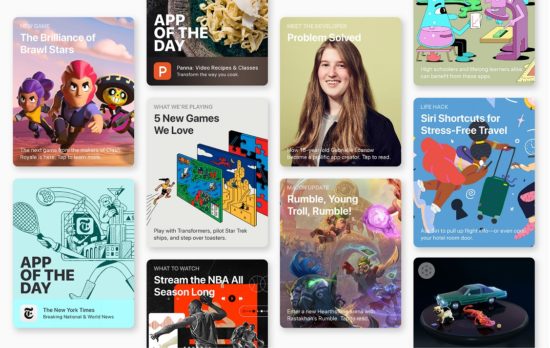
Over 630 app removal requests received by Apple
Apple received requests to remove 634 apps from its App Stores from 1 July to 31 December 2018, according to the technology giant’s latest transparency report. The company received 80 requests from 11 countries for app removals during that time period.
The majority of the requests originated from China at 56, with 626 apps specified and 517 removed. Most of the apps were related to gambling or pornography. Other countries’ requests flagged apps for issues like privacy violations, copyright infringements and illegal content.
The biannual transparency report by Apple outlines how often governments and private parties request customer data. Globally, Apple received 29,183 device requests in the July-December period, down from the 32,342 requests it received in the first half of 2018.
App Store
Facebook enters the crypto space
Facebook has launched its own digital currency, Libra, which is set to be rolled out for use in 2020.
The social media network says Libra is a “global currency and financial infrastructure”. It is a digital asset built by Facebook and powered by a new Facebook-created version of blockchain. Using a digital wallet, Calibra, people will be able to send and receive Libra cryptocurrency simply by using a smartphone.
Facebook said it wants to reach the 1.7 billion around the world who do not have access to a bank account. The currency will be serviced by the Libra Association, an independent, not-for-profit organisation based in Switzerland. The aim of the body is to validate transactions on the Libra blockchain and to manage the reserve Libra is tied to and allocate funds to social causes.
Just a few weeks since its launch, the cryptocurrency has sparked concerns from US lawmakers who are urging Facebook to halt their implementation plans for Libra. In a letter to Facebook, the House Financial Services Committee said it wants to examine risks around cyber security, global financial markets and national security concerns prior to implementation.
Bitcoin clocks high energy consumption
Bitcoin uses as much energy as the whole of Switzerland, according to a new online tool from the University of Cambridge.
The tool estimates that bitcoin uses around seven gigawatts of electricity, equal to 0.21% of the world’s supply. That equates to the amount of power that would be generated by seven Dungeness nuclear power plants at once. Over a year, this equates to roughly the same power consumption as Switzerland.
In order to mine bitcoin, computers known as mining machines are connected to the cryptocurrency network. They are tasked with verifying transactions made by people who send or receive bitcoin. To make as much money from this process as possible, people often connect large numbers of miners to the network or even entire warehouses. That consumes lots of electricity because the miners are almost constantly working.
The University of Cambridge’s tool models the economic lifetime of the world’s bitcoin miners. It uses an average electricity price per kilowatt hour (£0.04) and the energy demands of the bitcoin network. The model assumes that all bitcoin mining machines worldwide are working with various efficiencies. This can then be used to estimate how much electricity is being consumed at any one time.
Vodafone goes live with 5G in seven UK cities
Vodafone has become the UK’s second mobile operator to turn on its 5G network, just a month after EE.
The telecoms firm has launched its new 5G service in Birmingham, Bristol, Cardiff, Glasgow, Manchester, Liverpool and London. Other cities such as Blackpool, Portsmouth, Warrington and Wolverhampton will all go live later this year.
F1 driver Lewis Hamilton officially opened Vodafone’s 5G service this week. He will act as a 5G ambassador for Vodafone, helping bring to life the potential of 5G to be a real game-changer.
The switch-on was marked with the world’s first demonstration of the power of 5G to transmit touch using haptic technology. Two players from Wasps rugby team were able to run a training session 100 miles apart. The impact of a rugby tackle by Will Rowlands at the Ricoh stadium in Coventry was transferred via 5G to teammate Juan de Jongh on stage in London. De Jongh, in a specially developed haptic Teslasuit, was able to feel the force of the tackle in real-time through Vodafone’s high speed and super low latency 5G.
Vodafone is also the first UK provider to offer 5G roaming in Germany, Spain and Italy as well as being the first to offer unlimited data on both 5G and 4G.
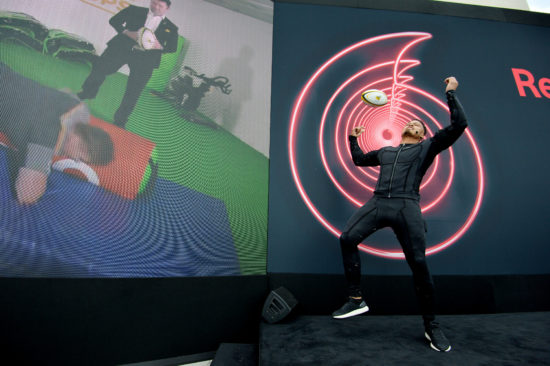
Wasps Rugby player Juan De Jongh, at the Sky Garden in London, was able to feel a physical tackle made by Will Rowlands at the Ricoh Stadium in Coventry via 5G and haptic technology, as Vodafone marks the official switch-on of its 5G network
Photo credit: Jeff Spicer/PA Wire
NatWest allows selfies for opening bank accounts
NatWest has become the first major high street bank to allow customers to open an account using a selfie and photo ID to verify their identity.
The selfie is checked against the photo ID using real-time biometric checks and authenticated to prevent fraudulent applications, thereby removing the need to provide ID documents in branch or by post. It also records the location of the application, allowing additional fraud checks.
The new capability, created in partnership with HooYu, has been successfully piloted with over 60,000 customers to date, with fraudulent applications dropping significantly during that time.
“We know customers want to be able to open accounts at a time and a place that suits them and not have to worry about sending precious ID documents in the post or taking time out of their day to go to a branch,” said NatWest chief digital officer, Frans Woelders. “That’s why we’re making it easier, safer and faster to open accounts, allowing customers to get on with the things that matter.”