
The App Store is 10 years old, but how has it shaped egaming?
This July marks 10 years since the App Store first flung open its virtual doors, EGR Technology looks back at the App Store’s creation and its impact on the egaming industry

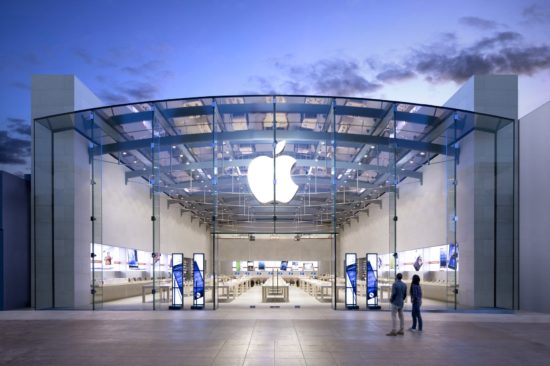
During CEO Tim Cook’s keynote speech at Apple’s annual Worldwide Developers Conference in June, he divulged that there are now 20 million iOS app developers and that the Cupertino behemoth has paid out $100bn to them over the course of the App Store’s lifetime. Furthermore, the digital emporium now attracts a whopping 500 million visitors a week. These staggering figures underline how far this repository for third-party apps has come since its launch a decade ago, after having been first announced by the late Steve Jobs hard on the heels of the unveiling of the much-anticipated iPhone in 2007.
The App Store’s incarnation on 10 July 2008 triggered what was arguably the biggest gold rush since the birth of the world wide web itself. Suddenly, anyone could, if they put their minds to it, code their own free or paid-for apps for iPhone and iPod Touch users and distribute them through the App Store.
A total of 500 apps were available when the store first opened, and it wasn’t long before all kinds of apps appeared – some good, some bad and certainly some ugly. Remember the gimmicky illusions where if you tipped the iPhone towards your lips it (kind of) appeared as if you were necking a beer? Or the one where the screen displayed an image of an electric shaver while a buzzing sound completed the effect of giving your chin a trim? Then there was the infamous $999 app aimed at egotistical plutocrats which simply displayed three words: ‘I am Rich’. That app was downloaded more than half a dozen times before Apple pulled it down. The problem for the gambling industry, however, was that Apple appeared to take a dim view of gambling apps and so initially barred them outright from its store. However, free-to-play gambling apps, which would later be known as ‘social casino’ and balloon into a sector worth in excess of $4bn, were allowed to enter.
At the time, Andrew Daniels, MD of digital design and app agency Degree 53, was working as a senior developer at IGT when an off-the-cuff decision was taken to create a native iOS version of slots title Cleopatra. “We did it just to say we have got something in the App Store, but we kept seeing all these Americans downloading it and no one really knew why. It was social casino, yet we never realised. Later [2012], IGT bought [social casino] DoubleDown for $500m, so if anyone was paying attention to what was going on we could have saved them $500m.”
The green light
Then out of the blue, in 2010, Apple performed a volte-face and waved RMG apps through, creating a watershed moment for mobile betting operators. Although Apple didn’t provide RMG apps with their own category and didn’t promote them in any way, at least operators were finally through the door. (Separately, Google decided to ban RMG apps from its app store, which was later known as Google Play, until July 2017 when it lifted the ban in a few selected markets.) “When we got the nod that we could do it [from Apple] it was great,” recalls Charles Palmer, Betfair’s head of mobile at the time. “A lot of companies were opting for mobile web because it wasn’t restricted but back in the day the mobile browser on an iPhone wasn’t fantastic, so you couldn’t get a decent experience. Nowadays, you can get a pretty on-par mobile experience with a web app as that of a native app.”
With Betfair’s mobile users surging by 40% in 2009 and the company recording a 50% increase in year-on-year mobile revenues, the firm was desperate to get a dedicated app out there. And in May 2010, Betfair Exchange achieved that and also became the first established operator to launch an RMG app for the iPhone, iPad and iPod Touch. The proprietary product took six months to build. “It was all about getting that experience from an exchange point of view and cramming it onto a phone,” Palmer says. “It worked nicely on a PC, but it was that much harder to get it to work on a mobile. We had some really good UX and UI designers in house, so that helped.”
A few weeks later, Paddy Power unleashed a dedicated sportsbook app for the iPhone to coincide with the 2010 Fifa World Cup in South Africa. Equipped with all the functionality of the regular Paddy Power site but optimised for the iPhone and iPod Touch, this product, built by Swedish mobile development specialists Mobenga, was widely accepted at the time as a ground-breaking mobile betting experience. A standout feature was the scrolling icon bar near the top which allowed users to swipe left or right to view various sports betting markets. “That was the one thing that was key to Mobenga’s success,” states former CTO Lars Widmark while speaking to EGR Technology from Seattle.
“Now you can write two lines of code to make that scrolling icon bar but back then we had to do it from scratch. Everyone wanted it.” Indeed, the phone was soon ringing off the hook at Mobenga’s office as other betting operators clamoured for their own apps optimised for iPhone. One unnamed operator even brazenly took a screenshot of Paddy Power’s app, crudely pasted its own branding over the top of the Irish bookmaker’s logo, pasted it into a Word document and asked the Mobenga team to build it. “When we released this Paddy Power app we had three developers, but that app was like releasing the floodgates – we were in delivery mode for at least three or four years afterwards.”
Screening process
When the first-generation iPhone was released in 2007, the public wasn’t all that convinced of its merits. It was commonly perceived to be an iPod Touch with voice calling, while the actual device was bereft of basic functions (cut and paste, for starters) and, in typical Apple fashion, it was particularly pricy for a smartphone. Looking at it now 11 years on, its dinky form factor with a 3.5-inch screen resembles something Fisher Price would knock out today for a toddler to play with. Yet back then, the iPhone and its subsequent iterations up until 2010 (the iPhone 4 was released in June 2010 with a similar 3.5-inch display), were a breath of fresh air compared to Java-powered phones running on the J2ME platform.
“I’d been working in mobile since 2003 and we used to do J2ME phones, which were really, really difficult,” says Daniels. Likewise, Widmark compared developing for iOS devices and their standardised operating systems, hardware and screen sizes as “night and day” compared to the fragmentation headaches associated with J2ME phones. “We were used to working with Java where the starting point was that nothing would work. You had the limitations of 64 kilobytes on the binaries and I know that sometimes you would spend a week to shave off a couple of kilobytes to make it installable on the devices. When the iPhone came, it was one device and one screen size. It was much more standardised.”
Besides the standardisation, the iPhone’s intuitive UI, build quality and the seamless App Store experience were key factors in the phone’s success. In Q3 2010, Apple announced that it sold 8.4 million iPhones worldwide. The following quarter, sales rocketed to 14.1 million – a 91% rise over Q4 2009 – as the handset began to surge in popularity. By March 2011, 100 million iPhones had been sold to date. It meant that iOS (and Android) developers were in hot demand. “2010 was a gold rush,” says Daniels. “I was getting job offers every single day.” For Betfair’s Palmer, now COO of Premier Punt, this was a particularly “tricky” period for recruitment. “Some of them had come from start-up companies but getting people with the relevant skill level was quite difficult because the good ones would get snapped up – they were so rare. Now, though, everybody is an app developer.”
Beaten into submission
After building and perfecting a betting app came what was often the greatest challenge of all: getting the seal of approval from Apple. Indeed, the seemingly hit-or-miss app approval process was often the bane of many gambling app developers’ lives, while the lack of feedback or advice from Apple as to why an app failed to make the grade. “It was just an unknown having to release it to Apple and then getting no real feedback from them – it was silence,” says Palmer. Daniels concurs: “The real challenge was Apple. Even though they allowed gambling apps, they were checking every little thing,” It was when Daniels was head of development at Betfred that he and the mobile team created the firm’s first fully native app, Goals Galore (both teams to score), yet it took more than four months for Apple to finally give it the rubber stamp.
Over at Mobenga, a prominent UK bookmaker’s app was stuck in review for nine months, which Widmark says was a record for his company. Most frustratingly, whether or not an app was accepted seemed an arbitrary decision, he notes. “Because we built hybrid apps Apple said that if it didn’t have enough native functionality it shouldn’t be provided as an app in the App Store. But that rule was completely up to the person reviewing it. It felt like if they did it on a Monday morning or a Friday afternoon – or before or after a cup of coffee – then you could get different results.”
Mobenga once submitted two almost identical betting apps (apart from branding) for release in Australia but one was approved and the other wasn’t. “The blue brand was approved on the first attempt but with the red one we spent almost half a year getting that through. It was rejected due to the [lack off] native functionality so we added a native radio player and odds calculator. We added random code to make the binary look bigger and eventually we got it through. It felt like that the person who blocked us had stopped working there and someone else had a look at it.” And betting apps didn’t just get tangled in red tape when they were first submitted; the same process had to be negotiated when it came to app updates. These days, operators and developers are far more attuned to Apple’s requirements and what an app should and shouldn’t include.
Store of value
Despite the sometimes-tortuous review process in the early days, and the fact web apps began to match native apps for speed and functionality, it didn’t seem to quell the desire among operators to have their products in the App Store. Gambling firms often reported how iOS users tended to stake more and bet with greater frequency than their Android brethren. Furthermore, having an icon sitting on a bettor’s home screen provided that brand awareness and one-tap access to a betting or gaming product suite. In Daniels’ view, app stores have probably been the “biggest change in the industry for a long time”. He says: “Mobile is the channel; if it wasn’t for apps it wouldn’t have ever taken off and would have been a clunky experience – without that we wouldn’t be in the position we are today.”
Meanwhile, Widmark notes: “My take on that is that the apps themselves and the actual iPhone were what made a difference – not really the app stores. It was much less of a hassle to use a native service on an iPhone than a Nokia.” As a side note, Mobenga was eventually snapped up by Playtech for €23.8m and Widmark continued to work there until 2015 as part of an earnout arrangement. Sure, the closed ecosystem of the App Store and the fact that Apple – and Google Play – have virtually cornered the business of app distribution has had its critics over the years, yet the App Store looks set to continue to be practically the only way for iOS users to download apps. According to analytics company Appfigures, the App Store housed over 2.1 million apps at the end of 2017 (755,000 new iOS apps were released in 2017), although this was the first time the total number had dropped (2.2 million in 2016). This was probably due to Apple removing older apps not built of 64-bit architecture.
Yet with Apple automatically taking a 30% cut of paid-app revenues, this ecosystem has become a mammoth cash cow for Apple itself; the aforementioned $100bn dished out to developers means that Apple has clawed in $30bn over the last decade. Kerching! The company may have made a shedload of money but, moreover, “Apple normalised mobile”, with the App Store, Daniels asserts. “They changed the game by making the most technically inept person able to interact with the internet because before that it didn’t happen. You had to be a geek or use it in work. The App Store exposed people to the internet in very user-friendly forms. They made it accessible to all.” So, here’s to the App Store’s next
10 years. Cheers Apple.