Against the grain: LeoVegas on why it is shunning major tech synergies post-M&A
LeoVegas has long been at the forefront of mobile gaming, but what sets the operator apart in an overcrowded sector is the decision to keep brands separate and to refrain from technical synergies, as EGR Technology discovers when speaking to CTO John Strömberg

Late last year, LeoVegas slid into its tech unicorn status with what may have appeared to many as surprising ease. In the six years since the Swedish online gambling operator’s inception, the self-proclaimed “game tech company” has rapidly grown from an apartment in Stockholm to a myriad of global offices, over 600 employees and a handful of widely known brands. But it is evident that the journey has been driven by a laser-focused technical strategy and a staunch belief that mobile-first is the future of egaming.
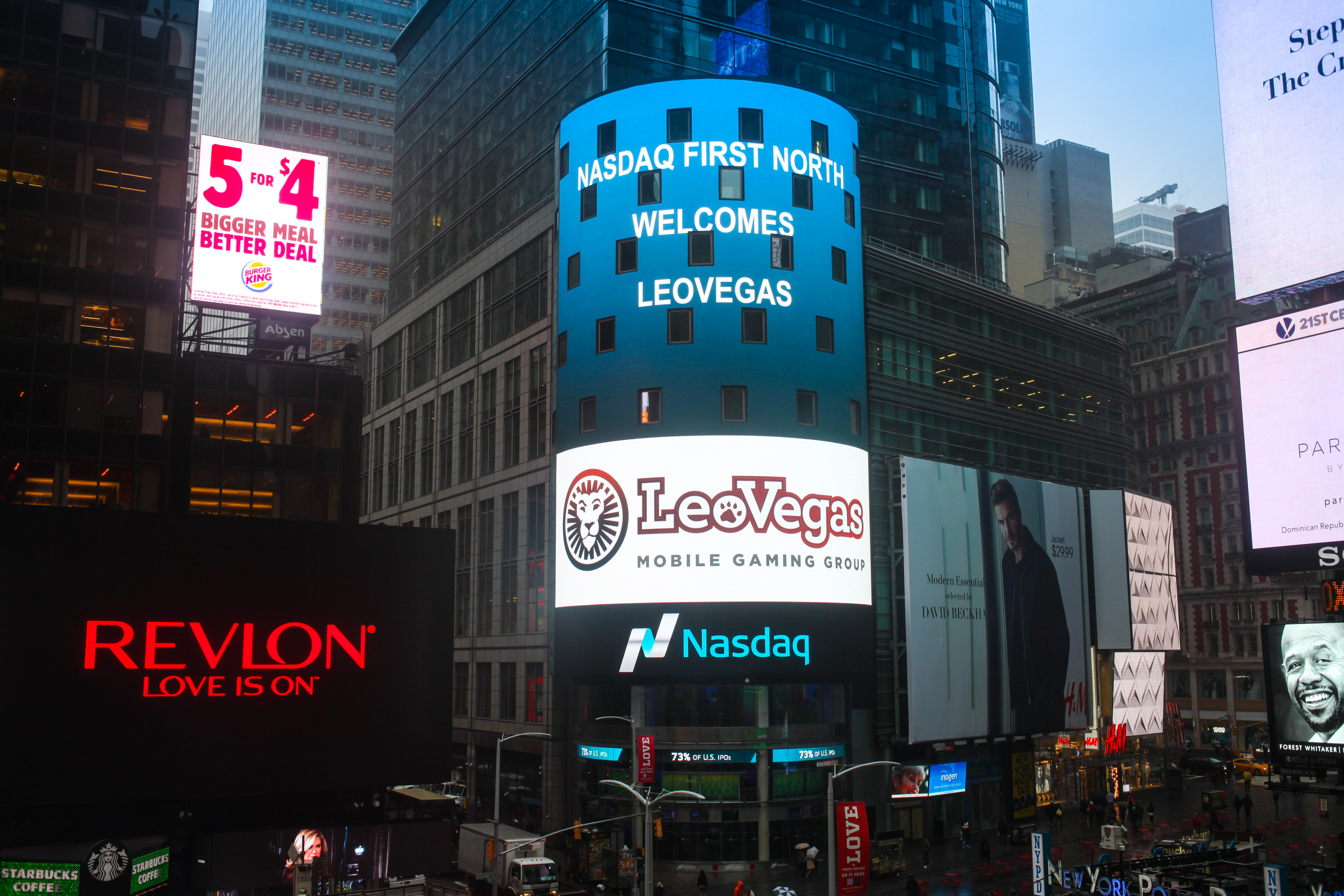
Reaching the magic $1bn valuation placed LeoVegas in the same category as fellow unicorns Airbnb and Uber. The operator became the 57th European firm to reach the milestone, joining its Swedish brethren Spotify, King and Klarna in this elite club. On accepting the title, Gustaf Hagman, CEO and co-founder of LeoVegas, hailed the firm’s tech-first approach and nascent vision to transform the world of entertainment on mobile devices as the driving force behind its success.
“Through our vision – leading the way into the mobile future – we are taking new steps and striving to accelerate our development through the technical solutions that are leading the way,” Hagman said, alongside his co-founder and now head of the operator’s investment arm, Robin Ramm-Ericson. It is fair to say LeoVegas has been among the leaders of the mobile gaming revolution. The buzzword ‘mobile-first’ has been its mantra since inception, and John Strömberg, CTO, asserts that this has enabled the company to be an early adopter with technology suppliers and get a running start on mobile web and native app development.

LeoVegas CTO, John Strömberg
He says that while many operators adopt a broad approach to their technology framework, LeoVegas has chosen a more targeted framework that takes into account all the key elements of mobile play – from battery life to storage capacity, and even “thumbability”, a term coined by the developers to describe how a player behaves with their thumb. “These are the concepts you hear in the corridors of a mobile-first company,” Strömberg says.
LeoVegas was among the young and tech-savvy generation of egaming operators that crept onto the scene in the early 2010s. At the time, the start-up was fresh enough to know the old days of clunky legacy technology was fast becoming outdated, but also knowledgeable enough to see there was much more room to adapt traditional technical processes. And with that perspective the operator developed its in-house Rhino platform in 2014, powered by a small team with head of platform at the time, Joakim Johansson, at the helm. Four years on, the team is significantly larger and split between three offices in the Swedish cities of Stockholm, Västerås and Växjö.
Platform for success
“We have a platform [that] is under my umbrella as the CTO, and then we have the development organisation which answers to our head of development,” Strömberg outlines. “Then we have all the different verticals and products: casino, sports, payments, responsible gaming. All of them also map into the operational part of the business. We’ve also got affiliation and tracking, retention, and back-office tools. We basically have teams focused on other product verticals or business support in one way or another.”
Prior to 2015, the operator sat on the NYX Gaming platform to power its casino product but switched to its own in-house model to support its strategy of “being the number-one mobile casino in the long term”. In the early stages of the platform’s lifecycle, former LeoVegas operational CEO Johan Styren told EGR the back-end technology would enable the operator to scale its operations more easily and efficiently, and three years on, Strömberg reaffirms his point: “We saw this piece of architecture would be central to how fast we could run – we want to control our own future. In order for us to do that, we need to be able to own and run that piece.”
In the three years since its launch, the platform has been heavily adapted to be able to run with zero downtime during deployments, and allow the team to push continuous updates. It operates a micro services architecture, enabling engineers to upgrade and adapt pieces over time to suit the changing needs of the business, including new verticals like the LeoVegas sports betting product introduced in May 2017. “In a very simplistic way, we introduced another component, added it on top of the micro service architecture, and off we went.
“So these very independently deployable small pieces also add to the resilience of the product, and different parts of the system may be stressed in different ways, but it shouldn’t necessarily affect the other parts,” Strömberg explains. But in the four years since it was developed, the core debit and credit payments functionalities have remained somewhat the same, despite much of the tech being continuously updated. And similarly to its egaming counterparts, the back-end has been evolved to work on the cloud so it no longer relies entirely on the physical infrastructure based at the LeoVegas Malta office.
Organised search
More recently, a sweeping update was carried out across the company’s front-end, web-facing platform in an effort to improve SEO across all mobile web browsers. Like many of its competitors, the tech was built in an environment unwelcoming of SEO, with web browsers like Google Chrome unable to load web pages properly. In the update, which was rolled out to LeoVegas’ smaller markets in May, the team embraced server-side rendering. “Instead of rendering everything client side, which is what a lot of sites did before, we have switched to server-side rendering, which means Google can get the full picture as soon as you load the site,” Strömberg notes.
With regulations across various markets forming a vice-like grip around many EU operators, LeoVegas has found itself in the crosshairs of the UK Gambling Commission after the regulator discovered the operator had failed to prevent self-excluded players from receiving marketing material. Before the incident came to light earlier this year, the operator had already made a concerted effort to bulk up its responsible gambling standards in the form of in-house technology Leo SafePlay.
The platform has built a number of key socially responsible features into LeoVegas’ products, including deposit-limit, loss-limit, session-limit and wagering-limit tools, as well as the ability for users to pause their accounts, view their gaming history and assess their gambling behaviours. Players can also access third-party blocking tools Gamban and Betfilter, which allow them to restrict their access to any gambling site in the UK market.
One step beyond these restrictive features is LeoCare, an initiative powered by the firm to fund the initial stages of a player’s gambling addiction therapy, provided they have been a customer for over 12 months. Most recently, the UK-facing LeoVegas sites integrated the Gamstop national self-exclusion scheme. “From my perspective, it’s about how we can leverage technology there is through data and machine learning to find models that help us identify risk players,” Strömberg says when discussing the Leo SafePlay system. “It’s about how we can leverage the technology through data and machine learning to find models that help us identify risk players.”
The shift is having impressive results, he believes, but has also made way for a myriad of further front-end modifications. The first phase of the technology was inaugurated in 2012 and, according to Strömberg, it served the firm surprisingly well for five years, which is classed as almost a lifetime in technology. The upgrade lasted over a year and commenced with a great deal of research on next-generation technology and how native application development would inevitably evolve.
Strömberg comments: “We had a core team that built the framework surrounding this. Then we brought in all the product teams to bring their parts up to speed. It was tough because we are always a moving target and, of course, the company changed quite a lot during that process. That was the toughest part; working against a moving target.” After the initial development stages, vertical teams went through a process of integrating each element of the business into the new technology whilst continuously maintaining 100% uptime. The final phase was particularly testing as tech teams had to decipher the optimum opportunity for switching entirely onto the new platform.
Elsewhere, developers are tasked with producing the company’s native mobile app, a crucial piece of the product puzzle that was highlighted by Hagman in a recent interview with EGR. Following Google’s shift to allow real-money gambling apps on its app store in certain markets last September, the CEO said releasing the app for Google Play would be a “game changer” for the operator.
Strömberg agrees, and says the firm leverages its mobile web developers to work on the mobile app. Key to building and updating the app is using all the functionality of the web front-end platform to make it as fast as possible without having to build a separate piece of technology. Also integral to the native app is a solid core technology, particularly as Stromberg says the team is “constantly changing which strategies we think are best to produce good native applications”.
A fresh approach
LeoVegas appears to be adopting a strikingly different approach to its egaming competitors in a bid to expand its brand offering, after having acquired UK-facing Royal Panda and IPS (now Rocket X) last year. Unlike Kindred and Mr Green, both of which are facing on-going integration processes to shift newly-acquired brands onto the same back-end, middleware or front-end platforms, Strömberg proclaims the M&A pursuit is not about targeting operators that share similar technical models to LeoVegas.
“We are not looking for system and platform synergies,” he notes. “Rather, we focus on sharing knowledge and experience, and focusing on different strengths [in technology]. As we are a rather big tech team at Gears, what we can help out with is what we have [already] gone through with growing the tech – for example, our test automation team can share knowledge on infrastructure.”
Equally, Strömberg is hugely keen on learning from the other brand teams and have LeoVegas adopt practices others are using to streamline their tech processes. “We are not focusing on merging technologies,” he reaffirms. “What we look at are the components that each tech group in the company can expose to the other, instead of everyone reinventing the wheel.” For example, one area in which he believes LeoVegas can guide its sister brands is in upscaling. “When it comes to scaling, it’s one thing we do really well at Gears since our product handles a huge amount of transactions.”
“It’s about how we can leverage the technology through data and machine learning to find models that help us identify risk players” – John Strömberg, LeoVegas
Where LeoVegas does find strength in the other brands, the micro-service architecture of the core Rhino platform can easily adapt and leverage new technical processes. There are, however, a few exceptions to this rule, particularly responsible gambling, AML and compliance, which will be synced up across all brands to meet the rapidly growing expectations of industry bodies.
The decision to maintain separate technologies was first made apparent following the purchase of Rocket X, which shared a number of principal shareholders with bingo and back-office tools platform Bede Gaming. Within the statement announcing the acquisition, Hagman said the company would remain on the Bede platform. Bede chairman Joe Saumarez Smith said to EGR: “LeoVegas fairly quickly became the obvious choice with the overall health and growth of the business.” LeoVegas Sports is powered by Kambi and Royal Panda’s sportsbook sits on the BetConstruct platform.
Extending beyond the capital
As most tech companies will confirm, the mastery behind the technology is its developers, and Strömberg is quick to insist the Gears of Leo staff are among the best. In particular, he seeks out individuals who share the firm’s start-up mentality and a desire to build and really own their products. Each office supports its own unique tech culture and adheres to a local approach with recruitment, as certain hiring strategies would not necessarily work for the different environments, Strömberg says.
“When it comes to Växjö, it has been a tech hub for us for many years now and we have a great deal of experienced talent there, [but] they have a different approach because Stockholm is quite extreme with companies cropping up all the time. I’m sure our developers get job offers nearly every week. It’s important for us as a game tech company to profile ourselves and how we work with technology and what we think is important, and the craftsmanship in that,” he adds.
Jarl Moden was appointed as the operator’s permanent chief product officer in December 2017 after the role was established for an interim period during which LeoVegas was carrying out an internal evaluation. Moden’s position has since then helped to cement the mantra of accelerating product innovation in mobile gaming.
“We have put in a lot of resources to the product and tech side,” he tells EGR Technology, “and building significant teams, including more than a dozen UX and UI designers.
“We are really starting to see the outcome of that with our new sportsbook client and the new design of the site. Compared to most operators, we must have a higher ratio of product and tech staff.”
The operator has leveraged its relationship with sportsbook platform provider Kambi to take control of the product’s front-end and use the provider’s flexible APIs.
Moden says there is much more to come in the realm of sports betting as it focuses on relevance and a more data-driven technique.
He says the developers are continuing to improve on the UX and make it more intuitive. “Initially, we did a lot of technical groundwork and now we have the foundation to start pushing out new features. We also want to build on what we have in casino and live casino.”
On winning Mobile Innovation at the EGR Marketing & Innovation Awards in June, Moden says the firm’s focus on speed and quality and a simple UI has been the strategy for its success.
Although Kindred, Betsson and Mr Green also have tech hubs in Stockholm, LeoVegas’ commitment to the lesser-known cities of Växjö and Västerås offers up a unique smörgåsbord of tech talent untapped by the mainstream industry. Strömberg insists the quality of life in Västerås, which is approximately an hour’s drive from Stockholm, provides cheaper housing and better living costs while still being close to the capital. Växjö, in southern Sweden, is a smaller city, which offers new challenges and a wide range of ages and experience.
Overall, the operator has a team of approximately 120 developers, designers, UX testers and product owners. A small team is also based in Milan after the 2017 acquisition of Italian brand Winga, which was rebranded to LeoVegas later in the year. In the largely competitive world of tech recruitment, Strömberg says the firm has appeared attractive to potential staffers. While many of the senior employees tend have a background in the egaming industry, many of the junior developers join the firm as graduates.
As the operator steers towards new markets and verticals, it is eager to establish fresh and novel approaches to online gambling and mobile gaming. Its investment arm, LeoVentures, was brought out of dormancy in 2017 to establish a couple of acquisitions of online casino streaming and live casino communities. Both areas are rapidly rising in popularity, and instead of evolving the platforms into major affiliate partners, the plan is to establish a foothold in casino game streaming, which has gained massive traction on Twitch and YouTube.
“The combination of proprietary content and the moving picture format creates exciting opportunities going forward and is in line with LeoVegas’ strategy to be an innovative and entrepreneur-driven company,” Hagman said in a statement announcing the CasinoGrounds acquisition in December. It is precisely this approach to innovation and new mediums that has cemented LeoVegas’ position as a tech start-up with immense potential. Following its Q1 2018 report, industry analysts Regulus Partners categorised the operator as one of the few to have proven that “old dot.com ways are ripe for reinvention with the rewards being levels of growth that materially outperform softening macro trends, even with scale”, signalling that Strömberg’s actions are paying off handsomely.