
The month in tech: Samsung leans towards 2019 foldable phone release and Facebook acquires AI research firm
All the latest in wider technology news for the month of June 2018


According to reports in the Inquirer, Samsung has made headway towards developing a foldable device by producing a curved battery that could have a capacity between 3,000mAh and 6,000mAh. The tech giant built a similar battery in 2014 but it only reached a 210mAh capacity. It is also in the process of producing a flexible OLED screen likely to feature in the eagerly anticipated Galaxy X smartphone.
The device is expected to be launched in 2019 and is rumoured to cost upwards of £1400 with a screen size of 7.3 inches when fully open, and 4.5 inches when folded. Samsung unveiled its first flexible screen prototype back in 2011 with claims it had an open-close cycle of 100,000 times before the brightness dropped permanently.
The official release is expected to occur during next year’s Mobile World Congress. TechRadar reports the phone will be ready for testing by November.
Light it up
Camera manufacturer Light is in the process of developing a prototype for a phone with nine rear cameras, expected to be released later this year. Light previously produced the 16-lens Light L16 camera which it described as the “first multi-aperture computational camera that packs DSLR quality and capability into a device that fits in your pocket”. The camera is able to take multiple photos simultaneously at different depths and focal lengths. The nine-camera device is said to be able to capture 64-megapixel images with low-light capabilities and special depth effects. With the L16 retailing for £850, the phone is expected to come with a hefty price tag.
Hello Moto
Motorola’s Moto G6 is the latest affordable smartphone to hit the market, with reviewers lauding it as the “budget phone that shouldn’t be this good”. The device operates Android Oreo on a 1.8GHz octa- core Snapdragon processor with 4G speed. It also has internal storage of 32GB and 3GB of RAM. It also includes a 3000 mAh battery and a 5.7-inch display with full HD resolution.
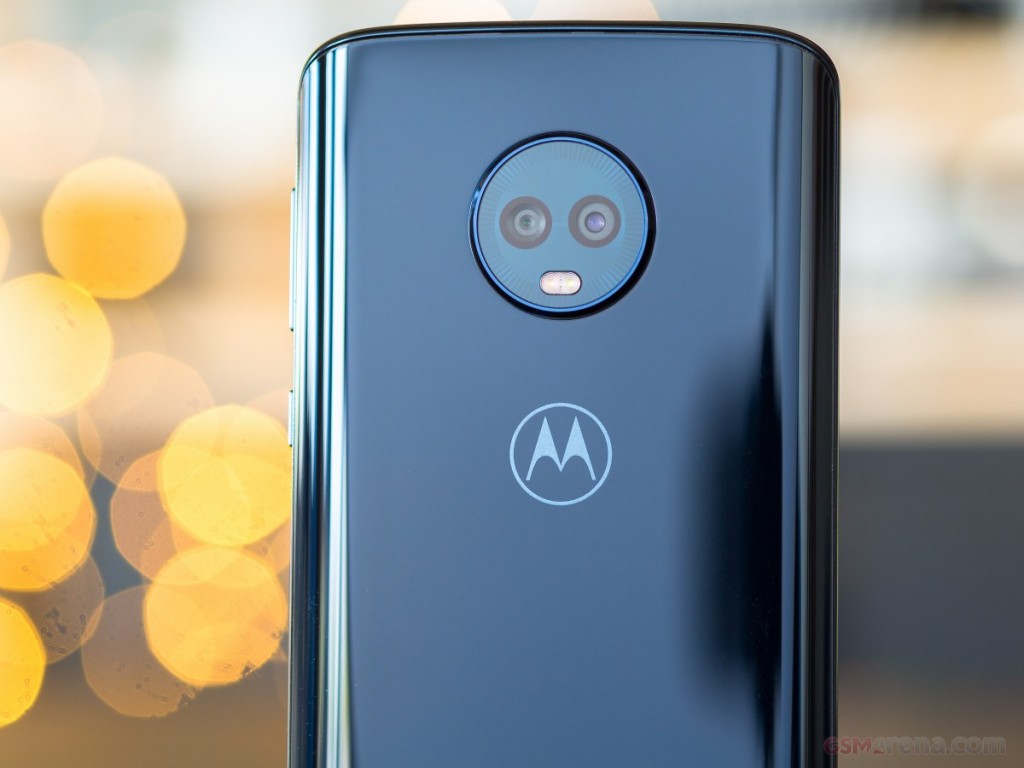
The rear camera can capture 12MP images and 1080p HD video, as well as time-lapse and slow-motion videos. Users have access to Motorola’s Moto Voice Google assistant and advanced imaging software. In terms of hardware, the phone has slightly thinner bezels than the Moto G5 and also sports a glass back, giving it much less of a budget phone appearance.
Alongside the G6, the manufacturer released the G6 Play, a more affordable version of the phone with a lower-resolution display and a single rear camera. Meanwhile, the slightly upmarket version of the phone, the G6 Plus, offers moderately better battery life (4000 mAh) and a 13MP rear camera.
The end of an era
Major online retailers have removed Jawbone fitness trackers from their ecommerce stores following an investigation carried out by Which? The consumer watchdog deemed the wearable devices to be “useless”. After the company went into liquidation last year, a new start-up called Jawbone Health aimed to continue to run the online services previously used by watch owners to track their workouts.
However, during the transition of its app service, dubbed UP, to the new Health technology platform, a disruption caused users to lose access entirely. After four weeks of the service being down, users took to Twitter to lodge over 600 complaints that their devices were no longer fit for purpose. Since then, Which? Has said users who bought their device in the last six months can apply for a refund.
Those that have owned it for longer are still eligible for a partial refund. “Retailers have a responsibility to ensure that products listed on websites or sold in stores are fully functional,” a Which? spokesperson told the BBC.
US bound
Chinese smartphone manufacturer Xiaomi is looking to enter the US market in 2019, a Reuters report has said. The firm expects to avoid the set-backs experienced by its competitors in the US via its US connections. According to TechRadar, Xiaomi has enjoyed considerable success in China and has since targeted other Asian nations to contribute to a 129% rise in year-on-year sales.
Analysis: A bettor opportunity
Marc Thomas, partner, Propus Partners LLP
At the time of writing, the World Cup is exceeding everyone’s expectation (except possibly those in Germany and Spain!), however operators are not congratulating themselves just yet. The group stages from Russia are reported to have had record levels of turnover and with a generally positive set of results, most bookmakers will have generated pleasing margins. With Sweden and England having gone through, the levels of consumer interest (and therefore staking) are expected to continue to accelerate, meaning the volatility of the final few games could still make or break it for some.
However, while this World Cup may break all sorts of records, operators and suppliers have not fully taken the opportunity to launch products and features for their mobile customers. In previous years, major football tournaments have prompted operators to create and improve features such as cash-out and requesta-bet. In addition, tournaments of this size have traditionally seen operators expanding the range of in-play betting markets on offer with mobile customers in mind, something we haven’t really witnessed this summer.
The reasons given for this relative lack of mobile innovation will differ widely, however it is suggested that most have taken the decision to optimise/stabilise mobile apps and features that they already have, rather than introduce risk by creating new ones. With the mobile sports betting market being so competitive, the prospect of an unstable mobile platform for both existing, and the thousands of newly acquired customers, is clearly a risk most operators and suppliers have thought too great. In addition, many major operators have instead focused on promotions and bonuses with a variety of ‘millionaire’ type competitions supported by stand-alone apps and huge marketing expense. However, we expect many operators to launch new mobile products for the start of the next domestic football season.
In addition, with launches predicted for the likes of Superbet and Bet.me as well as a ramping up of activity for Addison Global’s Moplay brand, the mobile betting landscape is likely to become even more competitive than it already is.
Tech world
According to TechRadar, Samsung, Cisco and Orange are conducting the first multi-vendor trial of 5G Fixed Wireless Access (FWA) technology. The trial is being carried out in Romania and is using a 26GHz millimetre wave (mmWave) spectrum. It has picked up speeds of 1Gbps over a distance of over 1km and is expected to reach higher speeds and greater 5G capacity as the trial continues.
“Thanks to this first successful test of 5G Fixed Wireless Access in the 26 GHz band, Orange has been able to verify several use cases enabled by this technology,” Arnaud Vamparys, Orange’s head of radio networks and microwaves said. “We can now better understand the way in which this technology works in real usage environments in order to complement wireline solutions.”
Credit: Facebook
Charged up
A court has ruled that Visa and Mastercard are charging British supermarkets Sainsbury’s, Argos, Asda and Morrisons too much in interchange fees and card charges. The companies have won the latest stage of court proceedings against the two payments giants in a case that is assessing a fair level of fees and determining what damages the supermarkets should receive, the BBC has reported. The case dates back to 2015.
Major discovery
New research has discovered a much less invasive method for detecting cancer using soundwaves. The method, established by researchers from Duke University, MIT and Nanyang Technological University, sets up soundwaves at an angle to the flow of blood in the body. As the sound moves, pockets of pressure push on particles in the blood.
The Next Web says the soundwaves push circulating tumour cells into a separate channel in the bloodstream for researchers to collect and analyse. Tony Jun Huang, the William Bevan Professor of Mechanical Engineering and Materials Science at Duke University, said: “Biopsy is the gold standard technique for cancer diagnosis.
But it is painful and invasive and is often not administered until late in the cancer’s development. “With our circulating tumour cell separation technology, we could potentially help find out, in a non-invasive manner, whether the patient has cancer, where the cancer is located, what stage it’s in, and what drugs would work best.”
Against their will
Multiple online reports have claimed Samsung smartphones have been spontaneously sending images to random phonebook contacts. Numerous images are said to have been sent to contacts without users being aware or having any indication after the fact in the Samsung Messages app. A thread on Reddit has said the affected devices appear to be the latest Galaxy S9 and S9+. However, according to T-Mobile’s schedule, the RCS update has only been applied to the Samsung Galaxy S7 and S7 Edge rather than the S9 or S9+.
Smartphone owners are being advised by Naked Security to turn off the Messages app’s access to storage and camera in Settings > Apps > Permissions. Reports have suggested the problem started after the Messages app was recently updated, although others said the issue goes back as far as May.
The fight for AI
Facebook has acquired London-based AI start-up Bloomsbury AI, which develops machine reading technologies that can understand written text. The social media behemoth paid up to $30m for the firm, which is backed by IQ Capital, the London Co-investment Fund and the UCL Technology Fund.
Facebook confirmed the purchase in a statement that said Bloomsbury AI’s expertise would strengthen Facebook’s efforts in natural language processing research. “We’re excited to announce that the team behind Bloomsbury AI has agreed to join Facebook in London. The Bloomsbury team has built a leading expertise in machine reading and understanding unstructured documents in natural language in order to answer any question,” the statement continued.