
Hands-on approach
A look at how suppliers have adapted to enable operators to offer a more tailored customer experience

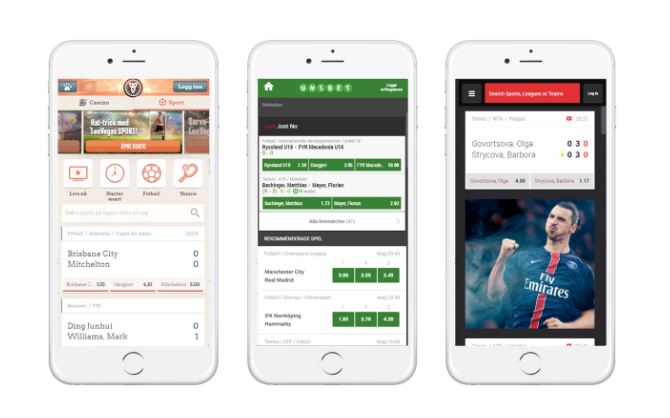
With a relatively quiet summer sporting calendar ahead, there’s perhaps no better time for sportsbooks to take a step back and review operations before making all important tweaks ahead of the new football season.
Certain keywords and terms tend to arise each time the industry outlines its vision for the future of sportsbook: personalisation, user experience, navigation and app loading times make up just a small number of those often trotted out.
For those who build their tech in-house, the task of moulding and perfecting their consumer-facing product is firmly in their own hands. It used to be the case that the others – those that rely on third party suppliers– would need to work closely with their technology partner. And the operator may, frustratingly, not always be at the front of the queue.
However, things have changed considerably in recent years with the off-the-shelf sportsbook solution becoming increasingly flexible. This has enabled operators to take control of the customer-facing frontend elements to offer their customers what they think they want and to stand out from rivals that use the same third party.
Case in point
For high-profile examples, look no further than Coral and Sky Bet and their front-end projects, which sit on top of the OpenBet back-end. OpenBet has supported customers de-coupling the front-ends and has positioned itself as a back-end supplier, understanding the direction of sportsbook travel.
With the advent of more markets and products, and highly complex modules like cash out, larger operators have looked to differentiate themselves by taking more control of the front-end interfaces for their customers – mainly across mobile and tablet. This allows them to be very close to their customers and to manage the customer journey end-to-end.
OpenBet says it has supported this transition by ensuring that everything under the hood works all the time – delivering a platform that, for example, supports in-play markets with 30,000 changes in a game and make it run smoothly and robustly. “Customers want to be able to do things on their own system and they need the flexibility and freedom,” Keith O’Loughlin, OpenBet’s EVP sports betting,” tells EGR Technology.
“OpenBet is a core partner for the biggest operators in the world, and works to support them in areas that they wish to partner, and also supports them in areas that they wish to control in-house.
“The look and feel is one of the customer’s key differentiators,” he adds. “For us this means we have focused on the development that goes on behind the scenes to make it all happen.”
A number of other operators have also looked to leverage their relationships with sportsbook providers and work more directly on certain areas of the technology. By doing so, operators can tweak their offerings themselves, in their own time, to deliver a more unique and satisfying product.
Sportsbook progression
The historic timeline for sportsbook is not particularly long. Platform supplier Kambi’s deputy CEO and chief business development officer Erik Logdberg takes us back to 2005, a period during which he claims sportsbook operators were generally all moving in the same direction.
Since then, live-betting, mobile and data have revolutionised the industry, resulting in operators taking different views on the correct way forward. This shift, Logdberg says, is at the core of Kambi’s strategy to deliver a service, and a technology, where each of its customers are able to achieve their own unique business goals.
LeoVegas, which launched its Kambi powered sportsbook product a year ago, is now developing ‘sportsbook 2.0’. Head of sportsbook Andreas Bardun says the operator is in an “interesting situation”, having started developing on top of Kambi’s open API.
The move has enabled LeoVegas to render its own front-end with the dedicated goal of building the fastest product on the market. “We realised that all the sites looked the same, and so we wanted to use analytics and all different learnings to understand what customers want to do, and to create a different experience for a different type of customer,” Bardun explains.
The operator is currently investing in presenting its players with the right type of personalised offering. Like many industries, as suppliers’ technologies have evolved, they are able to offer operators more freedom.
Scalability and differentiation are absolutely key for the success of these partnerships. “Doing [both] at the same time is how we can make each of our operators super-efficient and relevant,” Logdberg explains.
Flexible API
For Ian Bradley, chief product officer at supplier SBTech, the catalyst for operators to want more say on their consumer facing product was the success of mobile. From there, firms started to roll out native apps and really looked into distinguishing themselves from their competitors.
Some operators have adopted a hybrid approach to their site development, and in order to accommodate this across a multi-operator scheme, suppliers are rolling out dedicated offerings. SBTech, for example, has a rich history in retail but has adapted its web platform to include a custom widget that “consumes” the flexible API to allow for an adaptable design.
“[It’s] based on the requirements to optimise the look and feeling across channels,” Bradley explains.
“We build on a product level avoiding customisation issues down the line with difficult versions and being able to roll the features out to our operators. One important focus was to give query logic to adjust the content of the widget based on parameters.”
Bradley tells EGR Technology increased demand for 24/7 sports coverage has led to a boost in the value of lower tier competitions. “Sportsbooks have to have a fast and scalable architecture to support the round the clock demand, and [with this in mind] front-end products have been enriched with visualisations and stats to keep their customers engaged,” he adds.
Logdberg reveals that Kambi first started opening up its front-end in 2012, introducing a ‘rigid system’ which was made up of certain static components like the betting grid and scoreboards, while also incorporating a flexible model allowing clients to inject their own concepts based on Kambi data.
Since then, Logdberg says Kambi has continued to hand more power to operators to enable them to differentiate their front-ends as they see fit, to the extent where operators are now able to create experiences themselves directly on Kambi’s APIs.
Outside sources
In addition, Kambi pinpoints the key areas they opened up to clients, with price differentiation nearing the top of the list. The supplier went about exploring innovative ways to vary operators’ constantly changing prices without them having to rely on an in-house trading team.
Another move was to forge close ties with small third-party tech companies, which Logdberg says is another coup for both sides. Outside influence brings fresh vision and insight to the set-up, offering operators a unique service that caters to their specific needs.
“We have opened up [the sportsbook] to third parties, as an operator may find [one] they want to work with,” Logdberg says. He also believes it is a positive way to ensure they can innovate parts of the core platform.
For the more modestly sized operators looking to enter the sportsbook market, third-party suppliers are just the tonic – offering a speed to market, and efficient costs. “It’s obviously a far quicker route to innovation if the operator needs to do 10% of the work rather than 100%,” Logdberg says.
“There is the really big challenge of getting real-time data, from the stadium for instance, into the system, [then] pushing the prices out to the front-end client, settling them, and paying out within a few seconds. For someone who wants to be leading in instant betting, to build that whole thing is a huge undertaking.”
In the fast-paced world of sportsbook, there is no time for poor investment. “[For LeoVegas] it would have taken too much time and effort, I think there are operators out there who have tried building their own platforms and trading teams, and it gets expensive very quickly,” Bardun adds.
Going global
Suppliers can offer a comprehensive understanding of certain jurisdictions. Punters’ habits and behaviours differ hugely from market to market, and the challenge for suppliers is to make the same operator relevant across multiple jurisdictions.
Logdberg says the UK is the odd one out in Europe, being such a mature market with a heavy reliance on strict industry standards. “Of course in each market you have the local offer and the deeper you go into the local offering is a differentiator,”he says.
Pinpointing these similarities and differences assists operators with their visions of penetrating certain markets. LeoVegas, for example, has built a highly developed tennis product, based on Kambi’s offering.
“Our number one core market is Scandinavia so we needed to have a provider with a strong offer and live in-play for these markets, and we felt Kambi was the best option,” Bardun notes. “Tennis is all about in-play because you can bet on every point even up to the serve.”
However, working with suppliers can have certain setbacks. With a host of expectant operators in their portfolio, it takes time to invest in each one and carefully build their vision. For operators, being dependant on their suppliers’ roadmap can lead to developments progressing at a slower pace than they would like.
The challenge at the suppliers’ end is keeping ideas fresh and different. Logdberg admits it is impossible to supply multiple, different product strategies to clients. “You have to open up the system more and let the operators do a bit of it themselves, and also let other third parties leverage that core system that we built.
“What we see with our operators is it is becoming a lot about this differentiation happening in the final presentation layer. Then in how they work with retention and CRM.” In this respect, the flexible front-end API works in the supplier’s favour. Bradley says the key to keeping clients happy is listening to them. By doing so, suppliers are able to extend their reach and thrive as an ecosystem.
The future
Development of the sports betting vertical, and its ever changing real-time movements presents many more complexities than any casino product. “It’s rebuilt every day,” Logdberg says. “[So] it’s a challenge to operate a really good clean and flawless experience in sportsbook.”
In order to keep up with the industry, the next hot sportsbook plans are already being mapped out. “The industry has a lot of space to improve on and develop big data and personalisation,” Bradley believes.
Better usage of data and knowledge of players and how they use the product is the next focus for LeoVegas. “I think sportsbook is getting a little bit too slow,” Bardun says. “I am completely hooked on everything to do with instant markets, like quick bets. Right now they are in a hidden part of sportsbooks.”
Suppliers and sportsbook operators are looking in the same direction, which says a lot about the progression of their working relationships. Gone are the days of a singular sportsbook building system, and as both sides of the system tighten their unions, it’s the end-customer that looks set to benefit.