
Leader of the pack: Catena Media on its hyper-aggressive acquisition drive
Julian Rogers speaks to CEO Robert Andersson to discover how these purchases complement the super affiliate’s multi-pronged strategy to dominate the industry


Unless you’ve been living under a rock for the past couple of years, you couldn’t fail to notice how Catena Media appears to be on a never-ending shopping spree, snapping up affiliates left, right and centre. The ink has barely dried on one multimillion-euro deal and this digital performance marketing business is making headlines by signing on the dotted line to purchase yet another start-up.
Acquisitions have become so commonplace that they barely cause a ripple these days at the Stockholm-listed company’s HQ in Malta. There are no impromptu celebrations and the bubbly stays locked away. “No, we don’t pop any champagne corks,” CEO Robert Andersson explains matter-of-factly. “It’s more like a shoulder shrug. It’s what we do. Of course, we are happy when we close a good deal but it’s not like a big celebration every time we do it. This is normal business.”
By the law of averages, there’s a good chance Andersson would have just stuffed another affiliate in Catena’s shopping basket when EGR Marketing caught up with him midway through a part-business, part-pleasure trip to Los Angeles. And this proved to be the case, with the five-year-old super affiliate having picked up award-winning sports tipping and news resource Bettingpro.com for a total of £13.9m in early July. The terms of the deal included a £11.9m payment upfront and another £2m six months after completion, conditional upon the successful handover of assets. Those assets included premium domains Footballtips.com, Racingtips.com, Livetennis.com, Bettingpro.com.au and Feeespins.com.

Robert Andersson, CEO of Catena Media
Besides the €15m acquisition of casino affiliate AskGamblers.com in April 2016, Bettingpro.com was Andersson’s most pleasing addition to Catena’s burgeoning portfolio. “Bettingpro is a kind of sports version of AskGamblers,” the 40-year-old Swede explains. “It’s high quality and focused on great content – the product stands on its own without SEO work. People find it and it ranks because it is a great product, so it has a lot of traffic. And it also has a lot of social traffic [including 108,000 Twitter followers], which is a great strength.”
These past 12 months, Catena has “aggressively added sportsbook revenue” in a bid to reduce the groups reliance on casino – which before accounted for 98% of revenue. It is also part of a concerted effort to capitalise on the upcoming football season, followed by February’s Winter Olympics and the daddy of them all next summer: the World Cup in Russia. “We have been looking to strengthen our position, particularly for next year, and Bettingpro was perfect for us.”
Pick and mix
Since Andersson’s arrival two years ago, this well-oiled acquisition machine has purchased over 20 companies. At certain points under his stewardship Catena has been notching up roughly one deal a month. Indeed, the Bettingpro.com purchase came hard on the heels of acquiring casino affiliates MrGamez.net and Spielekiste.de (Delilah Holdings), bought for an upfront fee of €4.2m in June. In May, Newcasinos.com was snapped up for an initial €7.65m and Catena’s sports betting vertical was given a shot in the arm with the purchase of Online Media, including Bets.co.uk, for an upfront payment of £11.65m. And in February, Swedish-focused casino affiliate Slotsia.com, which was only created in 2015, was sold to Catena for €3.58m, along with a maximum earn-out of €5m.
Catena itself was only established in 2012 – by childhood friends Erik Bergman and Emil Thidell – but the self-styled ‘global lead generation company’ is fast becoming the 800-pound gorilla of the affiliate space. It has more than 240 employees and around 120 revenue-generating sites referring traffic to over 500 casinos and sportsbooks. This growth is reflected in its strong financial performance.
Revenue for the first quarter amounted to €15.2m, which was a jump of 104% over the same period last year. Adjusted operating profit was almost €7m (up 68% over Q1 2016) and adjusted operating margin came in at 46%. Meanwhile, total revenue for 2016, which included seven acquisitions, was €40m – a 168% increase over 2015.
Meanwhile, plans are afoot for a transfer from the Nasdaq First Premier to Nasdaq Stockholm’s main list (Mid Cap), although this has been put on the back burner until H2 2017 due to the “M&A pipeline” and “strategic initiatives”. Catena’s market cap has climbed from SEK1.7bn in February 2016 to SEK4.5bn today, while the share price rose from SEK33 to a high of SEK112 earlier this summer before sliding back to SEK85 at the time of writing. Moreover, though, the float gave Catena access to capital, including an initial €25m cash injection. “This means we can be really, really aggressive with our M&A agenda. And that, of course, gives us growth.”
“This means we can be really, really aggressive with our M&A agenda. And that, of course, gives us growth” – Robert Andersson, Catena Media
You wouldn’t be alone in thinking that executing and integrating 20 acquisitions into Catena’s operations in the space of 24 months sounds a complicated and hectic undertaking for Andersson and his management team. It couldn’t have been a stroll in the park, right? “It is hectic, yes,” Andersson admits, “but we have a working model and the way we have structured the company means we are able to handle this tempo. Of course, at times it has been challenging, especially in the beginning when there is a bit of a learning curve, but now we have such a solid model for how we do these things and that means it is business as usual.”
Furthermore, the time it takes to negotiate and wrap up a deal largely depends on the sellers, he explains. “We can often move quite quickly because we have our processes and we have done this 20 times but it’s the first time for the seller – we know what we are doing when they don’t. So it depends on how cautious they are and whether their lawyers have done this before.”
Catena, which also has offices in London and Serbia’s capital Belgrade, doesn’t tend to take on acquisition’s staff, although the owners are sometimes retained during a pre-determined earn-out period. However, with the Bettingpro.com acquisition, Catena retained the 25 to 30 freelance journalists employed by the business.
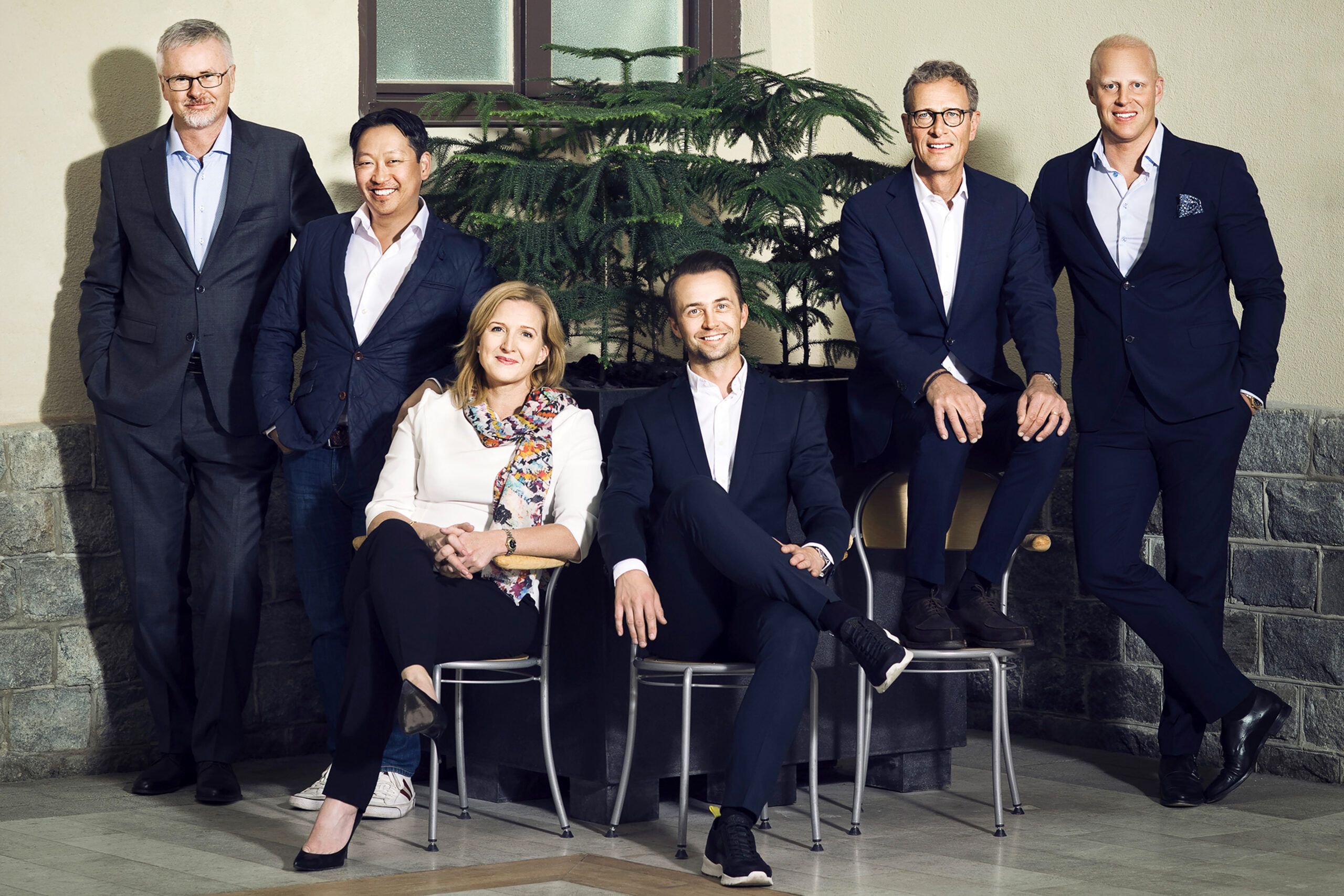
Catena Media board of directors
But that’s rare. One veteran of the affiliate industry told EGR Marketing that Catena’s strategy of paying earn-outs and incentivising site owners to maintain growth during transitional handovers was “smart”. Indeed, the calibre of the owners is just one of many factors Andersson and his team carefully weigh up before deciding whether or not to pounce on a potential target. These factors tend to include the company’s actual product(s) and underlying technologies, the markets being targeted, whether earnings are mainly based on CPAs, revenue share or hybrid deals, and so on. “There are a lot of parameters when looking at an acquisition target, so it’s hard to talk about a secret formula. [But] it’s not like a company buying another company and having to merge and deal with all the cultural differences. We are mostly buying assets. It’s fairly lightweight transactions.”
Spit and polish
The mission following an acquisition is simple: improve the site(s), increase traffic and enhance revenues. Catena does the same with its own portals from time to time. For instance, JohnSlots.com, which was one of Catena’s original brands and is still one of the largest casino comparison portals in Sweden, has recently re-launched after undergoing a revamp. This included a German version.
“We are also taking our old core products, improving them and launching them in new territories as well. So it’s not only M&A,” says Andersson. Indeed, this is part of an overarching strategy to produce higher quality content and stand out from the crowd in a heavily congested sector where countless affiliates are chasing casino and sports betting traffic.
With a focus on quality over quantity, many of the older, less profitable sites have been culled. During a Q1 earnings presentation, Andersson noted how the 80-20 rule was applicable to Catena as 20% of its high-quality sites account for around 80% of revenue. The company recently created a video content department that produces, among other things, interviews with operators.
When Robert Andersson first arrived as CEO in June 2015, Catena Media had just 30 employees. Fast-forward two years and the headcount stands at 244 with over 30 nationalities and 28 languages spoken. While the headquarters are situated in Sliema on the northeast coast of Malta, where 154 staff members are based, Catena also boasts a PPC hub in London and an office in Belgrade, Serbia, which came with the acquisition of AskGamblers.com. However, the workforce in Malta is poised to imminently move into new offices, which includes a gym, a games room and chefs preparing and serving free meals.
The hope is that the relocation will make Catena a more attractive proposition for jobseekers and help to retain existing staff. “It will help with recruitment, for sure,” Andersson says. Despite averaging 300 days of sunshine a year, he concedes that it is an ongoing struggle recruiting talent on this 316-square mile island in the middle of the Mediterranean Sea where around 250 egaming brands have operations. “It’s hard to get good staff in Malta and hard to get senior people who might have family to relocate there. It’s also heavily competitive with all the gaming companies.”
Andersson, who is fluent in English and German besides his native Swedish, moved to Malta with his wife and two young daughters after joining Catena from one of Stockholm’s premier advertising agencies, River. He worked there for five years collaborating with brand giants including Nike, Sony Music and Absolut Vodka. He says he’s having “a lot of fun” enjoying life on the island, which includes surfing and relaxing with the family when he’s not in the office or travelling on business. “My days are so fluid. Since we are listed, there is a lot of travel to roadshows and to meetings with investors.”
It’s about “delivering value to the visitor of our sites so that people are more likely to come back”, Andersson says. Naturally, though, the ultimate goal is converting visitors. And new depositing customers (NDCs) have surged lately with 80,421 NDCs in Q1 (an average of 894 per day), which is a whopping increase of 149% compared with Q1 2016 (32,321) and a 20% rise over Q4 2016 (67,023).
The lion’s share of Catena’s traffic is organic. Indeed, search revenues accounted for three quarters of earnings in Q1 and paid media made up the remainder. While most search revenue is paid on a revenue share basis, paid media like Google AdWords usually involves a fixed CPA, which is good for cash flow but you miss out on the reoccurring income.
So this year Catena has been trying to move AdWords to a revenue share – or at least a part-revenue share (hybrid) – model. For example, €100 upfront and a 30% revenue share deal instead of a €300 flat fee. Andersson says this will increase paid media’s margin and make it less volatile. For instance, search traffic historically falls in the summer months so having on-going income from a revenue share deal insulates Catena against this dip.
Search traffic, on the other hand, is already predominately remunerated on a revenue share model. For example, 80% of Bettingpro.com’s revenues are derived from this kind of arrangement. Yet with such reliance on these lucrative, long-term arrangements, is Andersson concerned that capricious operators could one day suddenly decide to pull the plug on historic deals? “Not really. It hasn’t happened before considering our size. But why would they do that? They would never get any traffic from us ever again. Plus, they would be in breach of contract. Anyone can always not pay a bill – you can do that with your phone bill but you are still in breach of a business agreement.”
Global ambitions
Key to Catena’s growth is a three-pronged strategy comprising of those all-important acquisitions, organic growth and entry into new territories. As it stands, Catena’s most important markets include the UK, Italy, Belgium and grey markets in the Nordics. Furthermore, the Bettingpro.com acquisition came with Bettingpro.com.au, giving Catena greater access to the Australian sports betting market while MrGamez.net and Spielekiste.de will strengthen the company’s presence in Germany.
“We are fairly large in Germany but the bigger the presence you have in a market, the better your negotiating power.” Catena also has a foothold in the US through the purchase of affiliate businesses, including PlayNJ.com and USpoker.com, for $15m last December. There was also a three-year earn-out capped at $45m.
This was Catena’s largest acquisition to date and led to three new verticals being added to the business: poker, daily fantasy sports and eSports. This deal also took Catena’s overall revenues from regulated markets to 50%. With the foray into the US, Andersson is prepping Catena to take full advantage of egaming spreading beyond the three regulated states of New Jersey, Delaware and Nevada.
€15.23m
Revenue for Q1 2017
244
Total number of employees
50%
Share of revenue earned from regulated markets
5
Number of acquisitions in 2017
£13.9m
Total cost of acquiring Bettingpro.com and its assets
“We are positioning ourselves for regulation in Pennsylvania, which will be very interesting.” In fact, he suggests the US’ egaming potential is “massive” and that it could eventually become the world’s largest online gambling affiliate market.
A byproduct of further geographic expansion should be even further growth. So far, Catena has recorded triple-digit revenue increases year-on-year. The aim is to increase average annual growth by 75% in 2017 and 2018 followed by long-term annual revenue growth exceeding 40% (including acquisitions). The management and board have a clear and determined goal of being the world’s number one provider of high-value online gambling leads.
Quite frankly, they want to be the biggest and most powerful affiliate marketing business out there. What was once – and still is to a large extent – a heavily fragmented industry, is becoming dominated by professional super affiliates running dozens or hundreds of portals. Conditions have probably never been tougher for the smaller players or new entrants.
“Barriers to entry are still quite low,” Andersson notes. “Anyone can still start an affiliate site, but I would say the barriers to success have become a lot harder. The market is heavily populated and there are a few big ones now pouring a lot of effort in to ensuring they stay the biggest.” In fact, Catena is “regularly” approached by smaller affiliates offering to sell their businesses, although Andersson refuses to elaborate on how often is “regularly”. These propositions are understandable when Catena keeps turning heads in the industry with all these multimillion-euro transactions. Dollar signs must pop up in webmasters’ eyes.
According to Andersson, the M&A trend in the industry is set to continue for one or two more years. This will obviously result in fewer, but more dominant, sites controlled by the big boys. Yet this situation benefits operators, he suggests. “Instead of having to work with thousands and thousands of, let’s say, unprofessional affiliates, they can work with large professional affiliates that can be strategic partners.” Although Catena would appear to be spinning a lot of plates brokering deals and managing acquisitions and transitional periods, Andersson, who exudes calmness and confidence, seems unfazed. His focus is on Catena’s sustained growth: “As a business, we want to have the best relationships with operators, the best cultures and the best products.
“This comes from our core values, which are passion, professionalism and curiosity. It’s also a combination of having really good people and good owners, which means we managed to build a really good team with a strong culture.” He adds: “I’m very happy with what we have achieved in two years, but I still believe that this is only the beginning. If you look at the travel industry and the travel affiliate industry you see the likes of Expedia have a market cap of €23bn.” So is that the long-term goal? To become the Expedia or Booking.com of the online gambling affiliate industry? Andersson doesn’t even have think about his response. “That would be the goal, absolutely.”
Catena Media revenues rose 78% for H1 in results revealed last week.