
Market Focus: Malta
EGR Compliance looks at the current regulatory regime in Malta, one year on from the passage of the new Malta Gaming Act

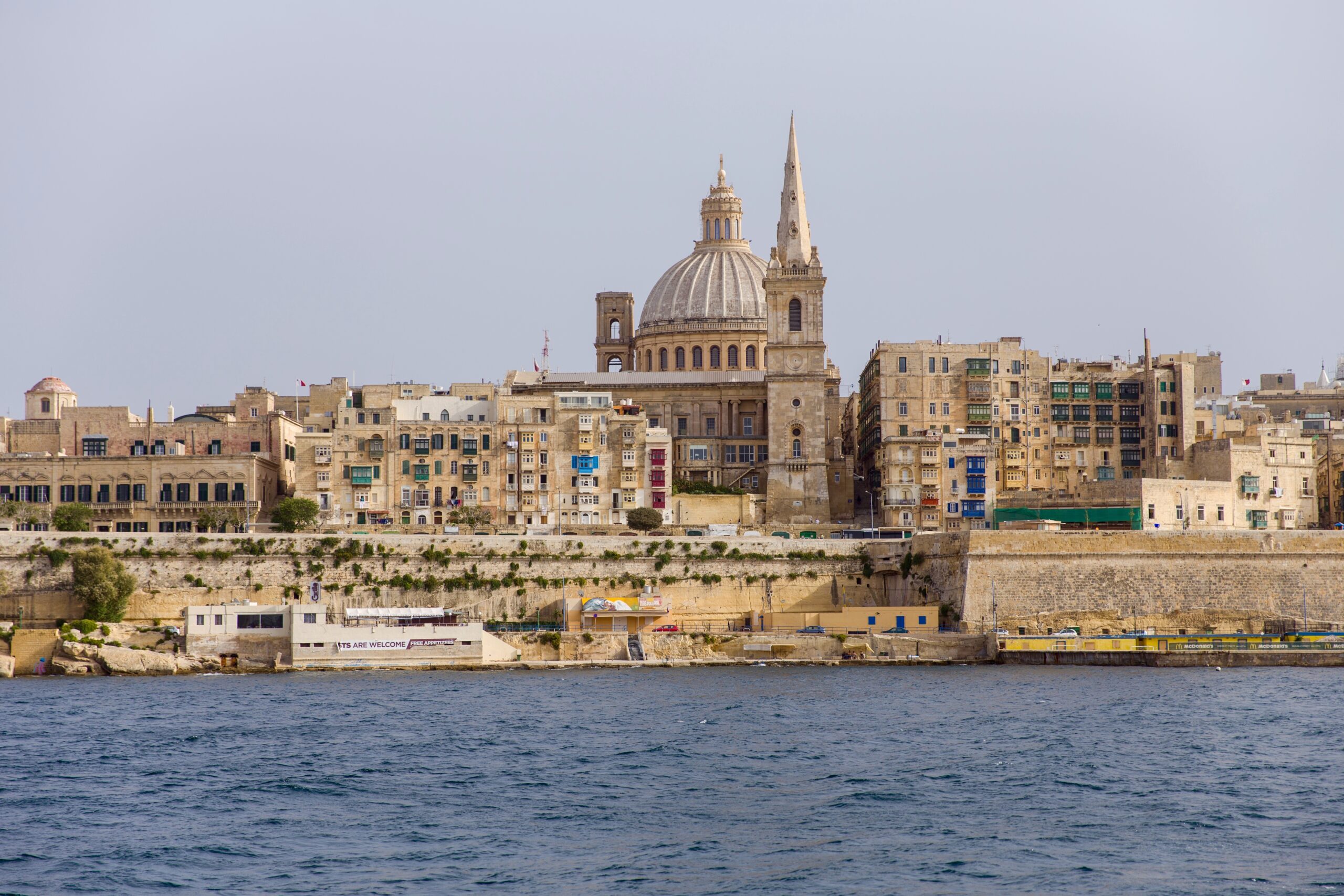
The principal piece of legislation governing the Maltese online gambling market is barely a year old, having only come into force in August 2018. The Malta Gaming Act replaced all existing gambling legislation with a single piece of gaming law, aiming to develop a streamlined regulatory regime for the island.
The Act, together with subordinate legislation, provides for the establishment of the Malta Gaming Authority, together with explaining its functions and powers. These include player protection, licensing, the collection of licensing fees and provided for the establishment of a responsible gambling fund.
The act also enshrined in law several technical directives and guidelines consistent with EU legislation, strengthening existing player protection measures within a secure legal framework for the first time.
It also widened the MGA’s powers under the compliance and enforcement functions with the aim of better achieving regulatory objectives, in line with concurrent developments on anti-money laundering and funding of terrorism obligations.
Gambling is referred to as gaming under the act and is defined as an “activity consisting in participating in a game, offering a gaming service (i.e. B2C), or making a gaming supply, (i.e. B2B)”. The activity of online gambling is not expressly defined under Maltese law, as this makes no distinction between the type of gaming offered e.g. land-based or online.
The Malta Gaming Act allows for games including online gambling, poker, sports betting, other types of betting, lottery and bingo.
[box title=”Malta in numbers” box_color=”#EC6408″ title_color=”#333333″]Population: 440,372
GDP per capita: $29,660
Internet penetration: 81.4%
President: George Vella
Principal regulatory body: Malta Gaming Authority (MGA)[/box]
The regulator
The Malta Gaming Authority (MGA) was first established in 2001 to provide regulatory oversight of the fledgling Maltese egaming industry. It was one of the first regulators in the world to enable legislation specifically relating to the online gambling industry, starting with the Malta Games Act, 2001, and Chapters 438 and 400 of the Laws of Malta.
The MGA is the main regulatory body responsible for overseeing all gambling activities, be it land-based or online. It also has the regulatory powers to issue licences to both types of operators and can either suspend or revoke them as required. It also retains full enforcement powers to issue financial and regulatory sanctions against operators contravening the Malta Gaming Act.
During the period 2018-2019 several subordinate directives have been added to the MGA’s scope of powers in the areas of player protection, compliance, compulsory alternative dispute resolution and certain rules governing licensed premises.
In addition to the MGA, two other regulatory authorities have a specific supervisory role which overlaps with the egaming industry: The Financial Intelligence Analysis Unit (FIAU) and the Office of the Information and Data Protection Commissioner (IDPC).
The FIAU, which is governed by Maltese AML laws, is responsible for ensuring that Maltese licensed firms conform to anti-money laundering laws, while the IDPC is responsible for ensuring that personal data being used by Maltese firms is protected and not misused.
Licensing
Two types of licence are offered by the MGA, one for B2B gaming and the other for B2C gaming. While the B2B licence is cut and dried, the B2C licence can cover one or more of four game types.
Type one gaming is defined as gaming where the outcome is determined by a random number generator, including games such as casino type gaming, lotteries and virtual sports. Type two gaming is games of chance where the outcome is not generated randomly through things like the setting of fixed-odds.
Type three gaming refers to games where the operator is not exposed to gaming risk but receives revenue via the payment of commission or charge on the bet. Type four gaming refers to controlled skill gaming.
If a game being applied for falls under more than one of the game types listed above, the MGA has discretion to categorise the game in the licence type which most closely matches it. Any gaming which falls under these criteria must be licensed by the MGA, and there are no limitations on the number of licences which can be offered.
Licences are granted for a period of 10 years but can be suspended or indeed revoked during this timeframe based on the individual actions of the operator involved. The cost of a licence ranges between €30,000 (£27,000) and €50,000 (£45,000) depending on the complexity of the business ownership structure, the licence sought and other factors.
Once issued, licences are not transferrable. However, in the event of a change in corporate ownership or control, the licence will be reassessed by the MGA, which can include the vetting of the new owners and/or any incoming directors. If the MGA finds these individuals are unfit to manage a licensed operator, the licence will be revoked.
A Maltese licence fee amounts to €25,000 with the application processing cost amounting to €2,300. The fee for a licence renewal is €1,500.
Application process
Applications for a Maltese gaming licence will take on average four to six months to complete, following the submission of a fully completed application form. As part of its application process, the MGA will test the fit and properness of the applicant’s business along with its key personnel to conduct gaming business.
It will assess whether the prospective licensee is organised correctly to undertake its proposed business strategy in Malta and satisfies all key operational and statutory requirements under the Malta Gaming Act. The applicant’s technical infrastructure, including its certifications and internal systems, are all additionally assessed prior to the commencement of any operations.
The MGA’s new licensee relationship management system (LRMS) also makes it possible for prospective licensees to submit their applications and any other compliance documents online. This has a twin effect, making the process transparent and making the ongoing compliance process easier for operators once their licences have been issued.
Taxation
Licensees carrying out online gambling in Malta are subject to the Gaming Licence Fees Regulations (GLFR). This replaced the prior mixed system of taxation with a system where operators and suppliers pay an annual fixed fee and variable payments based on the type of gaming being offered and the revenue generated on an annual basis.
Further, licensees providing Type one to three gaming services must pay a non-refundable fixed annual licence fee of €25,000, whereas operators providing solely Type four gaming services must pay a non-refundable fixed annual licence fee of €10,000. In addition to the taxation outlined above, all B2C operators (irrespective of the type of gaming being offered) are subject to a gaming tax of 5% of the gaming revenue derived from end customers located in Malta.
Restrictions
Under the Malta Gaming Act, all unlicensed online gambling is prohibited and every game being offered from Malta must be approved or recognised by the Malta Gaming Authority. It is an offence for a person to promote, aid, abet or otherwise facilitate a licensable activity without a valid licence, which will cover various ancillary services connected to gaming activity.
Operators are required to prohibit any gambling by minors and conduct all necessary due diligence procedures on prospective players. By law, any winnings are required to only be transferred to the respective players account from which the funds originated. Operators are also required to ensure their adverts conform to MGA regulations and that they possess an appropriate and compliant responsible gambling policy.
Local expert view
Jessica Moreno is the principal lawyer and founder of JMore Legal, a legal consultancy based in Malta. Moreno has for most of her career worked as in-house counsel for leading operators and suppliers in the gambling industry and can offer comprehensive advice on all aspects of commercial law, licensing and regulatory compliance. She shares her thoughts on the Malta gaming market

EGR Compliance: Has the introduction of the Malta Gaming Act benefited the islands egaming industry or hindered it?
Jessica Moreno (JM): The Gambling Act 2018 is a comprehensive piece of primary legislation. It is supplemented by several pieces of secondary legislation in the form of regulations and directives, adopted under the new gambling framework. The new framework repealed most previous legislation relating to gambling and has therefore consolidated local gaming laws. The Gambling Act 2018 is currently the main piece of legislation that governs gaming in Malta. The benefits of these ambitious changes are significant.
The former ‘multi-licence’ system has been streamlined into two classes (B2C gaming service and B2B critical supply) of gaming licence covering various types of activities across multiple distribution channels. In order to cut through unnecessary red tape, an approval process caters for changes to systems, distribution channels and game verticals all used under one licence. A risk-based approach has been adopted to identify those changes that trigger a requirement of prior MGA approval, such as products which are new to the operator and new verticals, and those which require MGA notification only, such as new games using the same system and RNG. The salient benefit is that operators no longer need to obtain an additional licence each time a new product is launched, allowing increased speed to market.
The changes also brought a crackdown by the MGA on operators offering products licensed outside of the EEA via any domain operated under an MGA licence. Licensees obtaining products from a provider must ensure that such provider holds an MGA licence or recognition notice to provide such critical supply. The MGA will issue a recognition notice where an operator is licensed in another EEA country which is deemed to offer safeguards equivalent to those offered by Maltese law.
The principle of recognition of equivalent gaming licences, as well as the introduction of a ‘Corporate Group Licence’ allowing multiple companies to be covered under one group licence, affords operators greater flexibility while allowing the authority to maintain adequate controls.
In addition, the new framework has granted more powers to the MGA, enhanced player protection rules, exempted B2B licensees from gaming tax and introduced a moratorium on certain fees for start-up undertakings.
EGR Compliance: Where are the biggest opportunities for operators looking to enter the Maltese egaming market?
JM: Over the years, Malta’s remote gaming industry has grown exponentially, and it has emerged as an attractive European licensing hub for online gaming operators seeking continuing access to EU services. The ongoing risk of a no-deal Brexit has led UK-based operators to make contingency plans, including the acquisition by UK bookmaker William Hill of online casino Mr Green & Co with its Malta headquarters, and the relocation by bet365 of most of its Gibraltar operations to Malta.
Malta offers a talent pool experienced in gaming as well as financial services, digital marketing and other software and services suppliers that are today integrated with the gambling industry. Corporation tax is also attractive.
Most importantly, the new legislative framework caters for evolving technologies and business models. The MGA’s purview includes controlled skill games such as fantasy sports. The regulator also launched guidelines on the establishment of a sandbox framework for licensees leveraging innovative technology arrangements within their technical infrastructure or accepting virtual financial assets as a means of payment. In an industry where casino operations are saturated with many operators offering the same cookie cutter websites, Malta’s regulatory framework provides an opportunity for operators to develop new products and technologies that are licensable.
EGR Compliance: In your opinion is the Malta Gaming Authority an effective regulatory entity?
JM: The goal of any gambling regulator is to balance player protection, integrity of the gambling service and prevention of illicit operations along with responsiveness to consumer and industry needs. In this respect, the MGA is becoming an effective, forward-looking regulator.
The transition to the new legislative framework appears to have gone remarkably smoothly. The regulator issued guidance notes to ensure operators were adequately informed of the changes and continues to collaborate closely with licensees so that clarifications can be sought when needed. In addition, the new MGA portal has made reporting and new application submissions more efficient.
The MGA is also effective in their relationships with other regulators. For example, when Sweden enacted regulatory legislation at the turn of the year, a memorandum of understanding was concluded with the Swedish Gambling Authority which allows companies licensed in Sweden to host their gambling system in Malta. The majority of the 69 licences issued by the Swedish Gambling Authority were issued to MGA licensed operators.
EGR Compliance: What is the biggest lesson that other egaming regulators can learn from the Maltese regulatory system?
JM: Malta was the first EU member state to introduce regulation for online gambling. As at the end of 2018, the number of MGA licensed gaming companies offering online services stood at 273.
The biggest lesson that other regulators can learn from the Maltese regulatory system is to implement regulation that allows for technological advancement. The shift from ‘vertical’ to ‘horizontal’ regulation under the new framework follows the convergence between online and land-based gaming in terms of the products and technology used. There is no longer one specific law that regulates land-based, remote gaming, or specific game verticals. Instead, the new framework contains largely generic provisions that apply across the board. It allows the regulator to quickly and expeditiously respond to technological market developments.
In addition, the regulator recognises technological developments as well as operators’ increasingly multi-jurisdictional operations when it comes to implementing its requirements with respect to technical infrastructure. Cloud hosting is accepted by the regulator provided that a live or real-time mirror server for essential regulatory data is kept in Malta.
EGR Compliance: Where are the biggest deficiencies in the Malta Gaming Act?
JM: While some of the benefits of the new legislative framework are clear, it is perhaps too early for any deficiencies to be apparent. The new framework grants the MGA new investigative powers, plus the ability to suspend or cancel licences. However, one difference between the Maltese regulator and its counterpart at the UK Gambling Commission is that the ability to sanction and the ability to suspend licences is separated – sanction powers lie with the Financial Intelligence Analysis Unit (FIAU). The fight against money laundering was a key focus of the activities of the MGA throughout 2018. It empowered its Enforcement Directorate to effectively become an agent of the FIAU. It remains to be seen whether this close collaboration will be effective in combating anti-money laundering.