
How Brexit could affect Gibraltar-based gaming firms
Jacqueline Breidlid and Florian Lottmann, from Bernstein Public Policy in Brussels analyse the consequences of Britain leaving the EU

While the bookies’ odds suggest an ever diminishing likelihood of Brexit, everyone in the gambling industry knows that every underdog has its day, and even a 25% chance of Britain leaving the EU makes an analysis of the consequences worthwhile.
What are the known unknowns? If the UK heads for the exit, all will depend on the sort of relationship the United Kingdom will enjoy with its former fellow Member States and how the Crown Dependencies (the Isle of Man, Guernsey and Jersey) and the British Overseas Territories (first and foremost Gibraltar) would fit in to that new relationship.
For the sake of brevity and simplicity let us assume that the vote will be won on the issue of immigration. Taking back control of its own destiny and borders the UK will rule out all options that would entail a continuation of the free movement of people between the EU and Britain.
The “Norway option” and membership of the European Economic Area as well as the “Swiss option” with its Schengen arrangement would hence be off the table. In all other scenarios – a Customs Union or a simple Free Trade Agreement – the UK would have much more limited access to the Internal Market, and crucially, be excluded from the freedom to provide services – the cornerstone of market access for online gambling within the EU.
Ironically, once out of the EU with its allegedly myriad of onerous and often ridiculous regulations online gaming providers may become wrapped up in rigid and redundant red tape, generously applied by national authorities across 27 jurisdictions.
The EU does not regulate the online gaming sector, and competence in this area is mostly retained by individual Member States. Consequently, the actions of individual Member States are what will determine access to markets and customers in each of the EU Member States, with some imposing more restrictions than others and no EU competition and state aid law to level the playing field.
National gambling laws usually demand that the legal entity of the gambling company must be incorporated in national legislation of the Member State, an EU Member State or an EEA Member State (Iceland, Liechtenstein, and Norway). Secondly, a number of Member States require the operator to have all or at least part of their gambling equipment located in that Member State, an EU Member State or an EEA State. And lastly, remote gambling operators often need to prove that they hold a bank account for depositing players opened with a bank licensed in that Member State or in the EU or the EEA.
Coming in from a third country off the north-west coast of Europe, UK companies could consequently be cold-shouldered into full domiciliation and establishment requirements by disenchanted continental regulators keenly protecting incumbents. And where would that leave the online gaming and betting hubs of the Isle of Man and Gibraltar?
The gaming sector in the Isle of Man has grown in size and significance to a point where it contributed 16.7 % of the Island’s National Income. However, according to a recent government report, it is predominantly international (non-European) markets to which the Isle of Man companies’ products are marketed, hence estimating the impact of an exit from the EU to be “minimal”.
The Gibraltar Betting and Gambling Association estimates the industry to constitute as much as 25 percent of the GDP of Gibraltar, according to the 2015 Budget contributing the highest amount of all industries in corporation tax, gambling duty and income tax from the thousands of people employed in the industry – ahead of insurance and financial services by a wide margin.
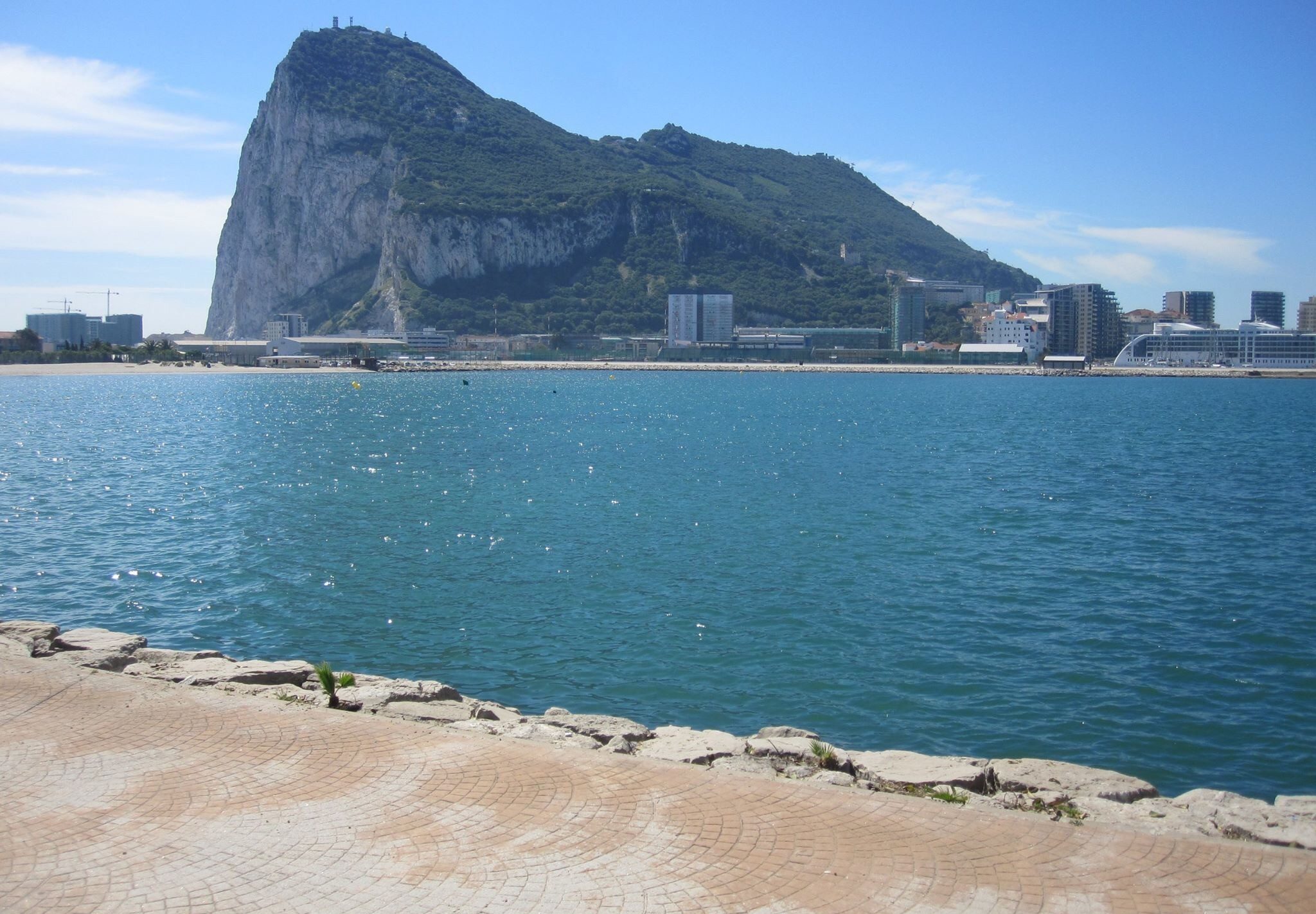
The government states that its “thriving gambling industry” benefits from “EU fundamental principles of free movement of people, capital and services”. Indeed, the success of gambling “services depends on access to the single market.” Chief Minister Fabian Picardo has even described a Brexit as an “existential threat”, where the Rock is “pulled out of the European Union” against its will and “denied access to the single market”. Not surprisingly, Spain in turn has already revived the idea of sharing sovereignty over Gibraltar with Britain if Brexit happens, saying it would allow the Rock to maintain access to the European Union. Assuming sharing hard-won and only just regained sovereignty may prove a step too far for the Brexiteers, this would seem highly unlikely.
Which leaves another sunny place in the Mediterranean, having won independence from the UK in 1964 and joined the EU in 2004, very much looking forward to rejuvenating old alliances and stretching out a welcoming hand to any gamer and bettor looking for a platform within the European Union from where to launch its offer. In the words of the island’s tourism authority – Malta is great place.
*Bernstein Public Policy forms part of Bernstein Group, active in advisory and advocacy for the gaming and betting industry.