
In pole position: why Formula 1 has become a magnet for gambling brands
PokerStars and Entain’s Party brands are vying for exposure after signing lucrative marketing deals with F1, but what is the end goal and how do operators feel about F1 betting?

After 40 years of Bernie Ecclestone being at the helm of Formula 1 (F1), gambling sponsorships finally broke into the inner circle of motor racing for the first time after new owner Liberty Media took over the business in 2017.
This momentum has continued with PokerStars signing up as the official betting sponsor of F1 just last month. The multi-year agreement with the premier motorsport series runs through to 2023 and will see the poker operator’s branding feature exclusively on European broadcasts during every season for the duration of the deal.
The partnership will be facilitated by virtual advertising specialist ISG, which will specifically target regional audiences with the PokerStars logo on race weekends. Two months prior, PokerStars’ rival, partypoker, made inroads into F1 sponsorship, alongside igaming sister brand PartyCasino. The pair sealed a multi-year partnership with F1 team McLaren Racing.
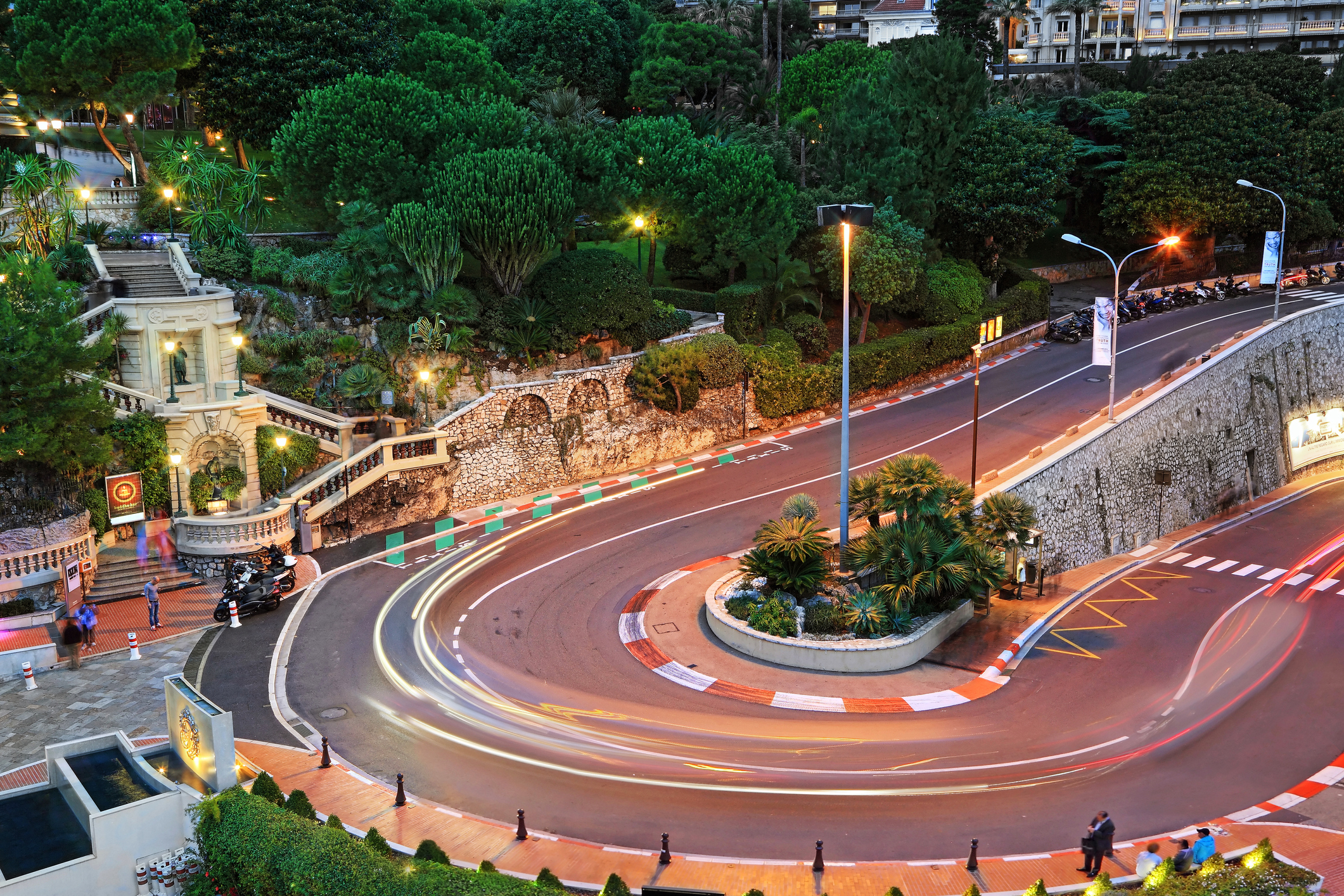
That agreement, which officially launched at the iconic Monaco Grand Prix on 23 May, saw the PartyCasino logo appear on the driver crash-protection system of both McLaren MCL35M race cars, while branding was also plastered across the helmet of the team’s Australian driver, Daniel Ricciardo.
Partypoker parent company Entain said there would be “McLaren-themed casino content” and “access all areas” games on the PartyCasino and partypoker websites as part of the contract, while PokerStars marketing director Tom Warren said: “Working with F1 provides us with the opportunity to reach a fan base whose passion for sport goes way beyond motorsport.”
All this talk of F1-branded casino content and passion that goes “way beyond motorsport” is evidence that neither of these operators are about to invest heavily in F1 sportsbook betting. This is reiterated by the fact they both opted for casino- and poker-focused brands over sports-led options. This begs the question: why choose F1 if they are not chasing F1 bettors? And what kind of return are these companies expecting on their major investments?
“F1 is the very definition of brand awareness because it has global appeal,” says Paul Fitchford, an igaming, casino and esports consultant who currently works as MD for iGamingUK. “Think of the countries they visit like Monaco and the types of eyeballs they get on their brand.”
Fitchford, who has previously worked for operators including bet365 and Sky Bet, bets religiously on F1 every week. He adds: “There is nothing magical in the gambling deals. They won’t be thinking this is suddenly going to drive a load of F1 betting, but they will hope it can add credibility to the brand at least.”
Fitchford recalls the 2014 sponsorship of McLaren Mercedes by whisky brand Johnnie Walker ahead of the Monaco Grand Prix. “I remember thinking, ‘What the hell does whisky have to do with F1?’” But considering he remembers the details of the activation all these years later, the deal clearly had the desired effect for the Diageo-owned distiller.
Change of attitude
Alcohol sponsorship was fair game back in 2014 when the marketing of gambling companies was still outlawed by the sport’s former boss and billionaire Ecclestone. Operators have increasingly grown their presence in F1 since Ecclestone retired in 2017. Kenyan bookmaker SportPesa was the first to break the mould via a lucrative deal with Racing Point once Liberty Media lifted the ban in 2018. That agreement was short-lived, lasting only 12 months before termination, but that PokerStars has been able to seal an official betting partnership with a sport once opposed to gambling demonstrates just how much F1 has softened its stance in this regard. Part of Liberty Media’s takeover as F1’s new owner that enabled the liberalisation of gambling marketing also saw Sportradar brought on board as the exclusive provider of official F1 data. The biggest development resulting from that partnership has been in-race betting, launched during the 2020 F1 season. “Up until recently, bookmakers haven’t had access to adequate real-time data for F1, so the betting offering has been limited,” says Sportradar MD of operations for betting and gaming Dalraj Bahia, echoing the gripe of F1 bettors. To address this, the supplier’s live odds team have worked with F1 to analyse untapped, historical data to create live odds models in the hope of upgrading the betting experience for operators and consumers. The results have seen Sportradar launch 21 in-play markets for F1, eight of which are unique. These include ‘total number of driver overtakes’ and the chance to bet on which driver will have the fastest lap for each lap of the race. Collecting this data and developing these markets is no mean feat as every car produces 1.1 million data points per second. Sportradar uses car telemetry to collect measurements at remote points before automatically transferring that information to equipment for monitoring. Since launching its Live Odds/Live Data solution at the start of the 2020 season, Sportradar has seen a 250% increase in the number of clients taking the service. Bahia adds: “F1 is a huge sport with great fan engagement in every corner of the world, creating significant potential for operators as F1 unlocks its data for the sports betting industry.” But have operators really capitalised on that opportunity? Or perhaps the more pertinent question is: do they even want to? “When I was an odds compiler, I would try to come up with alternative markets, looking at the best of the rest and the interesting battles in the midfield,” James Greenfield, F1 and PDC darts analyst for London-based odds provider TXODDS, tells EGR Intel. “You can come up with all sorts of interesting submarkets, but very few bookmakers do it because they say the turnover isn’t big enough to warrant it,” he adds. When Damon Hill won his sole championship title in 1996, Greenfield recalls Coral said F1 accounted for about 5.5% of sports betting turnover. “It would be nowhere near that now, probably closer to half a percent,” he estimates. On the other hand, a Sportradar spokesperson said: “The uptake in F1 betting is driven by how well it performs for our operators, delivering a solid return on their investment. On average operators see a 20% trading margin, which ranks highly when compared with other sports.” Greenfield got heavily involved in F1 in the mid-90s when he set up one of the first F1-related websites in the world. It was called F1 Betting and was effectively a blog before blogs. Bookmakers got in touch as it gained traction and he spent the following 15 years working as an odds compiler. He remembers the “glory days” of the late-90s and early noughties when it was much easier to get quite large bets on; a time when a £500 stake on a 100/1 shot would be accepted without hesitation – not to mention paid out in full for lucky winners. “As the internet bubble burst and lots of companies consolidated, that became increasingly difficult,” says Greenfield. “The odds aren’t as good because they are making fewer mistakes. When I first started, I realised that I knew much more about the sport than the odds compilers. There were some horrible mistakes and that made it very profitable.” Greenfield, who is now based in Dumfries and Galloway, would spend hours trawling through Teletext to spot those mistakes. This was a time before odds comparison sites and the speed that oddschecker provides. He would regularly ring 10 different bookmakers and ask them to read the prices down the receiver. “The errors were there and if you worked hard enough to shop around, there were plenty of good value bets to take advantage of,” he adds. The landscape now is very different. The mistakes have disappeared and so has much of the value. The pricing is largely homogenised due to the copycat nature of the industry and operators have shown little appetite in investing in the F1 betting experience due to its low turnover, despite an influx of new data.The iconic Monaco Grand Prix is probably the sport’s most famous race