
Power play: Paddy Power on plans for his sports trading exchange start-up
The Irishman discusses his decision to spearhead American SportZ Exchange as well as the lessons learned from the very public collapse of Football Index

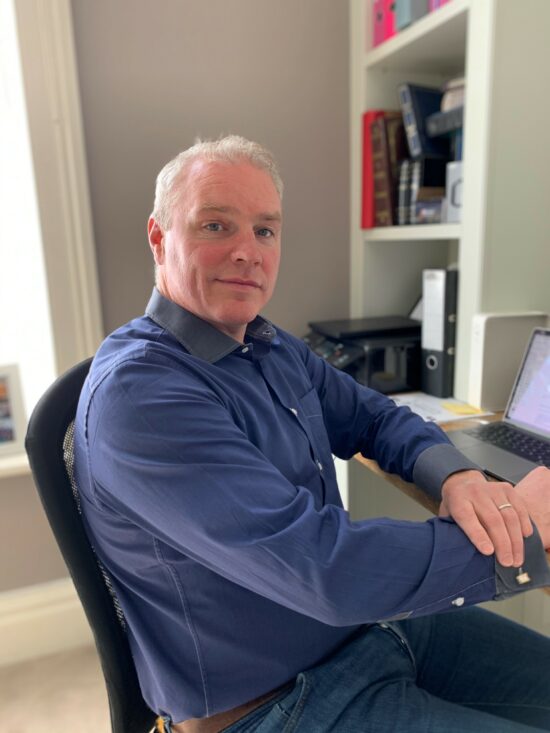
Paddy Power is a brand synonymous with gambling in the UK and Ireland. As one of the leading retail and online bookmakers, the firm has enjoyed a stellar rise to the top rung of sports betting. But what of the man behind the brand? Paddy Power has served as a brand ambassador for the Flutter Entertainment subsidiary for a quarter of a century, functioning as the public face of the company on many of its highest profile campaigns.
Power has used this time to gain enviable experience of the industry and a media cachet that has allowed him to spearhead a new start-up brand, American SportZ Exchange (ASX). Built on a unique sports trading model, the firm has attracted more than €1.5m in crowdfunding-based investments in two oversubscribed funding rounds. With ambitions to launch into the hugely competitive US fantasy sports market later this year, Power’s workload is set to become very heavy over the coming months. Here, he chats to EGR Intel about the genesis of the business and the crucial differences between it and the similarly positioned, yet ultimately doomed, Football Index.
 EGR Intel: What made you first want to get involved with ASX?
Paddy Power (PP): I spent a lot of time over the last couple of years thinking about the US market, and how it is going to pan out over there. It’s a relatively immature market compared to over here from a sports betting point of view and has a very strong heritage in fantasy sports. I guess this strong heritage is due to the fact there was no sports betting, fantasy was the only option for punters looking to gamble on their favourite sports.
Some of the discussions that I was having at the time were on how you could see a similar journey in sports betting that we have had in the UK in other parts of the world like Australia and the US. It just seemed to happen quicker and quicker with new geographies because obviously the technology is evolving far quicker, particularly in the US, and that’s where ASX comes in.
Behaviourally, we are dealing with a different generation and a different kind of group as a customer base. Fantasy sports is something that is obviously very popular in the US, but despite this it’s still relatively young and has not changed very much in a huge way since it began, so there’s still plenty of ways it can improve, technologically.
I was thinking along the lines of a next generation, fantasy-type experience and there are a lot of buzzwords right now around things like gamification and other areas and those sites which have increased their access levels have seen improved player retention. It’s about the democratisation because now people can trade or play or get involved in areas that were previously confined to the experts. This is opening a whole new kind of element to the gaming marketplace, and I think the US is where that’s happening openly and quicker than anywhere else.
EGR Intel: How does this fit in with your role as a Paddy Power ambassador?
PP: I’ve spent 26-27 years with Paddy Power. I still absolutely love the place and I’m still thankfully heavily involved and enjoying the brand ambassador role. I am very grateful to Paddy Power for giving me the opportunity to have a go and pursue this. I would love if it gets to a stage where there is a conflict of interest but, at the moment, I’m not sure that Paddy Power are going to be too worried about ASX. If it does get to a stage where there’s a conflict, we’ll cross that bridge when we come to it, but we’re so early stage and it really isn’t an issue just yet.
EGR Intel: ASX has had two oversubscribed investment seed funding rounds and obviously you have also invested in the business. Do you feel this vindicates your decision?
PP: I would not say vindicated because we’ve not achieved our goals yet, but it’s definitely reassuring. I would be worried there was just a tumbleweed blowing through the crowdfunding websites after pledging to invest in the business myself as well. To give you a bit of the backstory, about two years ago I had this pet project knocking around, which at that point was something completely different which eventually developed into this type of thing. We entered it into a couple of accelerator programmes, the first was a Sportradar one, which we ended up being successful in, and we regarded that as a good endorsement of both the idea and the product. What that meant was that we got access to Sportradar feeds, which are obviously expensive and very important for an early-stage start-up like ourselves.
The other one was the Hype Accelerator programme, which once again was quite a prestigious one, with something like 1,500 start-ups that we were successful in. At that point, it was very much like we’ve got to start doing something about this now rather than just having it as a project in our garage, so we decided to go down the crowdfunding route.
EGR Intel: Why crowdfund? With your gambling industry connections, surely you could attract investors?
PP: There is something lovely about crowdfunding in that everybody owned a bit of it, and it’s like having hundreds of advocates out there from the very beginning. People obviously want it to be successful if they’re invested in it. That generates good PR for the business and that’s important because the strategy that we’re pursuing is a partnership strategy. As a very small start-up, it is difficult to get in the door of huge potential partners. With the Hype Accelerator programme that we won, the main prize is not just the recognition but access to partners, and that has been very helpful to us. That is ongoing at the moment, and all of those opportunities are being pursued as we speak.
I loved the idea of crowdfunding, when people said, ‘Why didn’t you try to get a couple of heavy hitters to throw some money at the product?’ I just replied saying that it was not a conscious decision at this stage. First of all, I tested the product and, scarily enough, I tested whether people might be interested in the product and, secondly, it does actually add a bit of nice pressure. I think when you are responsible for more than just your own investment and your head is above the parapet, so to speak, you’ve really got to make this work.
There are obviously risks involved for everyone who’s put money into the project, but I think it’s got a real chance now and that’s exciting. If we can get that trundling along nicely with good momentum, I think that it’s going to be a good journey for us all.
EGR Intel: Do you think you will reach a point where you will need the larger higher profile investor?
PP: Absolutely, yes. 100%. It’s been a learning process for me as well, an unexpected start in that we raised a few million in a couple of minutes, that’s a lot of money and I’m very appreciative of that, but at the same time that’s nothing in the grand scheme of the US market. The reality is that money has been spent to get us to a stage where we can have a Series A or a more grown-up fundraise where it’s somewhere close to the tens of millions the business might need to properly explore and exploit the opportunity. At the moment, the whole point of the seed fund is to get us to a stage where we have got partnership deals signed up, and we’ve proven ourselves to potential partners, which delivers the metrics that’s required to then go off to serious, bigger fundraisers and hopefully it makes you seem like a safe bet. We are still, to some degree, in the early stages in our pilots and early partnerships, so we won’t be initially releasing real-money exchange betting. That could be something for the future. However, that is something that’ll be very expensive to develop and will need a lot of liquidity and things like that.
People are taking a punt on this now, quite literally. They are buying into three things at these early stages as the textbook says: the product, the team and the opportunity. We have put together a decent team and it’s reassuring that some proper people have left good, high-paying jobs to come and take a chance on ASX, which is reassuring to investors, and the product is pretty good. Sorry, I should say, the product is great. I am under-selling us and it can only get better with further investment to optimise it. That is being done at the moment and then it’s just getting it a bit slicker. The opportunity, particularly in the US, is mindboggling and there’s no reason why ASX can’t be a part of that.
EGR Intel: Can you explain a little more about the development of the ASX sports trading model?
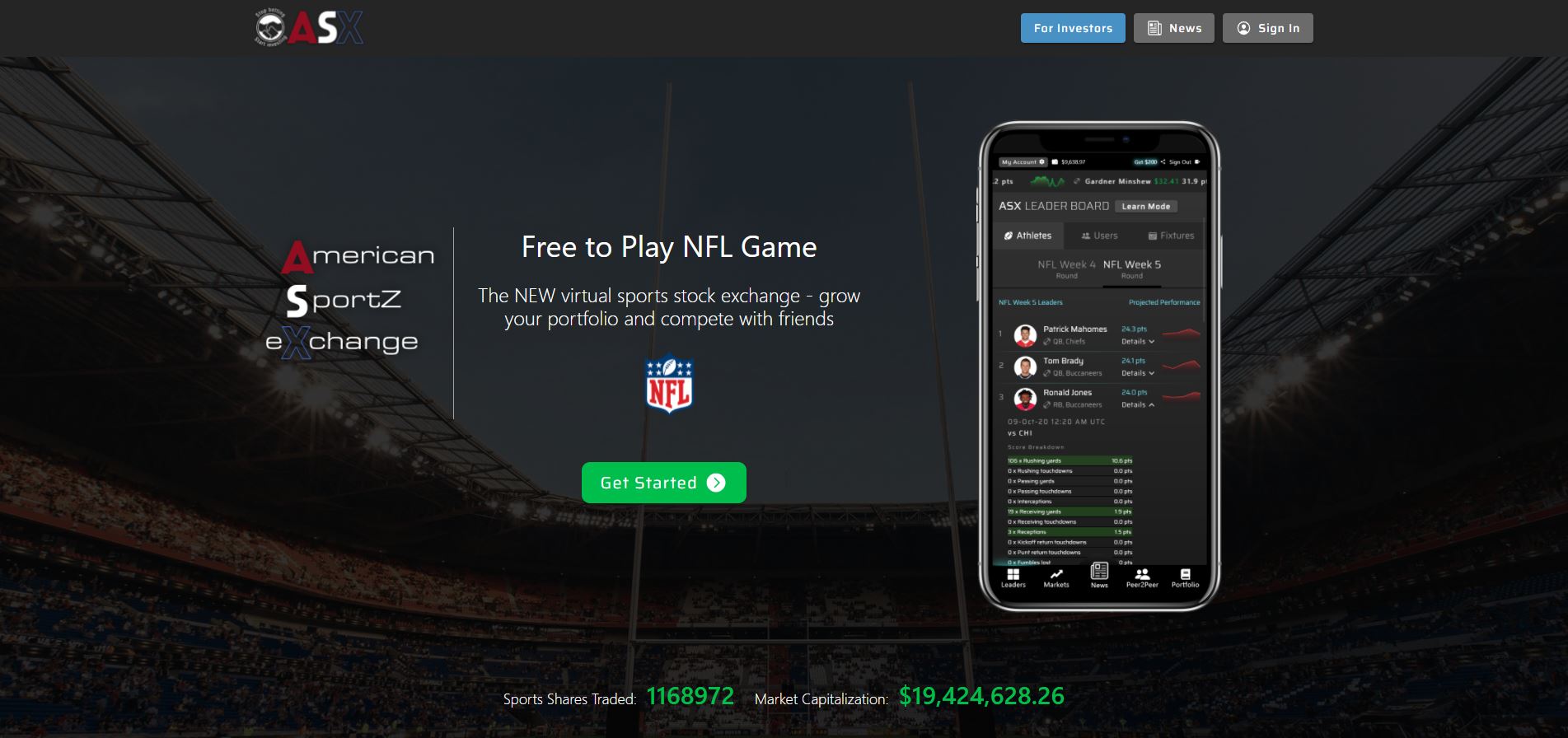
PP: The various elements of how the trading model works could be things like around peer-to-peer, and putting up prizes, whether it be a cash or experiential prize, or things like that with partners. A good analogy we’ve used is that it’s like a corporate box at an event; you set up a private group for the 20 guests that are there, you put up the prize, everybody registers their interest and then you set up the structure. You have the prizes for whoever’s portfolio is worth the most at the end of the day. So that is effectively how it works, it’s a virtual stock exchange whereby you spend a specified amount on building a portfolio of players.
With the Sportradar feeds, it includes things like the volatility and the price movements happening during the game as well, so unlike fantasy sports you don’t have to have your team in by the kick-off, you can actually trade during the game as well. At a specified point, whether it’s the end of the match, end of the weekend or end of the first half, the game checks the value of your stock portfolio and the highest value wins from a game point of view.
EGR Intel: What made you first want to get involved with ASX?
Paddy Power (PP): I spent a lot of time over the last couple of years thinking about the US market, and how it is going to pan out over there. It’s a relatively immature market compared to over here from a sports betting point of view and has a very strong heritage in fantasy sports. I guess this strong heritage is due to the fact there was no sports betting, fantasy was the only option for punters looking to gamble on their favourite sports.
Some of the discussions that I was having at the time were on how you could see a similar journey in sports betting that we have had in the UK in other parts of the world like Australia and the US. It just seemed to happen quicker and quicker with new geographies because obviously the technology is evolving far quicker, particularly in the US, and that’s where ASX comes in.
Behaviourally, we are dealing with a different generation and a different kind of group as a customer base. Fantasy sports is something that is obviously very popular in the US, but despite this it’s still relatively young and has not changed very much in a huge way since it began, so there’s still plenty of ways it can improve, technologically.
I was thinking along the lines of a next generation, fantasy-type experience and there are a lot of buzzwords right now around things like gamification and other areas and those sites which have increased their access levels have seen improved player retention. It’s about the democratisation because now people can trade or play or get involved in areas that were previously confined to the experts. This is opening a whole new kind of element to the gaming marketplace, and I think the US is where that’s happening openly and quicker than anywhere else.
EGR Intel: How does this fit in with your role as a Paddy Power ambassador?
PP: I’ve spent 26-27 years with Paddy Power. I still absolutely love the place and I’m still thankfully heavily involved and enjoying the brand ambassador role. I am very grateful to Paddy Power for giving me the opportunity to have a go and pursue this. I would love if it gets to a stage where there is a conflict of interest but, at the moment, I’m not sure that Paddy Power are going to be too worried about ASX. If it does get to a stage where there’s a conflict, we’ll cross that bridge when we come to it, but we’re so early stage and it really isn’t an issue just yet.
EGR Intel: ASX has had two oversubscribed investment seed funding rounds and obviously you have also invested in the business. Do you feel this vindicates your decision?
PP: I would not say vindicated because we’ve not achieved our goals yet, but it’s definitely reassuring. I would be worried there was just a tumbleweed blowing through the crowdfunding websites after pledging to invest in the business myself as well. To give you a bit of the backstory, about two years ago I had this pet project knocking around, which at that point was something completely different which eventually developed into this type of thing. We entered it into a couple of accelerator programmes, the first was a Sportradar one, which we ended up being successful in, and we regarded that as a good endorsement of both the idea and the product. What that meant was that we got access to Sportradar feeds, which are obviously expensive and very important for an early-stage start-up like ourselves.
The other one was the Hype Accelerator programme, which once again was quite a prestigious one, with something like 1,500 start-ups that we were successful in. At that point, it was very much like we’ve got to start doing something about this now rather than just having it as a project in our garage, so we decided to go down the crowdfunding route.
EGR Intel: Why crowdfund? With your gambling industry connections, surely you could attract investors?
PP: There is something lovely about crowdfunding in that everybody owned a bit of it, and it’s like having hundreds of advocates out there from the very beginning. People obviously want it to be successful if they’re invested in it. That generates good PR for the business and that’s important because the strategy that we’re pursuing is a partnership strategy. As a very small start-up, it is difficult to get in the door of huge potential partners. With the Hype Accelerator programme that we won, the main prize is not just the recognition but access to partners, and that has been very helpful to us. That is ongoing at the moment, and all of those opportunities are being pursued as we speak.
I loved the idea of crowdfunding, when people said, ‘Why didn’t you try to get a couple of heavy hitters to throw some money at the product?’ I just replied saying that it was not a conscious decision at this stage. First of all, I tested the product and, scarily enough, I tested whether people might be interested in the product and, secondly, it does actually add a bit of nice pressure. I think when you are responsible for more than just your own investment and your head is above the parapet, so to speak, you’ve really got to make this work.
There are obviously risks involved for everyone who’s put money into the project, but I think it’s got a real chance now and that’s exciting. If we can get that trundling along nicely with good momentum, I think that it’s going to be a good journey for us all.
EGR Intel: Do you think you will reach a point where you will need the larger higher profile investor?
PP: Absolutely, yes. 100%. It’s been a learning process for me as well, an unexpected start in that we raised a few million in a couple of minutes, that’s a lot of money and I’m very appreciative of that, but at the same time that’s nothing in the grand scheme of the US market. The reality is that money has been spent to get us to a stage where we can have a Series A or a more grown-up fundraise where it’s somewhere close to the tens of millions the business might need to properly explore and exploit the opportunity. At the moment, the whole point of the seed fund is to get us to a stage where we have got partnership deals signed up, and we’ve proven ourselves to potential partners, which delivers the metrics that’s required to then go off to serious, bigger fundraisers and hopefully it makes you seem like a safe bet. We are still, to some degree, in the early stages in our pilots and early partnerships, so we won’t be initially releasing real-money exchange betting. That could be something for the future. However, that is something that’ll be very expensive to develop and will need a lot of liquidity and things like that.
People are taking a punt on this now, quite literally. They are buying into three things at these early stages as the textbook says: the product, the team and the opportunity. We have put together a decent team and it’s reassuring that some proper people have left good, high-paying jobs to come and take a chance on ASX, which is reassuring to investors, and the product is pretty good. Sorry, I should say, the product is great. I am under-selling us and it can only get better with further investment to optimise it. That is being done at the moment and then it’s just getting it a bit slicker. The opportunity, particularly in the US, is mindboggling and there’s no reason why ASX can’t be a part of that.
EGR Intel: Can you explain a little more about the development of the ASX sports trading model?
PP: The various elements of how the trading model works could be things like around peer-to-peer, and putting up prizes, whether it be a cash or experiential prize, or things like that with partners. A good analogy we’ve used is that it’s like a corporate box at an event; you set up a private group for the 20 guests that are there, you put up the prize, everybody registers their interest and then you set up the structure. You have the prizes for whoever’s portfolio is worth the most at the end of the day. So that is effectively how it works, it’s a virtual stock exchange whereby you spend a specified amount on building a portfolio of players.
With the Sportradar feeds, it includes things like the volatility and the price movements happening during the game as well, so unlike fantasy sports you don’t have to have your team in by the kick-off, you can actually trade during the game as well. At a specified point, whether it’s the end of the match, end of the weekend or end of the first half, the game checks the value of your stock portfolio and the highest value wins from a game point of view.