
Luck of the draw: Camelot on keeping lottery relevant for a new generation of players
Following a strategic review, Camelot UK commercial director Neil Brocklehurst discusses the firm’s performance during lockdown and how its digital business is bouncing back

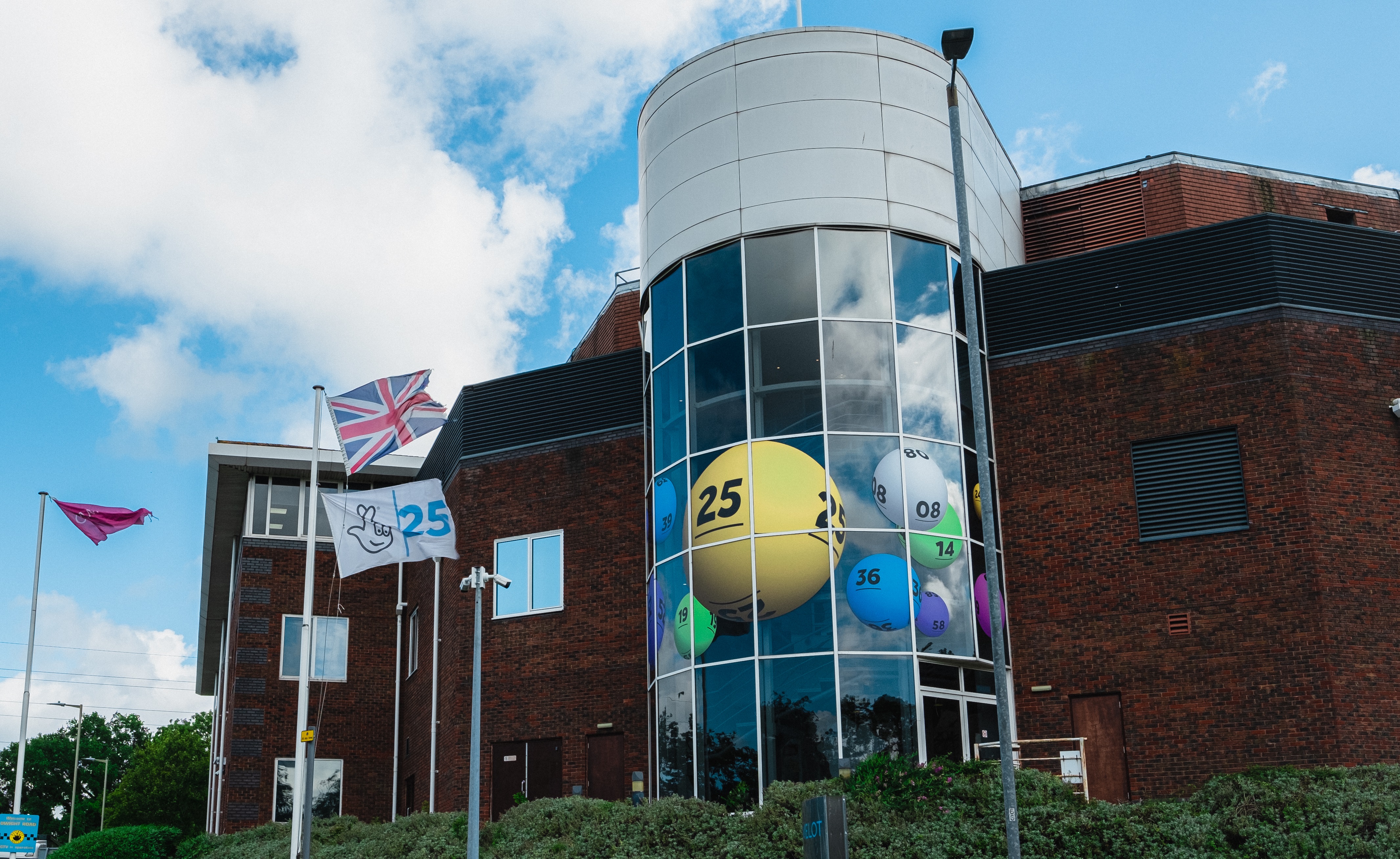
The National Lottery has been a UK institution for the last quarter of a century since its launch in 1994, creating 5,700 millionaires, paying out £75bn in prize money and donating more than £41bn to good causes across the UK. But nothing lasts forever; customer spending habits change, things fall out of style and getting them back into profitability can be an uphill and often futile task. You only need to ask the CEOs of institutions such as Woolworths, Comet, C&A and Blockbuster Video to understand that the stakes are high, and failure is not an option. In recent years, the National Lottery’s fortunes have been on the slide, culminating in an 8.8% year-on-year drop in sales in 2017, and increased competition from the wider gambling sector, leading many to think the brand’s numbers were up. Far from falling behind, Camelot initiated a full-scale strategic review of the business, perhaps the boldest and most wide-ranging review the National Lottery had ever seen. The central nexus of this review was to focus on four business areas: games, brand, digital and retail. On improving the game portfolio, Camelot UK commercial director Neil Brocklehurst cites this as being born out of a need to maintain the lottery’s relevance to a new generation of players. “The best example is probably our Set For Life game, which was introduced last year. It worked incredibly well and has fitted into the portfolio in a very good way, attracting a slightly different demographic of player, which is what we hoped for. “This player group is skewing towards a slightly younger, slightly more digitally focused [audience] than some of our other draw-based games,” Brocklehurst explains.

Neil Brocklehurst, Camelot UK
Just giving
Brocklehurst singles out much of the current digital programme as focusing on bringing players back to the National Lottery brand, through new online content and targeted messaging to personalise the experience so players enjoy games but also understand the link to the causes they are supporting. “There’s a very rich pipeline of new functions and features that will be delivered this year alongside our responsible and healthy play initiatives online as well, which is another big area that we continue to spend a lot of time on, and our mobile app in particular which is a real critical focus for us,” he explains.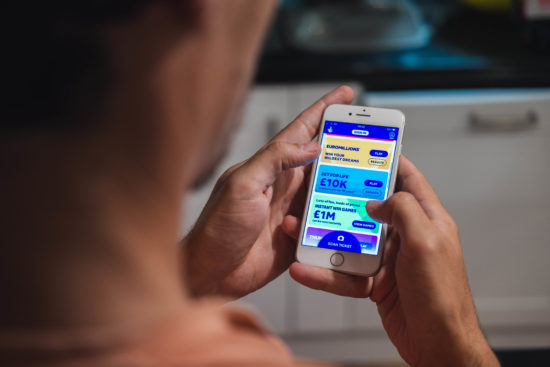 The final pillar, supporting the lottery’s existing retail operations, is also an area of growth but perhaps not at the level of digital. Much of the retail changes revolve around preserving and enhancing relationships with the lottery’s 44,000 existing retail partners through education and greater cooperation.
However, that is not to say there is no room for new blood, as Brocklehurst explains: “We’ve got some new retailers coming on stream this year, including Aldi, which will be our first brand delivery in the discount supermarket sector, and I’m also pleased to confirm we’re rolling out nationally in Iceland [stores] as well.
“We’re continuing to enhance our retail footprint and how we sell in retail will undoubtedly change over the next few years but, as retail changes, we’ll need to change with it,” he adds.
When asked if the process has worked based on the record sales and high growth of the brand, Brocklehurst raises a wry smile acknowledging the need not to sound too pleased with the results.
“I really think that the plan has worked and is continuing to work if you look at the growth and [what] we have achieved over the last two to three years, obviously culminating last year in record sales, a 12% rise in returns to good causes, as well as some of the brand health metrics that have gone alongside that,” he explains.
“It’s not just the sales, it’s some of the underlying metrics in terms of ‘playership’ and people’s attitudes towards the National Lottery which have responded to the plans that have been put in place,” he adds.
However, far from resting on its laurels, Brocklehurst contends that the job of delivering growth through the lottery is never-ending. “It’s very much like painting the Forth Bridge, you get to the end and you’ve got to start again,” he explains.
“We have a full plan this year, and we’re already starting to think about next year as well. The foundations that the strategic review laid down have put us in a really good position to ensure the National Lottery is in great health, but it’s something we don’t want to take for granted.”
The final pillar, supporting the lottery’s existing retail operations, is also an area of growth but perhaps not at the level of digital. Much of the retail changes revolve around preserving and enhancing relationships with the lottery’s 44,000 existing retail partners through education and greater cooperation.
However, that is not to say there is no room for new blood, as Brocklehurst explains: “We’ve got some new retailers coming on stream this year, including Aldi, which will be our first brand delivery in the discount supermarket sector, and I’m also pleased to confirm we’re rolling out nationally in Iceland [stores] as well.
“We’re continuing to enhance our retail footprint and how we sell in retail will undoubtedly change over the next few years but, as retail changes, we’ll need to change with it,” he adds.
When asked if the process has worked based on the record sales and high growth of the brand, Brocklehurst raises a wry smile acknowledging the need not to sound too pleased with the results.
“I really think that the plan has worked and is continuing to work if you look at the growth and [what] we have achieved over the last two to three years, obviously culminating last year in record sales, a 12% rise in returns to good causes, as well as some of the brand health metrics that have gone alongside that,” he explains.
“It’s not just the sales, it’s some of the underlying metrics in terms of ‘playership’ and people’s attitudes towards the National Lottery which have responded to the plans that have been put in place,” he adds.
However, far from resting on its laurels, Brocklehurst contends that the job of delivering growth through the lottery is never-ending. “It’s very much like painting the Forth Bridge, you get to the end and you’ve got to start again,” he explains.
“We have a full plan this year, and we’re already starting to think about next year as well. The foundations that the strategic review laid down have put us in a really good position to ensure the National Lottery is in great health, but it’s something we don’t want to take for granted.”
Its greatest challenge?
And then Covid-19 happened. It’s hard not to use dramatic language when talking about the effect of the coronavirus pandemic on the gambling industry. It has perhaps caused the largest seismic shift in the history of the sector, with retail gambling suffering the most severe declines due to the lockdown. However, the National Lottery, with its divided focus between retail and online, was one of many omni-channel operators uniquely positioned to retain its business throughout the period while taking advantage of the shift in play towards online. This unique positioning was largely due to the absence of its retail partner base from the full impact of lockdown measures, with many of its supermarket retail partners continuing to operate. Discussing the impact of the pandemic on the lottery’s traditional market split, Brocklehurst explains: “In the period prior to the Covid-19 lockdown period, we typically saw digital sales somewhere between 30%-34% of all lottery, but during the Covid-19 lockdown, digital sales peaked at about 47%-48% of total sales. We almost got to a 50/50 split between retail and digital but it’s since settled down a bit and it’s now probably closer to 60/40.” The shift away from retail gambling towards a more digital-focused approach is one that has been seen in many jurisdictions, both internationally and in the UK. With its strong focus and long history of reliance on retail sales, the National Lottery would have found itself in the firing line of this shift. With record digital sales in 2019, there may have been a temptation to embrace this migration fully during the pandemic to ensure preservation of the strategic review’s hard work. Challenged on the potentiality of a shift in focus from the lottery, Brocklehurst references the huge importance of continuing to embrace retail sales to a central lottery tenet: making products available wherever players want to consume them. “Our retailers do a fantastic job for us and have done over the last 25 years. There’s still many players that enjoy playing games through retail, whether that be a draw-based game or others, of course scratchcards and games such as that are only available in retail, given the nature of the product,” he explains. “We continue to see retail evolving because the retail landscape is changing rapidly. Alongside that, we’ll continue to invest hugely in our digital channel to continue to evolve that because those firms that don’t continue to evolve ultimately end up standing still,” Brocklehurst adds.Adapting to Covid changes
Addressing the wider implications of the pandemic on day-to-day operations, Camelot UK’s commercial director highlights the pressing need to conduct a wholesale relocation of its Watford-based contact centre operatives to entirely home-based working. Outside of that, the other main internal change was made to cope with the rise in digital registrations. “We had to pivot some of our retail salesforce to become contact centre agents, so they began to work with our retailers from that standpoint to allow more of our reps to work on the digital channel. “In addition, the types of queries we were receiving during the period were slightly changing. We were getting people ringing up and asking how they set up an email address and so forth,” he adds. At a player level, there has been a substantial influx of new players onto its digital site and with this influx, the need to increase signposting to the group’s responsible gambling-related measures came to the fore. “We’ve been messaging these players via our CRM channels, making them aware of our Dream Big, Play Small campaign and making them aware of all the controls we have on our site. “We’ve been working with our retailers around healthy play and educating them on what healthy play represents. We have a wide variety of things in place and we continue to focus on it, continually delivering new features and functions as the year progresses,” he adds. Externally, Covid-19 prompted a shift in the tone of the National Lottery’s entire marketing outlook, with the business choosing to pause its traditional marketing stratagem of selling the dream of becoming a millionaire during the lockdown. “During the initial stages of the lockdown, we decided that it really would not be appropriate for us to be specifically driving footfall into retailers by individuals to purchase tickets based on these sorts of events, so we chose to suspend them,” Brocklehurst explains. Outside of the administration of the National Lottery, Camelot’s mandate is to work with the 12 National Lottery distributors which provide financial support to good causes across the UK through the funds generated by ticket sales, and given the substantial impact the pandemic has had on all walks of UK life these funds are needed now more than ever. So, it was perhaps fitting that the National Lottery should do its part in the current crisis, and in April it announced a £600m investment across the arts, sports and charity sectors to mitigate the devastating impact of Covid-19. In fact, £600m is the largest single amount pledged to good causes over one single period and it is no mean feat to organise that level of funding. “We worked in partnership with both the DCMS, the National Lottery Community Fund and the other distribution bodies on communicating the contribution and again through our continued working relationship in respect of good causes, to put it in place so that the distribution bodies themselves can directly fund the causes that need it,” Brocklehurst explains.Going beyond
As the country and indeed the world moves back to some level of normality, thoughts naturally turn to future plans and how they might develop over the next five to 10 years. However, for Brocklehurst, the challenges and uncertainty do not come to an end with the relaxation of the UK’s lockdown measures. “Over the next six to nine months, we will need to be very agile and fleet of foot. Fortunately, National Lottery sales have thus far withstood the impacts of lockdown and have done well, but again we don’t want to take anything for granted,” Brocklehurst explains. “Depending on what forecast you read, the second half of the year could be very unsettled or only slightly unsettled, it varies between estimates. We’re going to have to be very agile both in terms of brand portfolio and from a marketing point of view to make sure that we’re continuing to remain relevant,” he adds. Outside of the unprecedented pressures of the Covid-19 crisis, at a business level Camelot’s twin main challenges are maintaining the momentum initiated in the strategic review and contemplating competing to maintain its 26-year tenure as UK National Lottery operator in the fourth National Lottery contest. Maintaining the momentum initiated by the strategic review is a precarious thing for Camelot, as strategies undertaken are not always successful and new products aren’t always well received by players. The brand may have scored a success with the recent introduction of its Set For Life game but push the development envelope too far and you might jeopardise a game which previously was successful.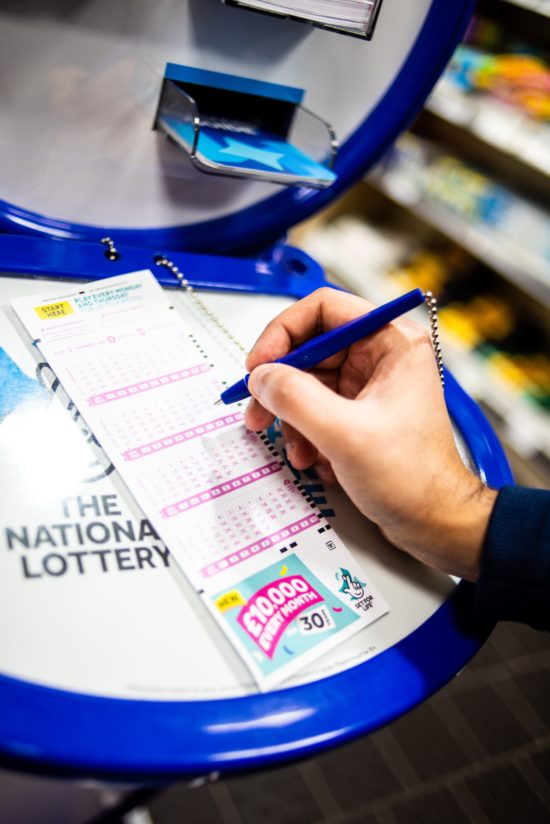
Set For Life playslip