
Q&A: Racing Post editor Tom Kerr on racing’s return and the financial impact of the pandemic
Comparing this crisis to foot-and-mouth of 2001 is “like comparing a schoolyard scrap to World War Two”, Kerr insists

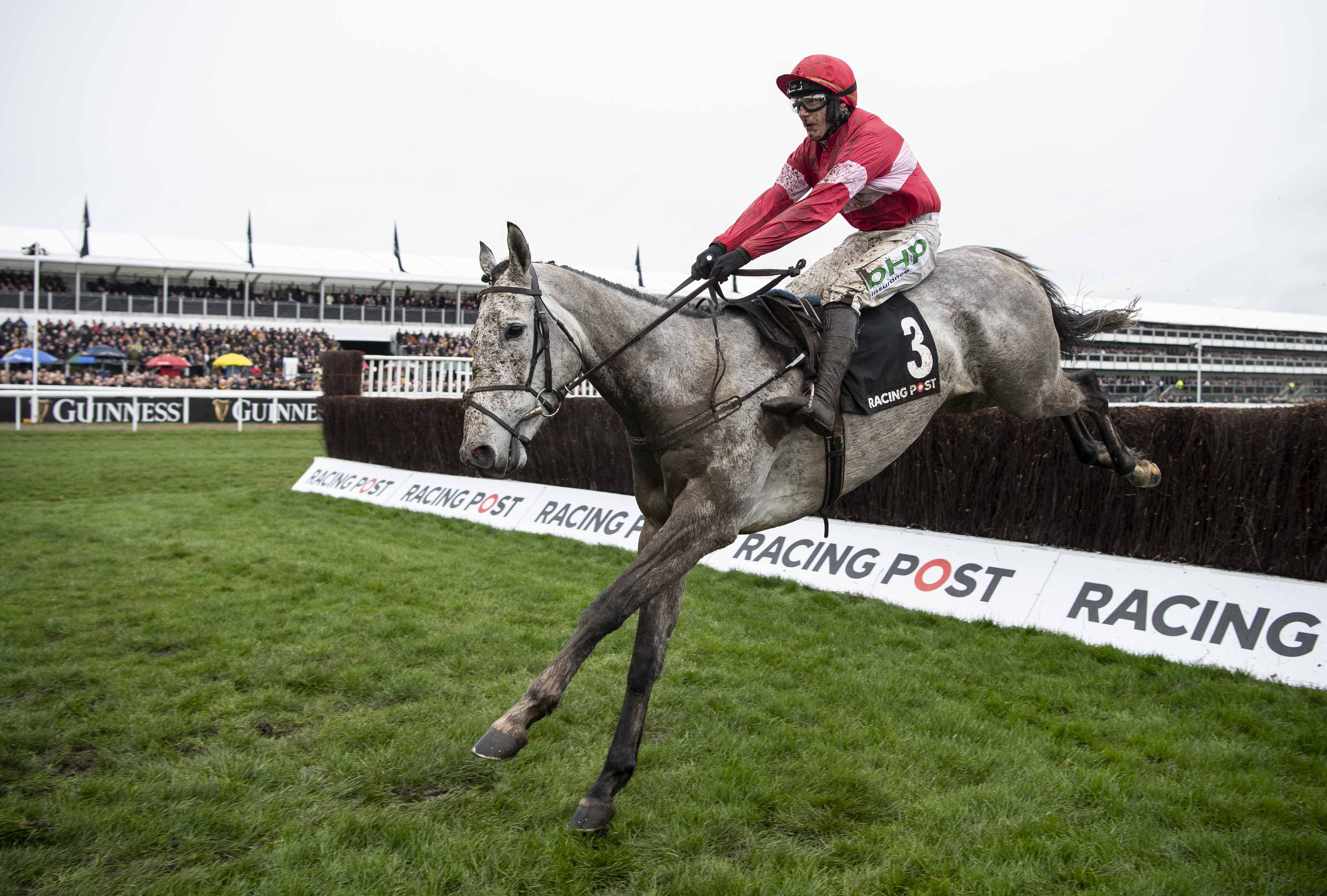
Seventy-six days. That’s how long racing in Britain has been suspended by the British Horseracing Authority, depriving the industry of almost 300 fixtures and leaving bettors to settle with action from far-flung parts of the world like Hong Kong, Australia, the US and, more recently, France.
Today, however, the Sport of Kings makes its long-awaited return in Britain with a bumper 10-race card at Newcastle’s all-weather track attracting 120 runners – the maximum entries per race is set at 12 to mitigate the risk of injury and to allow for social distancing. The revised and truncated calendar includes two meetings each day this week, culminating in two Classics (usually run in early May), the 2,000 Guineas this Saturday and the 1,000 Guineas the following day.
Racing is the second-most attended sport in the UK, yet there will be no crowds at tracks for the foreseeable future and as few people as possible in attendance. New protocols include the use of face coverings, temperature screening, partitioning in the weighing room, and one-way routes around the facilities, alongside strict social distancing measures.
Even though racing will be behind closed doors, bookmakers are expecting to do brisk business due to pent-up demand and casual bettors wanting to have a flutter on some live sport. Today also marks the return of the print edition of the Racing Post, which was forced to temporarily close – the first time in its 34-year history – and furlough more than 100 from the editorial team. For editor Tom Kerr, he’s excited about the paper “coming back with a bang”, as he tells EGR Intel.

EGR Intel: With racing’s return today at Newcastle, are you expecting a high level of interest and can the sport attract a new audience?
Tom Kerr (TK): You’ve got to be hopeful that it will appeal to a bigger audience. We’ve obviously been starved of live sporting action over the last couple of months, and you only have to look at the sort of cult interest that developed with Belarusian football to see that there’s a real appetite for live sporting action. Racing is very quickly ramping up with the Guineas at the end of the week, the Irish Guineas following the next, and Royal Ascot beginning on 16 June. The quality of the action is remarkable.
Obviously, it’s going to be a bit different than usual; we’re not going to have crowds and not the pomp and pageantry of Royal Ascot with the Queen coming down in a carriage. But I still think there’ll be some really significant interest. If you look at what’s happened in America, Australia, and to a lesser degree in Hong Kong, you’ve seen that in the absence of many other sports, interest has grown. So, I think there is a good cause for optimism that racing is going to tap into that pent-up demand.
EGR: How has the shutdown impacted racing’s finances, including the Levy paid by bookmakers (10% of gross profits)?
TK: A huge amount. I think the Levy loss is in the region of £8m per month, but that really pales into insignificance when weighed against the impact of media rights. The figures aren’t published for commercial reasons, but it certainly will have run into the tens of millions in terms of the collective loss. It’s probably been felt hardest by racecourses because they are fundamentally terrestrial businesses. Even if they have a diversified revenue stream, racing is events, it’s conferences… So everything they do effectively has ground to a total halt and all their revenue streams have disappeared. It’s really a challenging time for racecourses.
The equine side of things has probably been less impacted because while prize money obviously hasn’t been flowing, the most important revenue stream is owners’ training fees. That percolates down the racing ecosystem. And although numbers of owners are down, they’re not down significantly. It seems like the overwhelming majority of owners have stuck with trainers, albeit in some cases they’ve had to reduce fees, but generally they have stuck by and that has been a lifeline for racing professionals.
EGR: What about on- and off-course bookmakers?
TK: On-course bookmakers have basically been brought to a standstill. Apart from the very small number who have some sort of digital business, which is literally a handful, they’ve basically seen their revenues halt entirely. For [off-course] bookmakers, it’s a more nuanced picture that really depends on how diversified their revenue streams are. There are certainly some bookmakers where their financial results have shown that their takings have barely been impacted.
You’ve got the high street retail giants like William Hill who are more impacted but, increasingly, what we see even in the industry is consolidation. And they are diversified into new markets and, therefore, it probably made them less susceptible to this shock than they might have been a few years ago. For the retail giants, the government’s Coronavirus Job Retention Scheme will have been a lifeline because if they’d been forced to continue paying salaries for all their retail staff while the shops were shut you’d get to a stage where it is either totally ruinous or they have to take incredibly difficult decisions about redundancies.
EGR: How does this crisis compare to the foot-and-mouth outbreak of 2001?
TK: Good question. I think it’s like comparing a schoolyard scrap to World War Two. They are not on the same plane. When all this broke out, our lesson points were foot-and-mouth when racing stopped or the great recession in 2008 where we suffered what many thought was going to be a once-in-a-generation economic reverse. To shut down society to initiate a global lockdown for two-plus months is completely unthinkable and the sort of damage that has wrought on economies across the world is completely out of any prior scale that we have known. It’s been truly unique. I think its impact will only be fully understood in several years’ time because what might be the most long-lasting legacy is not the lockdown but rather the recession that follows.
EGR: Did you expect racing to be back at the start of June? Is it the right time and is it safe to do so?
TK: I was always fairly confident we’d get racing back around this time. I actually wrote a column a couple of months ago where I predicted mid-May, so I was overly optimistic there but we’ve seen that easing lockdown and bringing back parts of the economy in a safe way has not led to to a second wave or a spike in infections elsewhere. So, I think there’s good reason to be confident that racing can operate in a safe way. This is a sensible time to bring racing back.
Obviously, there’s not going to be any crowds; the runners and riders are going to be taking part with a backdrop of empty stands. There are also very strict limits on who can come in, strict hygiene protocols, and everyone who goes onto a course has to undertake an online test to demonstrate their awareness of the social distancing and hygiene protocols, so it’s going to be a different-looking sport. But the fundamental thing is that on the track we still have thoroughbreds of highest quality racing each other – the core of racing will be unchanged.
EGR: How have you been gearing up for the return of the Racing Post newspaper?
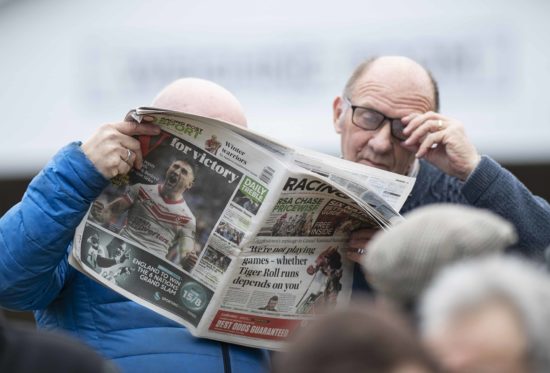
TK: Racing stopped in mid-to-late March and very shortly afterwards we took the incredibly difficult decision to pause publication of the print newspaper. Since then, we’ve been operating with a skeleton team of about 25 after having furloughed over 100 staff on the editorial side. We’ve been doing a bit of a pretty comprehensive digital service, putting out a digital newspaper covering all the latest news on coronavirus and the resumption of racing, and trying to keep people entertained. But obviously, with racing coming back, we were really keen to get the newspaper going again.
Picture: Edward Whitaker
So, over the last two weeks, as the details around the return to racing have firmed up gradually, we’ve been looking at how we’re going to bring the paper back. Of course, it’s not something that happens very often – we don’t launch a newspaper every day – so we’ve been trying to ensure that we come back with a bang and that we line up some really great features and great articles by our top writers. We’re really excited about getting going again and getting lots of colleagues back as well. We’ve come out of furlough, or will be over the next couple of days, and are very excited about kicking off again.