
How likely is a £2 restriction on online slots?
With some MPs calling for a clampdown on online staking limits, can the industry avoid a FOBT-style fallout or will history repeat itself?

“It is notoriously difficult to predict politics,” says Regulus Partners analyst Dan Waugh when asked if a £2 stake limit on online casino could become reality. “Whether we go to £2 is anyone’s guess.”
Waugh was following up on yesterday’s news that UK MPs involved in a cross-party Gambling Related Harm APPG recommended a legislative clampdown on online gambling, including a £2 stake limit for online slots and restrictions to VIP accounts.
He adds: “The likelihood that something will be done to institute a system of limits seems highly likely, and this is because the push for limits is much broader than the APPG. It is critical that the industry engages with the idea of limits and thinks about how they might be applied intelligently, rather than rejects them out of hand.
“One of the mistakes that the betting shop operators made was a failure to conduct tests on different staking levels. This is a mistake that the remote sector must avoid replicating.”
Some industry commentators believe that some form of stake limits in UK online are inevitable – and have been ever since the APPG rebranded to focus solely on online gambling.
https://twitter.com/gamblinglamb/status/1191299055344857088?s=20
The market reacts
Investors were clearly spooked by yesterday’s news with an estimated £1bn wiped from the stock of UK gambling operators. GVC’s share price dropped by 10.5%, while William Hill was down 12.5%, with 888 the worst effected at a 14% downturn.
Some analysts though suggest the Armageddon angle has been overblown. Barclays wrote: “We note that the APPG is not the regulating body for the sector, nor the responsible government body, and, therefore, the recommendations do not carry a requirement for regulatory change.
“The report is clearly one-sided, and we have already seen a rebuttal from the UK Gambling Commission, which the APPG describes in the report as ‘not fit for purpose’. Additionally, we think the operators have been making constructive steps on self-regulation.”
One major European operator declined to comment on the report entirely due to its backers which include land-based gaming organisations like Hippodrome Casino and the Gauselmann Group.
Deja vu
There are obvious parallels here to the narrative that occurred before FOBT stake restrictions were implemented in 2018. Former Paddy Power CEO Breon Corcoran said in a soon-to-be-published interview with EGR Intel: “I think if senior industry leaders had their time again, they would have read the writing on the wall much earlier. For the large retail chains that was difficult, but it ultimately didn’t help customers and didn’t help shareholders to have that level of unnecessary toxicity going on for as long as it did.”
How UK-focused operators react to the threat of online staking limits will reveal what – if anything – was learned in the fall-out of the FOBT debacle. The writing is already on the wall for online and the industry should surely be looking at – to borrow a phrase that Richard Flint was derided for yesterday – the least bad option that helps to reduce problem gambling.
https://twitter.com/gamblinglamb/status/1191301285221408769?s=20
The industry’s first response – if comments from GVC and William Hill are anything to go by – has been to come out swinging and highlight the advantage that would be given to the black market, which does nothing to protect vulnerable players.
The latest Winning Post note from Regulus Partners reads: “The impact would be more severe in the relatively likely event that black market policing is not particularly effective or joined up, since the black market would for the first time in the UK have a significant product advantage over domestically licensed operators.
“Tightly managing this would at least create a level playing field for heavier users who are not bloody-minded enough to actively participate in the available workarounds and perhaps save about c. 3-5% of sector revenue. It is worth further noting that restricting VIPs in the domestically regulated market is also likely to create up to c. 10ppts of leakage to black markets if VIP perks are readily and easily available in the black market – another big swing factor.”
Hills’ director of corporate communications Ciaran O’Brien raised these black market concerns in a combative statement.
“The irony of this report is it suggests the Gambling Act is analogue regulation for the digital age – yet it recommends retail solutions for digital products,” said O’Brien. “The recommendations would have significant unforeseen impacts given the black market already attracts over £1.4bn in stakes and takes no account of the significant progress made in the online sector in terms of tracking play against markers of harm using algorithms, the use of affordability checks for all players, enhanced due diligence checks for higher staking players and the development and promotion of safer gambling tools such as deposit limits, profit-loss tracking, cooling off periods, partial self-exclusion and cross operator self-exclusion.
“Perhaps the group preferred not to see the Gambling Commission to have the evolution in the industry confirmed by the regulator,” he added.
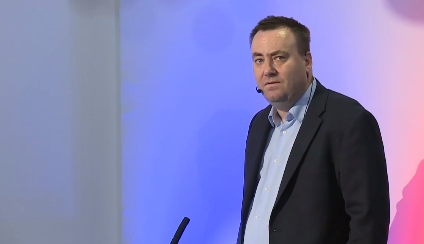
GVC CEO Kenny Alexander
Technology
GVC CEO Kenny Alexander, who has previously said the online industry learned its lesson from the FOBT mess, highlighted the operator’s investment in technology and research as the best way to reduce problem gambling rates yesterday.
He said: “It is our firm view that the kind of over-regulation being advocated by the APPG – a political grouping whose committee are predominantly opposed to the gambling industry – would be highly counterproductive and do far more harm than good.
“Such measures could lead to an increase in problem gambling, as customers move away from responsible, regulated operators towards the black market where there is zero responsibility, zero protection, and zero taxes being paid to the Treasury.
“GVC is committed to working with regulators and legislators to promote responsible gambling attitudes, but we are convinced that the best way of doing so is through better use of technology, an investment in research to gain a clearer understanding of the problem, and by improving the ways in which problem gambling behaviour can be identified and then tackled,” Alexander added.
https://twitter.com/JRANoyes/status/1191471145364664321?s=20
As Waugh opened, politics is impossible to predict. Whether a £2 stake limit is an inevitability or simply pie in the sky, the story does not end here.