
Why online casino is primed for an innovation explosion
Online casino appears to have lagged behind sports betting when it comes to innovation, but with the sector needing to appeal to the mass market more than ever, the new ideas are starting to flow


There was some head-scratching in the EGR newsroom in July when two casino companies announced the launch of “industry-first” innovations that let customers play multiple casino games on one screen. LeoVegas and Videoslots were both keen to shout about their new split-screen function, but some observers were left a little cold. Poker, for example, has had games within games for a while now, and the feeling was that casino was just a little bit behind the times.
It’s not an isolated incident. It seems like barely a week goes by without some form of sports betting innovation, from new types of cash-out to 18 different variants of social betting. New ideas in casino, however, seem somewhat thinner on the ground.
“It’s probably true that casino firms have been lagging behind sports betting in innovation the last five years,” admits Benedict McDonagh, MD of Green Jade Games. “I am surprised that we don’t hear of more start-ups challenging convention and trying something a little more off-the-wall and ‘risky’.”

Benedict McDonagh, Green Jade Games
He suggests the failure has been more from the supplier side of the sector, adding: “We’ve seen really impressive casino brand launches in the operator space within the last five years that focus on changing the experience and reward events, but to a certain extent, I feel these efforts have been undermined by the lack of improved game types. You can make the cookie packaging stand out from the crowd but if the cookie tastes the same as all other cookies, your packaging is just misleading.”
Compliance challenges
When interviewing a variety of casino operators and providers for this article, there are plenty of reasons why the core casino experience hasn’t changed too much in recent years, with the ever-increasing burden of compliance top of the list.
“The innovations we made 12 months ago are only just coming to the market,” says Nik Robinson, CEO, Big Time Gaming. “The main lag is the rigour of compliance, which is unavoidable, costly and time-consuming, coupled with the costs of penetrating many markets. You have to be absolutely sure the market you are looking to target gets the best possible version of the game you are making.” Robinson argues that bookies have it easier than casino firms because the excitement of the sport is already built in to a betting experience and all the bookmaker really has to do is get out of the way.

Nik Robinson, Big Time Gaming
“In this sense, sports betting interactions have become fine-tuned, minimum engagement products which maximise the entertainment of the event,” adds Robinson. “Even with in-play betting, it’s no more than a glance of the screen and a tap. Place a bet as fast as you can, sit back and enjoy the race. Even with cash-out functions it’s not really innovation, it’s just seamless simplification.”
Step back for a second here and consider the changing world of entertainment. Live sport commands better ratings (comparatively) than ever before because it is just about the only TV broadcast you have to watch live. Any sports fan will confirm you can’t watch a game the day after; the magic is gone. Sports betting companies benefit from that live magic, whereas casino operators have to create their own urgency to encourage customers to place a bet.
Into that changing world of entertainment add the aforementioned burden of compliance, which has fundamentally changed the historic casino model. With player values plummeting, operators have been forced to swap their VIP teams for a mass-market focus. In this world they find themselves competing with video games, Netflix and Instagram for screen time. To compete effectively, an online casino needs to be more than just a roulette wheel; it needs to be a genuinely immersive entertainment experience. In other words, the need to innovate is becoming an almost existential crisis for the casino sector. So how are firms responding?
“There’s a lot of exciting things on the way in the next 12 months,” promises Ross Parkhill, director of casino at Gaming Innovation Group (GiG). Starting at the beginning of the customer journey, Parkhill says the Malta-based operator has been looking to the likes of Revolut – a challenger bank – to help simplify the sign-up and verification process. Some challenger banks, for instance, ask customers to submit a picture of their ID via the app followed by a five-second video of themselves to verify the ID.
“[Banking] customers have a lot of similar pain points that we do,” Parkhill says. “They have to get people to register, and do things that are a little bit intrusive, like providing documents. As an operator, we have to get better at making sure that our casino sites become more like these digital leaders. The UX is seamless, it’s super easy and, in some cases, it’s almost enjoyable, whereas we as an industry have been slow to adapt.”
Finding the right game
Once a customer is signed up, one of the bigger challenges can be surfacing the right game, particularly as libraries have swelled to 500+ in many cases. 888 has arguably shown the way in this area with its Orbit platform, which helped generate an 80% increase in FTDs in the UK after it was launched. The platform uses machine-learning algorithms – developed in-house and out – to deliver the right content to the right players.
“Any casino site today has at least a few hundred games and we cannot expect our players to navigate this by themselves,” explains 888’s head of B2C Guy Cohen. “There is so much to do, that we are really just touching the tip of the iceberg at the moment with offering recommendations about casino games.” 888 has previously compared Orbit’s recommendation engine to Netflix and, if the early returns are anything to go by, firms should be investing heavily in recommendation algorithms of their own – or at least outsourcing the task.
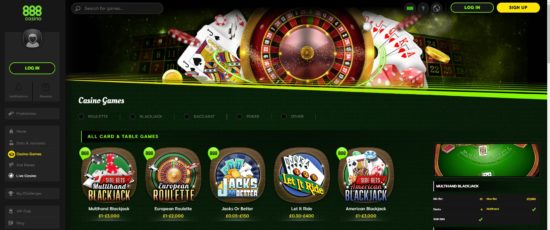
In a similar vein, 888 has focused on personalising more than just its landing pages, extending its use of AI to real-time communications. As Cohen explains: “Instead of sending different offers via email, we use real-time systems we have developed in-house to identify the activity of players and react and respond accordingly. It’s very different from the traditional way of doing CRM in casino. Churn rates are traditionally very high in this industry, so improving CRM is a huge area for future innovation.”
The added benefit of this type of customer profiling is that it’s also much easier to identify players showing signs of risky behaviour, and operators can intervene mid-session before spending gets out of control.
Get social
When asked about innovation, several execs threw out the usual suspects – Netflix, Uber, Spotify et al – but Cohen suggested the industry could have a lot to learn closer to home, specifically from social casino apps. If casino is at a disadvantage to sports betting when it comes to entertainment from the core product, then social casino is another step removed, without even the excitement of real money changing hands. Despite this apparent disadvantage, the market leader Playtika generated mobile app revenue of $72m in July 2019 alone.
“They never had the rush of real-money gambling, so from day one they focused on making the best apps out there,” says Cohen. He points to two areas RMG casinos should look to mimic – the overall UX of the apps, and the mission and gamification elements that keeps users coming back.
“They have a frictionless experience on their mobile apps,” he adds. “We tried to mimic that with Orbit and we see that we can grab market share simply by offering a frictionless product.”
The concept of gamification is of course nothing new in online casino, having been bandied around conferences for years, but it’s still seen as an opportunity for firms. It’s a core principle over at GiG’s Rizk.com brand, where all gameplay on the site helps fill up the power bar on the ‘Wheel of Rizk’, which players can spin for jackpots and bonuses. “It’s all about giving players another motivation, another core driver to come back to the site,” explains GiG’s Parkhill.
The cookie
These concepts of course are all somewhat around the periphery: operators perfecting the window dressing around the games themselves. So, are providers fulfilling their end of the bargain and doing enough to make sure the content itself is good enough to compete for eyeballs in the modern world?
The consensus is they are. “There are good things coming up,” says Bjornar Heggernes, casino manager at Bethard. “I’ve seen even from this year many projects that will go out this year or next year that bring something new from other entertainment sources like video gaming, mobile gaming and even TV shows.
“I can’t go into details but can say it will be gamification-plus. It’s about facilitating micro-transactions without players actually having to purchase anything. So players can collect stuff, create characters and optimise them by changing clothing and characteristics. It is bringing those tools from video games into casino games.”
Heggernes also envisages the industry taking a leaf out of the sports betting playbook and trying to make games more communal, with groups of players teaming up to chase jackpots, perhaps in the style of Sky Bet’s crowd-powered accumulators, or its recent Super 6 boost, where the jackpot was escalated to £2m if two million players entered. 888’s Cohen adds: “I look at the new casino games and how immersive they are, how many features they have, how much design is involved, and it’s clear that in the future casino games will only become more entertaining, more immersive and full of exciting features.”
The online casino sector has been forced into a period of introspection by a world changing around it, but if even half of what is being promised is delivered, then the future looks very bright indeed.