
CEO Interview: Simon Burridge, Virgin Games
In typical Virgin style, Virgin Games is taking on industry 'big boys'. Will its brand make it a force in egaming?
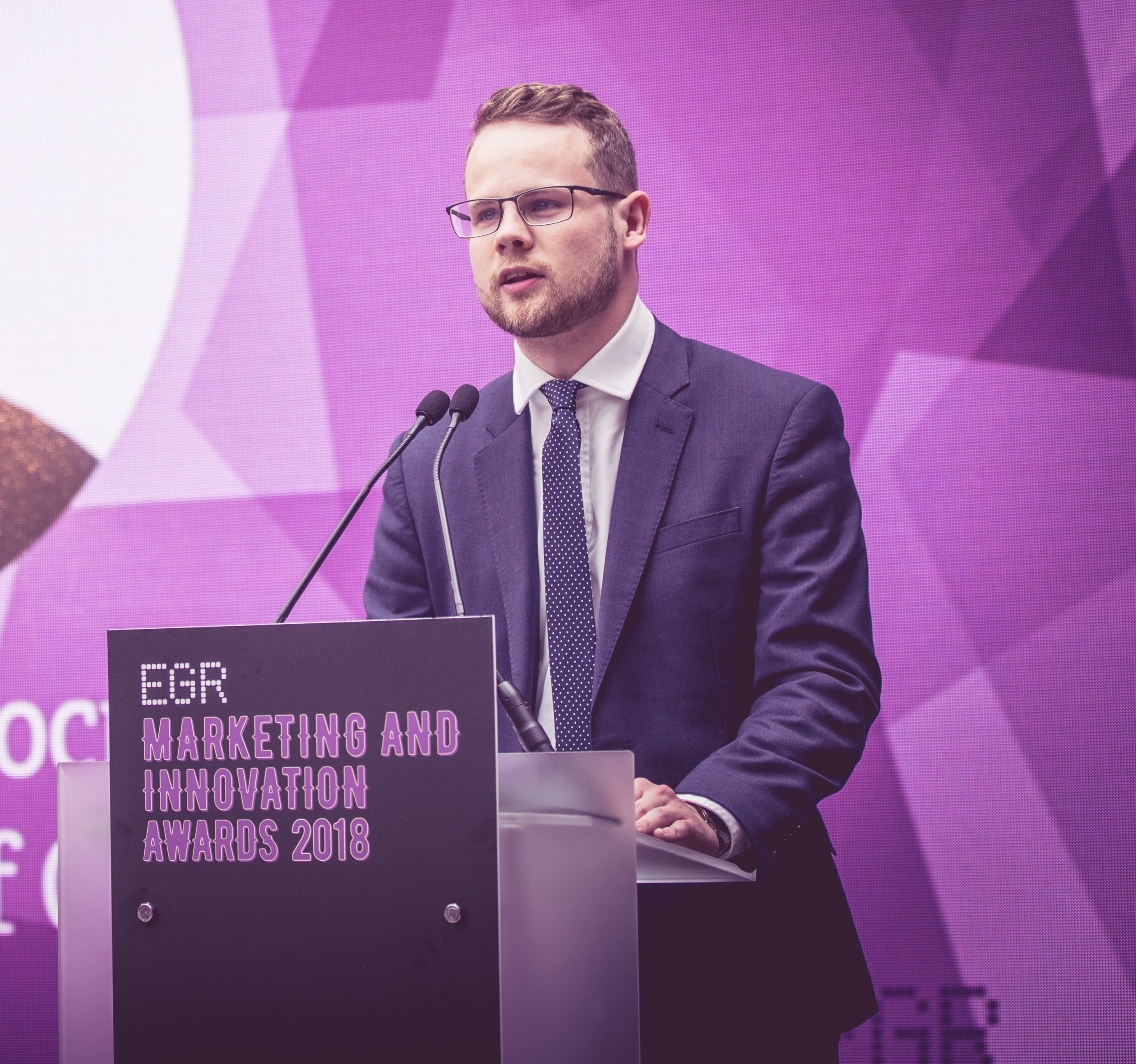
IF YOU HAVE been following the news on EGRmagazine.com in recent weeks, you’ll have noticed that Virgin Games is in an expansive mood.
The egaming arm of the Branson-brand recently completed a two-and-a-half-year platform build that sees it now ready to start monetising its investment, and is seeking external investors with which to enter new markets including California, Florida, France, Spain and South Africa as they regulate.
Virgin Games chief executive, Oxford history graduate and former ad man Simon Burridge, explains that the company has “been working hard over the past two years to make the leap from what was essentially a games marketing business to becoming a fully fledged operator” after migrating its player base onto its new, bespoke platÂform late last year.
Setting itself apart from the competition, the company plans to expand the Virgin Games brand beyond online gaming to become a ‘total gaming’ destination via a deal with technology company Game Domain International to offer more than 200 game titles for download.
The non-gambling games, Burridge explains, are “about gaming as entertainÂment. We want to be somewhere you can play in a trusted environment for a short time or a long time, for money, or for free.”
While still a relatively small player in egaming “ the company has 61 employees, and didn’t even make it to the Power 50 top operators 2009 “ Virgin Games has the benefit of a major brand name behind it.
“Research shows us that the more Virgin products one buys into the more loyal you become and that the customers we reÂcruit from other Virgin companies deposit more and stay longer,” Burridge says.
And it is for this reason that the company has already leveraged its most natural of ad-vantages and stuck its name on a range of other Virgin products.
In Italy, which regulated its online gaming market and is still adding to the number of legal verticals, this has included advertising and coverage on radio station Virgin Radio Italia and in the brand’s Virgin Active Italia gym chain, while in the UK, advertising on the Virgin Atlantic airline, Virgin Trains, TV stations under the Virgin Media brand and on other Virgin products including books, cosmetics and drinks, has offered a powerful advantage. “If there is a Virgin product knocking about, we’ve branded it,” Burridge says.
Time has certainly changed the Virgin brand, as middle-aged Burridge says: “When I was young it was cool, fun and anti-establishment, taking on British Airways and being cheeky. As it’s grown the brand has become more establishment than it used to be, but at its core it’s about value and fun. It’s about being on the side of the customer and I think that’s exactly where we want to be with Virgin Games.”
And to demonstrate that the compaÂny has not entirely lost its sense of fun, Burridge produces a Virgin Games-branded airline sick bag from Virgin Atlantic emblazoned with the message “we don’t want you to chuck in your hands.”
 No grey areas
Being cheeky, however, has its limits.
Unlike some rivals, “Virgin Games doesn’t hide behind European legal battles” Burridge says, operating “only in jurisdicÂtions where online gaming is unambiguÂously legal.”
This has ruled it out of much of the highly profitable “grey markets” such as Germany where other operators have cleaned up, and makes the prospect of newly regulating jurisdictions such as France all the more appealing.
This raises another appeal of the non-gaming deal: that it could allow Virgin to market the Virgin Games brand via itsnon-gaming products in other marÂkets ahead of any future legalisation of online gaming, although “that is a benefit rather than a main strategic goal”, Burridge says.
But marketing doesn’t come cheap. While being a part of the Virgin empire gives the company access to a range of cross-promotional opportuÂnities, as well as to support facilities and economies of scale, Virgin Games has little direct investment from the group, which has cash-hungry businesses such as its Virgin Atlantic, Virgin Blue and V Australia airlines to feed. Thus the need for those external investors.
“We do a lot of successful marketing and want to do more of it, but we can’t always throw appropriate sums behind it,” Burridge explains. “We are limited in the profile that we can generate on our own behalf and with so many operators and markets opening up at the same time, we are going to need some cash.” Entry to each new market will require £5-10m of investÂment, he estimates.
Quizzed on whether Virgin plans to enter the business-to-business space that other operators have joined (see eGaming Review issue 69 for our round-up), Burridge says that “this is something that we are willing and very able to do” given the expertise acquired by the new platform build, and that the company is already in talks with two different non-gaming companies.
However “we are not actively pursuing it,” he says. “We are a small team and there is a finite limit to the number of things we can pursue at any given time. And we are a marketing company first and foremost, and that’s what we like doing.”
Burridge revels in being ‘Free to do what we wanna do’ 
“We got out of the exclusivity and can now take content from anyÂwhere,” says Burridge about the new platform the company built in-house. “When we launch new games we see an immediate rise in play, but there’s also more we can offer in terms of products, the level of information we provide and competitions.”
Pressed a little further, however, Burridge also admits that the company’s earlier arrangement with three different suppliers “ WagerWorks supplying casino, Boss Media poker, and St Minver bingo – was not a satisfactory one for other reasons too.
“We had three separate verticals and if you were playing casino and fancied a game of poker you had to log out and log back in again: it was as unfriendly as we could have made it.”
The in-house system also means that while maintenance costs are larger, the revenue share from game play is not shared “ hence the push to monetise now the system is up and running.
Why UK tax ‘timebomb’ needs resolving
Burridge predicts that the UK tax regime will change to be more sympathetic to operators. “There is a timebomb with our leaders and masters [in the UK], who have realised that they have made a huge mistake in setting such a ludicrous tax rate.
“No one in the industry wanted to go offshore: it’s a bore apart from anything else. Everyone said that to them if you set a sensible tax rate we will all stay and everyone will be happy, but that didn’t happen and they are now realising that they aren’t making any money. Italy, by contrast, is absolutely raking it in.”
 Delivering online games faster is key
A deal with technology company Game Domain International (GDI) will give Virgin Games access to more than 200 game titles from 70 game developers available for download, with titles including Rome: Total War, Fifa Football Manager, Warhammer: Mark of Chaos and Tomb Raider: Legend. These will be offered in adÂdition to Virgin Games’ current suite of online gaming products.
The system, called A World of My Own (AWOMO), aims to deliver online game content much faster than rival download services by allowing users to play the games before they are fully downloaded; and will offer pay-per-download or regular subscription payment options.
“This will open up a long tail of people who are gamers but are not prepared to invest heavily in gaming, and will open up PC games to a rental market that has never been done before. If this takes off it could do for the gaming industry what iTunes did for buying music: no one buys music from shops anymore, they go online to iTunes.”