Analysis: Monopoly Money
As dot.country regulation continues to spread across Europe, state-run operators' previously dominant market shares are increasingly coming under threat. But as Denmark's Danske Spil has recently proved, this is far from the end of the road for former monopolies.
For the likes of Austria, Belgium and Greece where state-run monopolies are the status quo, the successful implementation of dot.country regimes in neighbouring jurisdictions has piled on the pressure for regulatory reform.
In some cases, opposition to the move to a licencebased market is strong. Greek monopoly operator OPAP has been fighting to retain its monopoly status of late despite the beleaguered government being close to cashing in on its 33% stake.
But in more cases than not, European countries will follow Italy, Spain and Denmark in a move to claw back the significant
revenues currently lining the pockets of offshore, unlicensed competitors. For incumbent monopoly operators, the trend means they must adapt or lose their long-standing and highly valuable market share.
In Sweden, horseracing operator ATG and state lottery Svenska Spel control a 90% share of the gambling market, a figure that reduces to 50% when taking into account online betting only. Talk of egaming regulation has persisted for several years, although it remains unclear whether the government will seek to protect its monopoly operators, or migrate to a licensing regime akin to that of Denmark.
Although online remains a relatively minor part of both businesses, they continue to grow ahead of possible future regulation. ATG moved online in 1995 with sports betting and gaming coming on stream a year later, while in February 1998 it expanded into horse betting through its Interbet portal. Today, online is its second biggest sales channel with 500,000 unique users.
Magnus Silfverberg, chief executive of Swedish operator Betsson, says the general belief is that in the long run it is “inevitable” that licensing will happen in his home country. “The government has to change today’s model, which is clearly not working from a society perspective.
“When it happens it is in our best interest that we go to a licensing model, which is commercially viable and is as attractive as possible so we get as many operators applying as possible to get a high absorption rate and avoid a black market. The politicians here have understood that the best alternative to the current model is offering an unlimited number of licences.”
Existing monopolies often claim that an open market could cannibalise the state’s gambling revenues, and money for good causes will diminish as a result. But Silfverberg argues that wrestling market share from Svenska Spel will be much harder than most anticipate; the 50% online market share it already has demonstrates its prowess.
“I think it’s possible for them to retain their market share. They have a strong brand and heritage, which they will continue to benefit from for a while in the future. But, over time, my assumption is that being a licensed operator like us we should gain the same level of trust and be able to take market share. Initially they could actually benefit from the move,” he says.
Great Danes
Indeed, Denmark’s monopoly operator Danske Spil sprang out of the blocks with great effect when the market opened in January, proving that, with the right strategy in place, dominance pre-regulation can continue. Following the opening of the market, the operator saw its share of online profits rise by a third (33%) to DKK837m (£89m) for the six months ending 30 June, compared to DKK629m in the corresponding period last year.
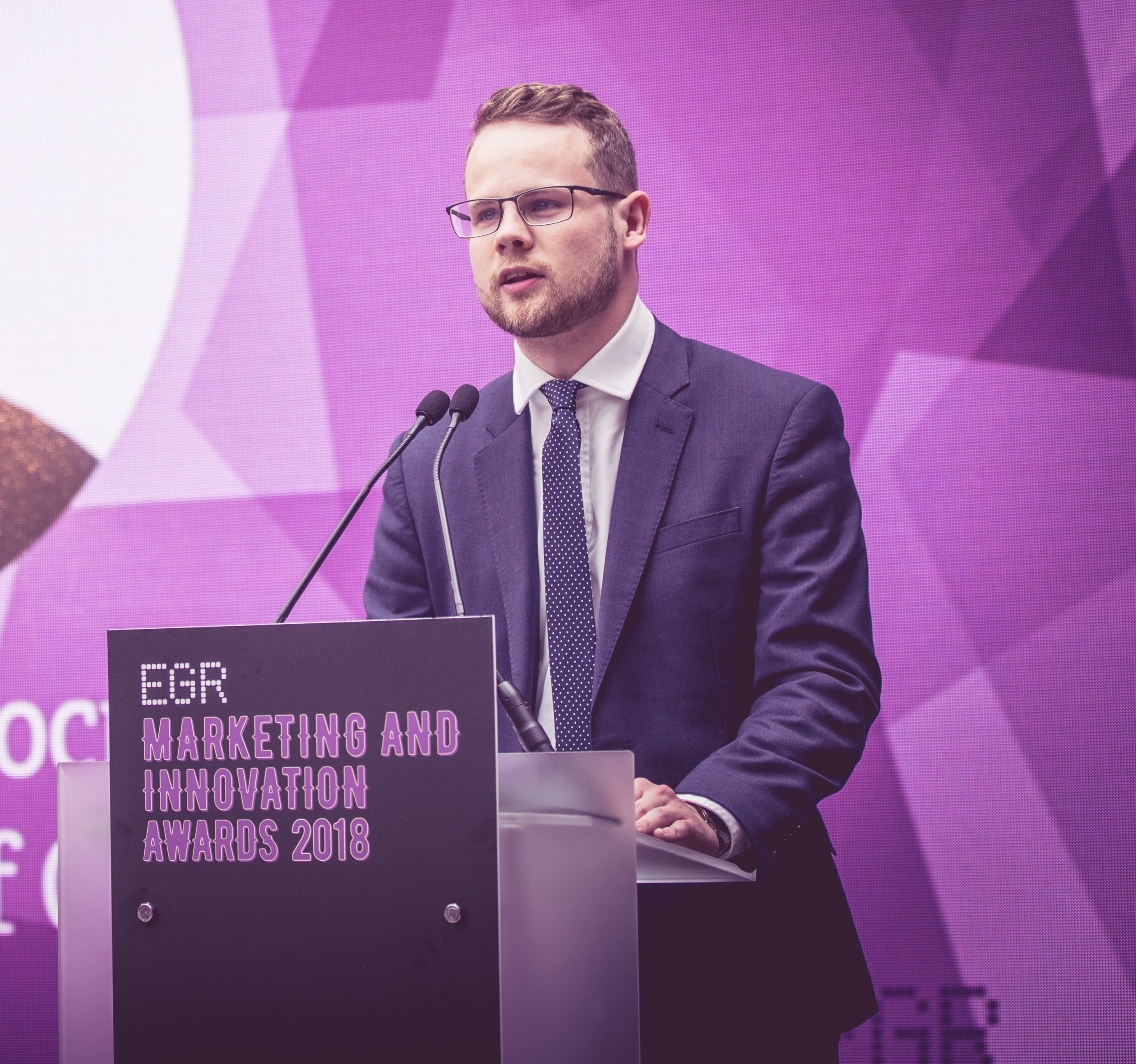
But Hans Christian Madsen (pictured), Danske Spil’s chief executive, says planning for that moment, and the inevitable assault from competitors on its market share both from home and abroad, was long in the making. “We told the government and our board that not to [change the regulation] was the worst scenario for us, because then we would lose the game as it is impossible to fight on equal terms when we had to pay 30% tax and our competitors didn’t pay anything.
“At that time we were also not able to put poker and casino on the internet. Our sports betting odds were no good because we had to pay tax,” he says.
“We worked very hard on deciding how we should enter the market. We decided that because we were a market leader yesterday, we wanted to be a market leader tomorrow. So, not only did we want to have a strong casino and poker solution, but we also wanted to strengthen all our other areas. We wanted to meet the market at 100km an hour “ at full speed. We wanted to be there straight away with a lot of marketing and pressure to take the chance.
“It took us very much by surprise that the customers came to us so early. We think the Danske Spil branding is very important. People believe in it “ they know their money is secure and that they will get a good product. We have ensured this corporate identity over the past five years,” Madsen adds.
Elsewhere in Europe, monopolistic operators are under threat from all sides. One must only look at the plight of OPAP, which for so long enjoyed an unchallenged dominance in the country, to see that the days of such regimes are numbered.
The Remote Gambling Association (RGA) has urged the Greek government to dismantle the monopoly while pressure from the European Commission on anti-competitive grounds saw it confirm plans to set a new 30% levy on gross earnings from all its games and a flat 10% rate on all player winnings from 1 January 2013. The announcement saw OPAP’s share price fall by almost a fifth.
Going Dutch
Next to undergo such a transformation could be the Netherlands, with eGaming Review exclusively revealing in October that its Ministry of Justice was preparing to introduce the country’s first draft online gaming regulation early next year for consultation.
Justin Franssen, head of the gaming practice group of VMW Taxand, says the past two years have seen much political debate to decide whether or not it should follow the Danish or the Belgian model, the latter determining that operators can only enter the market if they are in some way connected to a terrestrial licence “ a measure clearly suited to protect the country’s current operators that have lobbied hard to retain their status and keep out foreign operators.
The argument to protect monopolies continues elsewhere “ a Court of Justice of the European Union (CJEU) ruling in September last year determined that the Austrian government can prevent foreign gaming companies from operating there.
The case “ relating to two founders of the Austrian-facing Bet-at-home “ ruled in favour of the continued existence of a state gambling monopoly in the EU member state, providing legislation meets certain criteria such as “ensur[ing] a particularly high level of protection” for consumers.
Monopoly operator Casinos Austria AG remains the only company to have received the green light from the Austrian government to operate in the country, and last year saw the CJEU overrule local legislation ordering those offering egaming services to Austrian customers to have their servers located onshore, on the grounds that the requirement was not compatible with EU law.
However, citing the success of Danske Spil and PMU in France, which has seen amounts staked online increase by more than 25% year-on-year, Franssen argues there is enough evidence to say the liberalisation of markets actually benefits the incumbents, rather than cannibalises them.
“In general terms, what you can learn is in opening up a market you can definitely say that it gives an enormous impulse to the incumbent as opposed to what they say in a political debate ahead of a market opening,” he says.
“The whole remote business that is added to their offering is so much easier for the incumbents to market to the local customers because they already have a very trusted client base. So there is enough proof of positive effects of market opening on the positions of incumbents.”
Madsen knows, however, that the hard work has only just begun: “We have had a great start to the year but we can already see our competitors fighting back. We have to keep strengthening and getting better “ the competitive environment will give us strength. No one wants to give us the market share for free.”
This article was featured in November’s issue of eGaming Review. For subscription options, please click here.